

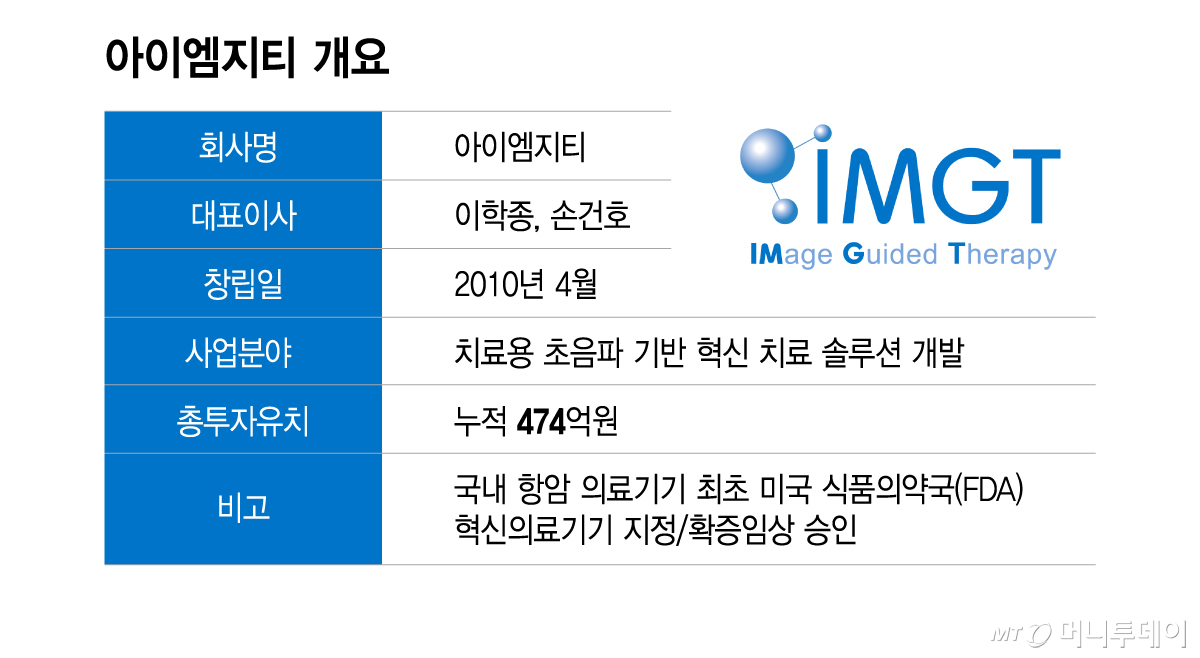
IMGT has taken the first step toward commercializing its pancreatic cancer treatment technology utilizing focused ultrasound. Following consecutive approvals within a single year for designation as a Breakthrough Device (BDD) by the U.S. Food and Drug Administration (FDA) and approval of an Investigational Device Exemption (IDE) for confirmatory clinical trials, the company plans to apply the technology to actual patient treatments to systematically verify its clinical efficacy.
IMGT said Monday that it completed the enrollment of its first patient at the University of Virginia (UVA) in the United States on the 5th (local time), officially launching a global confirmatory trial targeting pancreatic cancer.
This trial will be conducted in a multinational, multi-center, randomized manner, targeting a total of 366 patients with borderline resectable or locally advanced pancreatic cancer at institutions including Seoul National University Hospital in South Korea and facilities in the United States.
The study aims to evaluate clinical value by comparing overall survival (OS) between a group receiving existing combination chemotherapy (FOLFIRINOX) alone and a group receiving FOLFIRINOX combined with IMD10.
IMGT is an anti-cancer medical device company founded in 2010 by Professor Lee Hae-jong of the Department of Radiology at Bundang Seoul National University Hospital.
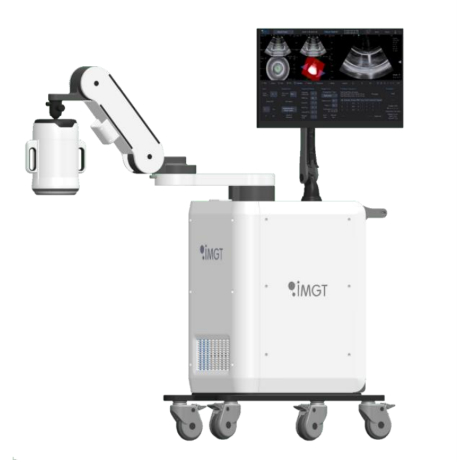
The company researches methods to enhance cancer treatment efficacy through 'IMD10,' based on 'focused ultrasound,' which concentrates ultrasound waves at a single point. Focused ultrasound focuses sound waves at one location, similar to how a magnifying glass concentrates sunlight, and is also known to the general public as the technology behind the skin beauty device 'Ulthera.'
Pancreatic cancer excessively induces fibrosis, where tissue hardens, making it difficult for anti-cancer drugs to penetrate deep into the tumor. This is the background behind pancreatic cancer recording a 'brutal survival rate' despite advances in immunotherapy.
Unlike existing medical devices that generate heat via ultrasound to destroy cancer cells, IMD10 induces cavitation (the phenomenon where liquid turns into gas, forming bubbles) within cancer cells using ultrasound. It punctures cell membranes and increases the delivery rate of anti-cancer drugs into the tumor through these openings, thereby boosting drug efficacy. It can be easily understood as temporarily creating a 'passage for anti-cancer drugs.'
An IMGT official said, "Rather than focusing ultrasound on a single point, we sequentially stimulate multiple tumor sites divided into hundreds of points," adding, "There is almost no burden on patients, such as damage to surrounding organs, and by integrating imaging ultrasound and therapeutic focused ultrasound into one device, we have simultaneously enhanced portability and ease of use."
Treatment is conducted concurrently with the administration of anti-cancer drugs. The method involves confirming the patient's tumor location via imaging and applying focused ultrasound for approximately 30 minutes while administering chemotherapy.
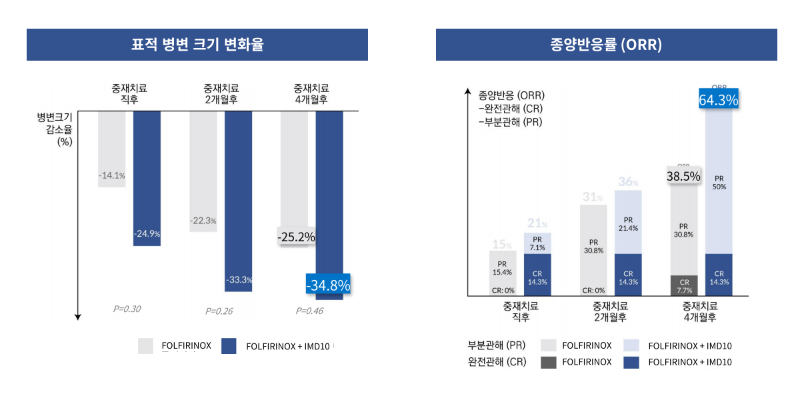
In a randomized exploratory clinical trial conducted on 30 pancreatic cancer patients, the IMD10 combination group showed a two-year survival rate of 64.3% compared to 40% in the monotherapy group, which was 1.6 times higher. The target lesion size reduction rate (34.8% vs. 25.2%) and objective (tumor) response rate (64.3% vs. 38.5%) also showed better results.
IMGT has raised a cumulative investment of 47.4 billion won to date, gaining recognition for its growth potential. IMD10 is the world's first medical device that uses focused ultrasound to increase drug delivery rates in pancreatic cancer, and this confirmatory trial is expected to be a turning point in determining commercialization beyond research.
IMGT plans to conduct final analysis at the 40th-month mark after tracking subjects for over two years following patient recruitment, during which it will simultaneously pursue expanding global partnerships and domestic approval procedures.
A company official said, "The confirmatory trial will be conducted through close cooperation with medical institutions in South Korea and the United States," adding, "We will verify whether the combination of focused ultrasound and anti-cancer drugs can contribute to improving treatment outcomes for pancreatic cancer patients."
He added, "Starting with pancreatic cancer, we plan to expand indications to cholangiocarcinoma and sarcoma, and explore the possibility of combining with immunotherapy and antibody-drug conjugates (ADCs)."

 in THEBIO


