

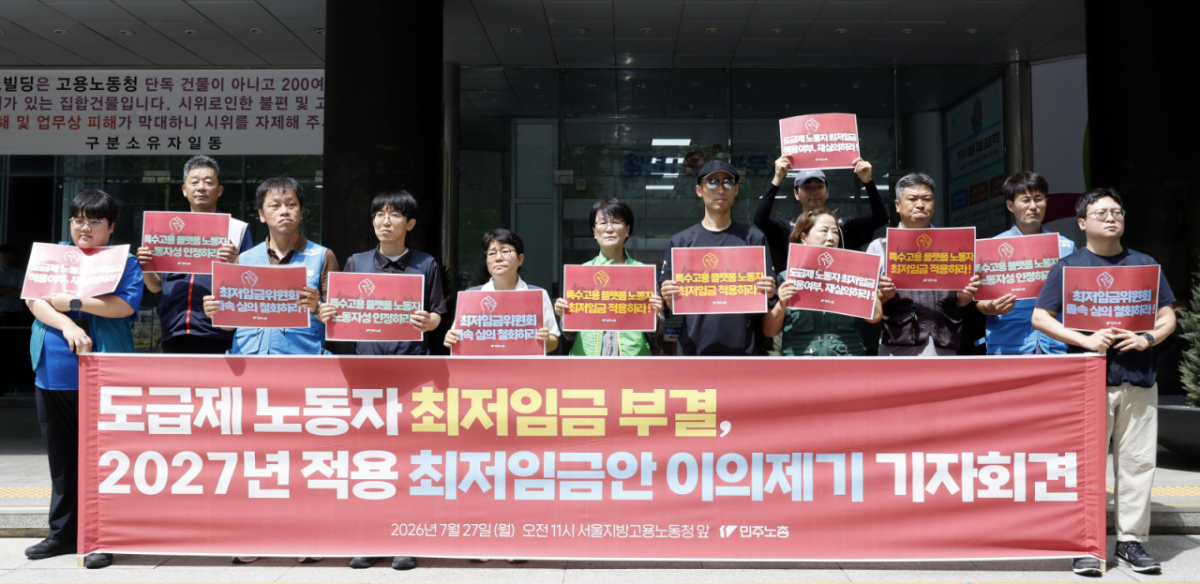
The minimum wage for next year has been finalized at 10,700 won per hour, an increase of 380 won (3.7%) from this year's rate. The small business sector filed an objection on the grounds that the current minimum wage level is excessive, while the labor side argued for expanding the scope of application; however, neither request was accepted.
Amid ongoing labor-management disputes over the minimum wage, the government has recently decided to consider applying the minimum wage to platform workers and freelancers to reflect structural changes in the labor market.
The Ministry of Employment and Labor announced on the 5th that the minimum wage for 2027 application has been set at 10,700 won per hour. This represents a 3.7% increase from this year's rate of 10,320 won. It will take effect starting January 1 next year.
When converted to a monthly basis (based on a standard workweek of 40 hours and 209 working hours per month), the minimum wage for next year amounts to 2.2363 million won. The rate applies uniformly across all workplaces regardless of industry type, but does not cover contract-based workers such as platform laborers and freelancers.
Earlier, on the 14th last month, the Minimum Wage Commission decided on a minimum wage of 10,700 won for next year. While worker representatives advocated for an increase of 16.3% to 12,000 won compared to this year, employer representatives insisted on maintaining the current level; ultimately, no agreement was reached, and the decision was made through voting.
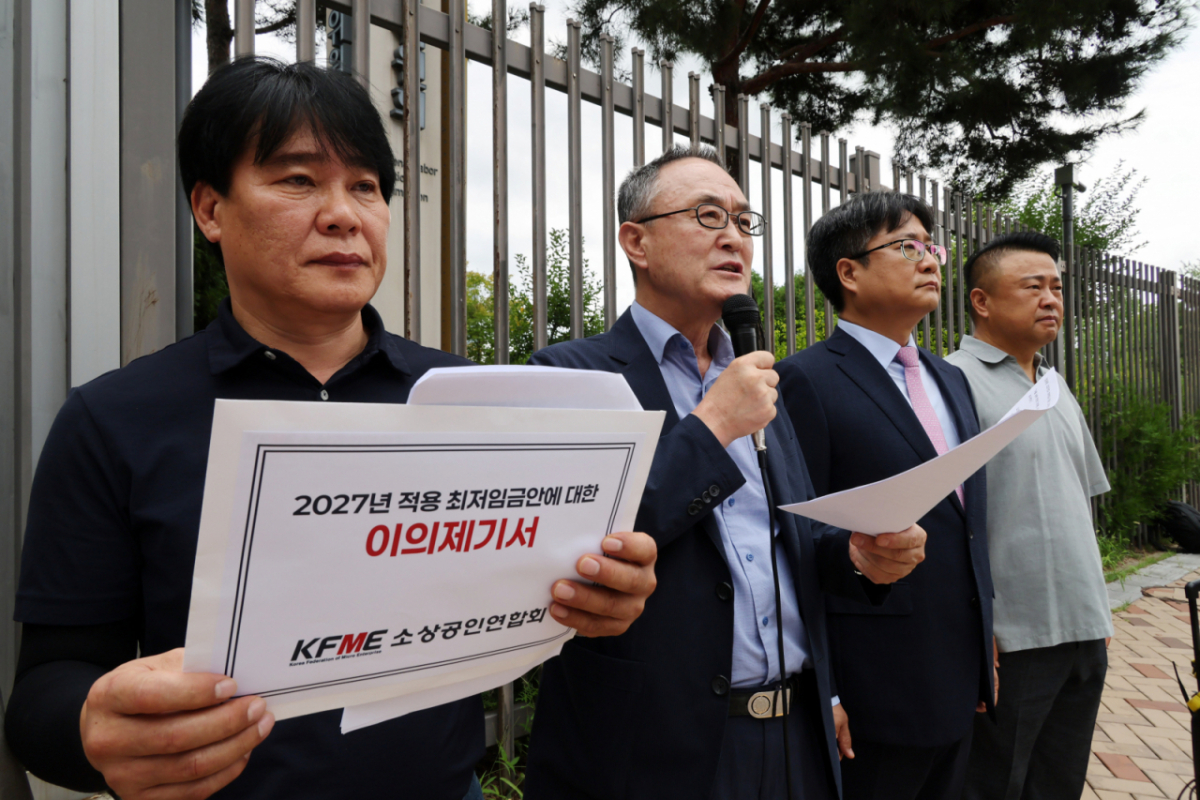
Both labor and management sides rejected the Minimum Wage Commission's decision and filed objections with the Ministry of Employment and Labor. The Small Business Federation, representing employers, requested a retrial, arguing that the minimum wage hike has further worsened small businesses' ability to pay. In contrast, the Korean Confederation of Trade Unions (KCTU) submitted an objection document, asserting that the minimum wage should also apply to contract-based workers.
However, the Ministry of Employment and Labor rejected both sides' arguments. The ministry explained that it did not accept the objections after comprehensively considering the purpose and provisions of the Minimum Wage Act, as well as the deliberation and decision-making process of the Minimum Wage Commission. On this day, the Small Business Federation filed an administrative lawsuit with the Seoul Administrative Court regarding the ministry's rejection decision.
The sparks of conflict remain. Disagreements between labor and management persist not only over the minimum wage increase rate but also regarding the scope and method of application.
The business sector is advocating for the introduction of industry-specific minimum wages to allow more flexible rates for industries facing difficulties, taking into account small and medium-sized enterprises (SMEs) and small businesses. On the other hand, the labor side maintains that the minimum wage should be extended to cover contract-based workers. Although discussions were held at this year's Minimum Wage Commission regarding the scope and target groups for next year's minimum wage, both proposals failed due to a lack of agreement between labor and management.
Conflicts over the minimum wage are expected to continue. Next year, the Minimum Wage Commission is likely to see labor and management sides engaging in similar disputes over the same agenda as this year.
As labor-management conflicts persist, the government has also taken action. The Ministry of Employment and Labor recently commissioned a research study titled "Plan for Introducing a Minimum Compensation System for New Forms of Employment" to consider expanding the scope of minimum wage application. Given that various forms of employment are emerging due to structural changes in the labor market, the ministry views the expansion of minimum wage coverage as a key issue and has begun reviewing related matters.
Through this research study, the Ministry of Employment and Labor plans to comprehensively consider factors such as: △plans for introducing and implementing a minimum compensation system for new forms of employment; △setting the scope of applicable targets; △market impact; and △compensation calculation standards that take into account compensation systems.
The ministry stated, "As new forms of employment such as special-type workers, platform workers, and freelancers continue to spread, the current legal framework has limitations and blind spots in protecting these workers." It added, "Research is needed to establish a protection system that can guarantee a certain level of compensation in line with reality."

 in ECONOMY

