

With the government deciding to ease the self-capital ratio regulations on project financing (PF) to expand housing supply, the financial sector is expected to have greater capacity for lending. Originally, there were few viable projects that would fall under the regulations scheduled to take effect next year. However, some analyses suggest that PF loan execution is unlikely to surge sharply, as the government plans to maintain a conservative review stance on project viability.
According to the 'Financial Comprehensive Measures for Stabilizing the Real Estate Market' announced by the government on the 13th, the implementation of PF self-capital ratio regulations for residential projects will be delayed from 2027 to 2029. Authorities had originally planned to apply a minimum self-capital contribution ratio of 5% starting next year and raise it to 20% by 2030 to strengthen PF soundness.
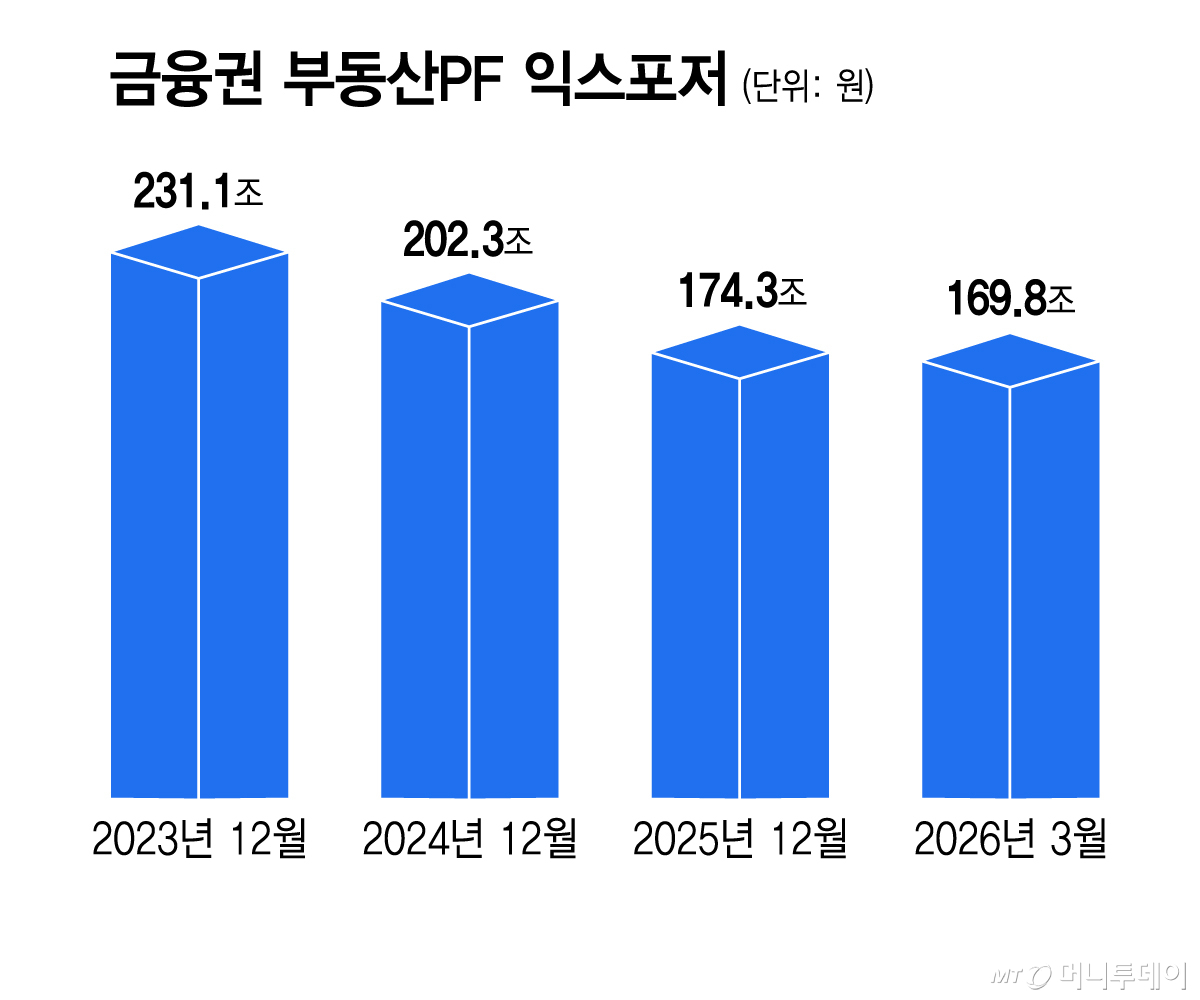
The financial authorities eased the regulations after focusing on resolving distressed PF projects for some time following the Legoland incident, shifting focus now toward activating liquidity supply for viable projects. The scale of financial sector PF exposure stood at 169.8 trillion won as of the end of March this year, down 26% from 231.1 trillion won at the end of December 2023.
Banks, which had previously been hesitant to participate in residential-type PF projects, now expect increased lending capacity due to this regulatory easing. This is because it was difficult to find PF projects that would meet the regulations scheduled for implementation next year. A senior official at a major commercial bank stated, "As the overall pool of PF deals has shrunk, we could effectively consider our second-half sales efforts concluded despite setting annual targets," adding, "With regulatory easing, banks will have more viable deals to handle."
Another official from a commercial bank also remarked, "The capacity for investing in residential project PF is expected to expand," while noting, "Since other variables such as location, pre-sales rate, and LTV are involved, we need to wait and see how much the capacity will actually increase."
Concerns about soundness are also emerging. Some view that PF loan supply is unlikely to rise sharply due to the continued conservative review stance and the burden of potential project instability. A financial sector official said, "While the scope for consideration may widen if self-capital burdens are low and project viability is strong, many distressed cases still exist, raising questions about how much risk banks are willing to take."
In response to these concerns, Shin Jin-chang, secretary-general of the Financial Services Commission, stated, "I believe that temporarily suspending the self-capital ratio regulations should not become an additional factor for distress," while explaining, "Given the current situation where housing supply acceleration is urgent and soundness burdens are relatively lower, a temporary suspension has been implemented."

 in FINANCE
