

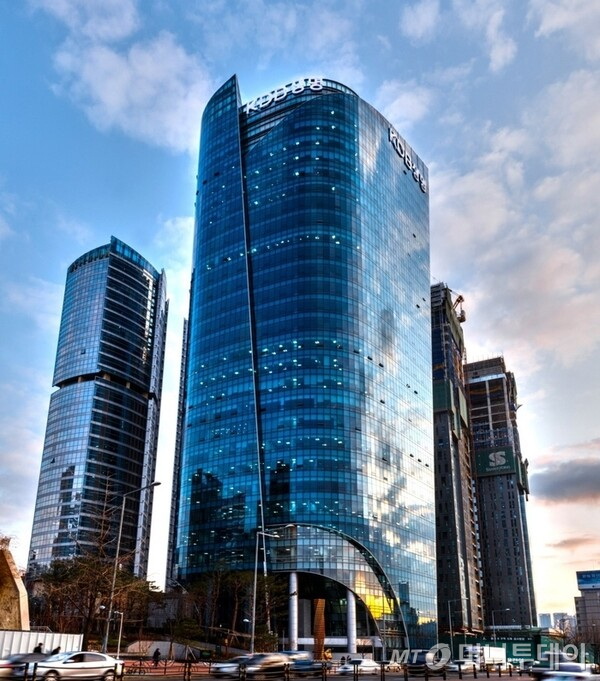
Korea Development Bank’s “Achilles’ heel,” KDB Life, is increasingly likely to find a new owner after its seventh attempt.
According to the financial sector on the 13th, Korea Development Bank and lead underwriter Samil PwC have selected Hanwha Financial Group as the preferred buyer for KDB Life. If Hanwha Financial Group succeeds in acquiring KDB Life—having explored insurance company acquisitions to expand into new business areas—it will extend its existing portfolio of securities, asset management, savings banks, and capital companies to include insurance operations.
On the 7th, three bidders participated in the formal sale auction: Hanwha Life, Hana Financial Group, and Hanwha Financial Group. After intense competition until the final moment, Hanwha Financial Group emerged as the frontrunner. The assets for sale consist of 116.32 million ordinary shares of KDB Life (approximately 99.75% stake) held by Korea Development Bank. It is reported that Hanwha Financial Group plans to inject about 1 trillion won in capital following the acquisition.
KDB Life first launched a sale attempt in 2014. A successful sale would mark the first time in 12 years. KDB Life’s predecessor was Kumho Life Insurance. When Kumho Asiana Airlines Group faced a liquidity crisis, Samsung Asset Management took over management control in 2010. Sale attempts conducted twice in 2014 and once in 2016 failed to even generate valid competition.
In 2020, JC Partners attempted an acquisition but could not secure regulatory approval from financial authorities due to concerns over the major shareholder’s eligibility. In 2023, Hana Financial Group was selected as the preferred buyer but abandoned the deal after due diligence, citing additional capital burdens and other reasons. The sixth attempt in 2024 saw MBK Partners participate alone but ultimately failed to reach a conclusion.
It is estimated that Samsung Asset Management has invested nearly 2 trillion won into KDB Life through multiple acquisition attempts and rights offerings (paid-in capital increases). Last year, it also carried out a rights offering worth approximately 500 billion won. As of the end of the first quarter this year, KDB Life’s solvency margin ratio (K-ICS) stood at just 74.5% before applying transitional measures. The amount of capital required after acquisition, rather than the purchase price itself, has been the biggest obstacle to the sale.
Following the selection of the preferred buyer, additional due diligence, negotiations on pricing and capital injection conditions, signing of the share purchase agreement, and regulatory review of major shareholder eligibility remain.

 in FINANCE
