

[For more diverse corporate information on the startups mentioned in this article, please visit the Unicorn Factory big data platform 'Data Lab'.]
As the use of AI (artificial intelligence) spreads rapidly, the market for cooling devices designed to solve heat issues in data centers is also growing steeply. For data center companies, cooling efficiency serves as a key factor that determines not only the price competitiveness of their services but also how stably they can mount high-performance AI semiconductors. Consequently, industry observers even say that cooling technology capability is now a benchmark for gauging a data center's overall technological prowess.
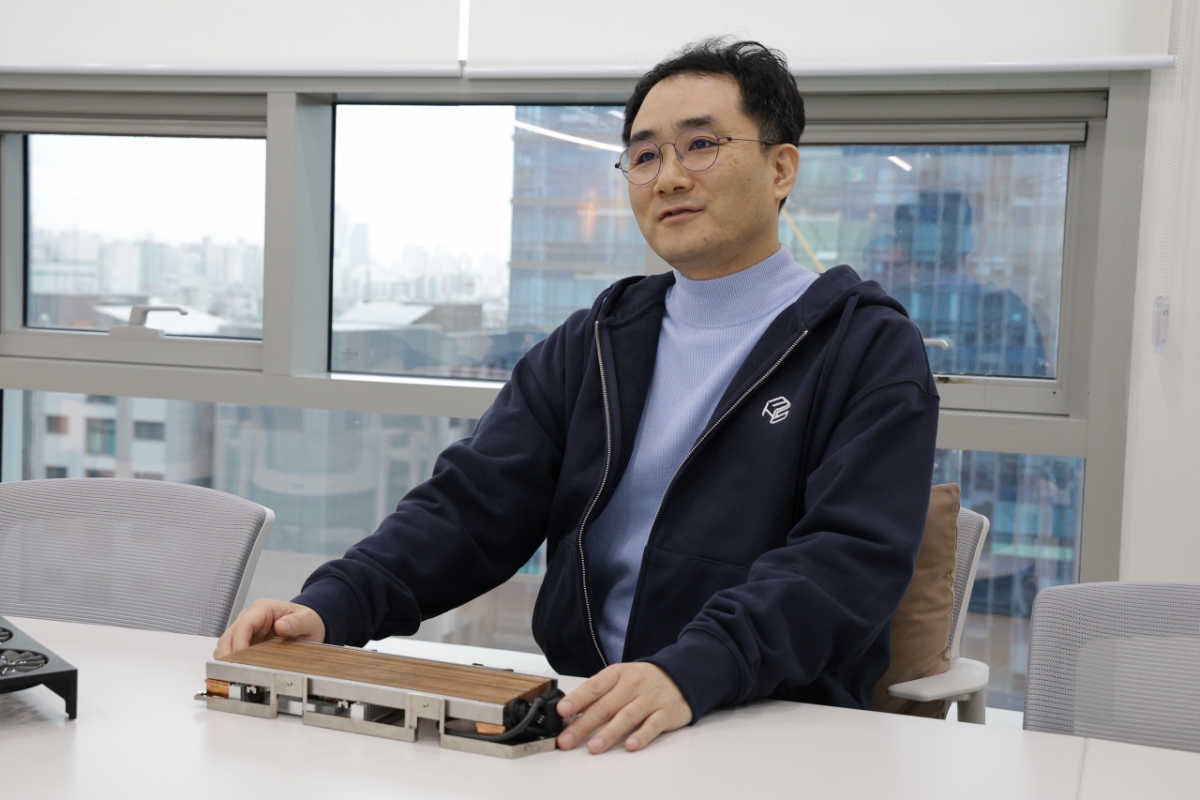
This trend is equally evident in the semiconductor industry, which supplies AI chips to data centers. If a semiconductor generates significantly more heat than its competitors, it becomes difficult to secure orders from data center operators. In response, semiconductor companies are optimizing designs and equipping their products with optimal cooling systems tailored to semiconductor characteristics, covering everything from substrates (PCBs) to server structures to reduce heat generation. Startup MHS (M&E__NAME_0__) is developing 'MACS', a liquid-cooling device targeted at such semiconductor firms. Its distinctive feature lies in miniaturizing the diameter of the pipes (channels) through which coolant flows down to the micrometer (㎛·0.001mm) level while maximizing the number of channels. This approach dramatically expands the contact surface area between the coolant and the semiconductor, thereby maximizing cooling efficiency.
Maximizing Coolant Contact Surface... Even Nvidia Says "Let's Test It"
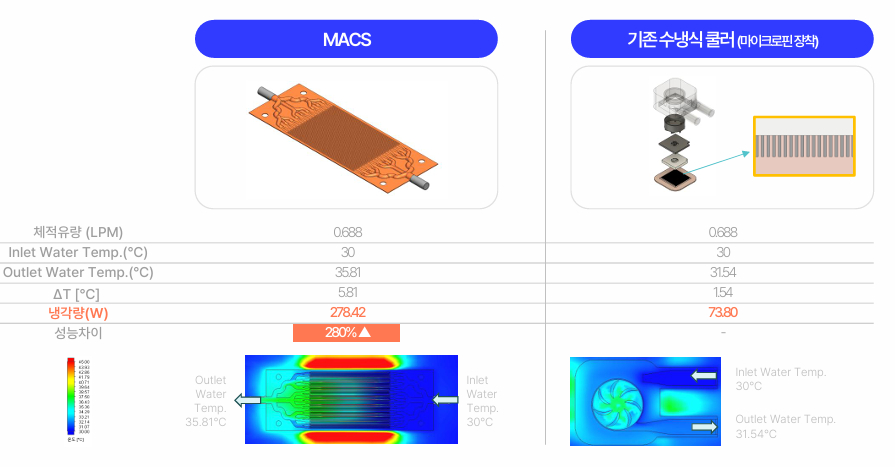
"The principle behind MACS is similar to boiling water faster by dividing it into hundreds of teaspoons rather than heating a single pot," said Im Jong-soo, M&ELee Chi-e-seu (CEO), explaining that "thanks to the expanded surface area where coolant makes contact, cooling efficiency is up to 280% higher than existing liquid-cooling devices."
While conceptually simple, actual implementation proved challenging. Water possesses viscosity, so simply narrowing channel diameters would prevent proper coolant flow. Lim (CEO) stated, "Reducing the diameter is a highly demanding technology. We applied hydrophilic surface treatment inside the channels and leveraged capillary action to ensure stable coolant flow even in narrow passages." This ultra-thin channel structure has become an advantage not only for cooling efficiency but also for product compatibility. The cooling device can be implemented as a thin heat sink, allowing it to be integrated directly with PCB cards. As a result, it can be attached directly to standard PCIe slots without requiring additional components.
This technology first moved domestic AI semiconductor fabless companies. Following Rebellion and Furiosa AI, HyperXcel and Lim (CEO)Mobilint recently signed contracts to use MACS in their next-generation products. Furthermore, since last year, Nvidia has been conducting a PoC (Proof of Concept) to apply MACS to its top-tier product line, 'Blackwell'. Lim (CEO) remarked, "As the recognition spreads that mounting MHS's cooling device directly translates into semiconductor competitiveness, love calls from the semiconductor industry continue."
"A Decade of Technology Advancement Since Founding... Meanwhile, 'The Market' Opened Up"
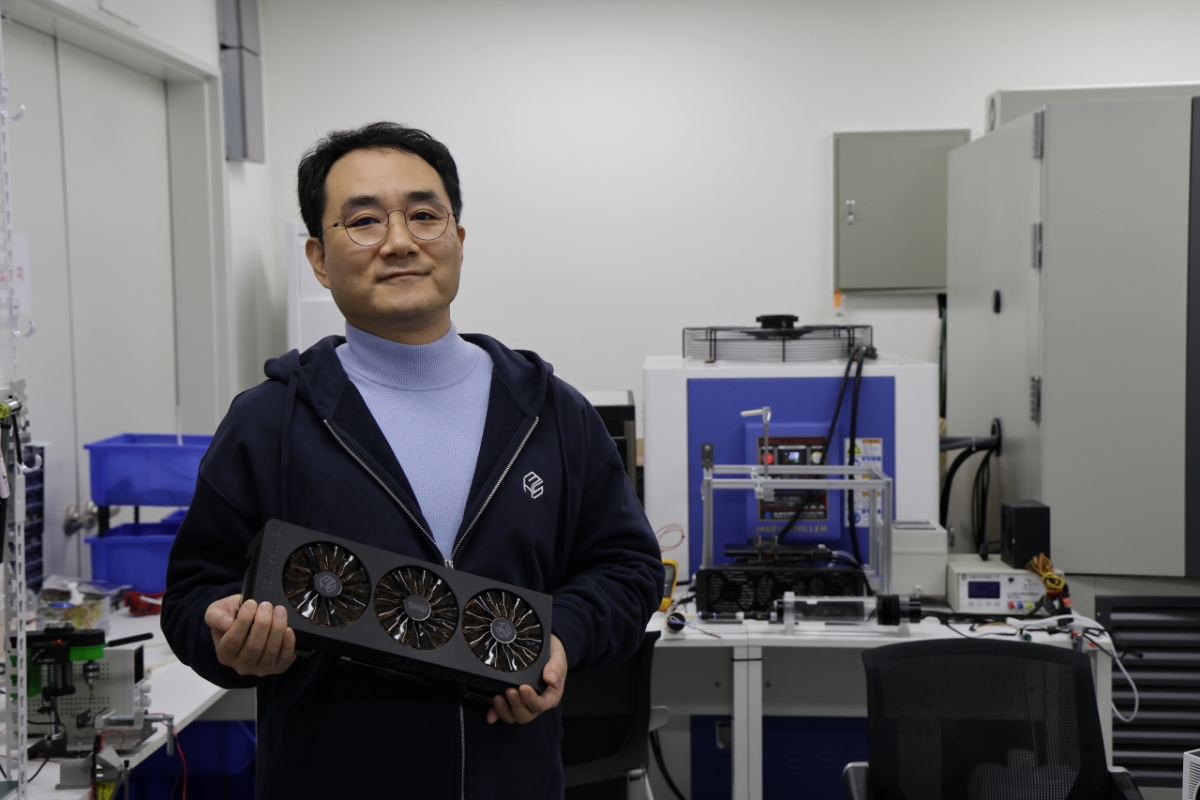
Lim (CEO) is an engineer who previously researched CFD (Computational Fluid Dynamics) at the engineering firm Siemens. CFD is a technology that analyzes and predicts fluid flow and heat transfer of substances like air and water through simulation. Drawing on this research experience, Lim (CEO) conceived the concept of MACS, which extremely subdivides channels for coolant flow, and launched the company to commercialize it.
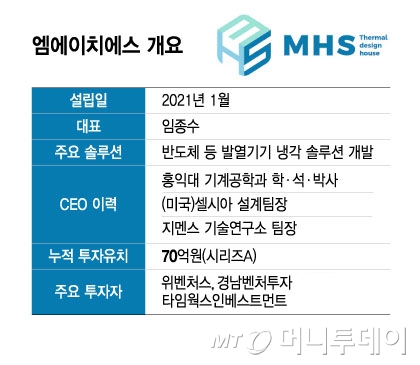
However, the path after founding was not smooth. While MACS was theoretically feasible, implementing it as a real product and scaling up to Yangsan presented another major hurdle. It took over 10 years just to reach the Yangsan stage. Only in recent years, as industries requiring high-efficiency cooling such as data centers and electric vehicles grew rapidly, did results begin to emerge steadily. As venture capital (VC) firms also started showing interest, MHS secured external investment for the first time last year, raising 70 billion won.
MHS is now eyeing the electric vehicle market as its next growth area after semiconductors. Cooling is essential in EVs to maintain performance and prevent battery thermal runaway in components such as motors, inverters, and converters. The company has recently begun collaborating with Company A, which develops key EV components. MHS aims to achieve over 100 billion won in sales this year through business expansion in both the semiconductor and electric vehicle sectors.
"Our goal is to provide cooling solutions wherever heat is generated," said Lim (CEO), adding, "We will ensure that the MACS method becomes a new global standard across all industries."
[MoneyToday Startup Media Platform Unicorn Factory]

 in FUTURE


