

[For more diverse corporate information on the startups mentioned in this article, please visit the Unicorn Factory big data platform 'Data Lab'.]
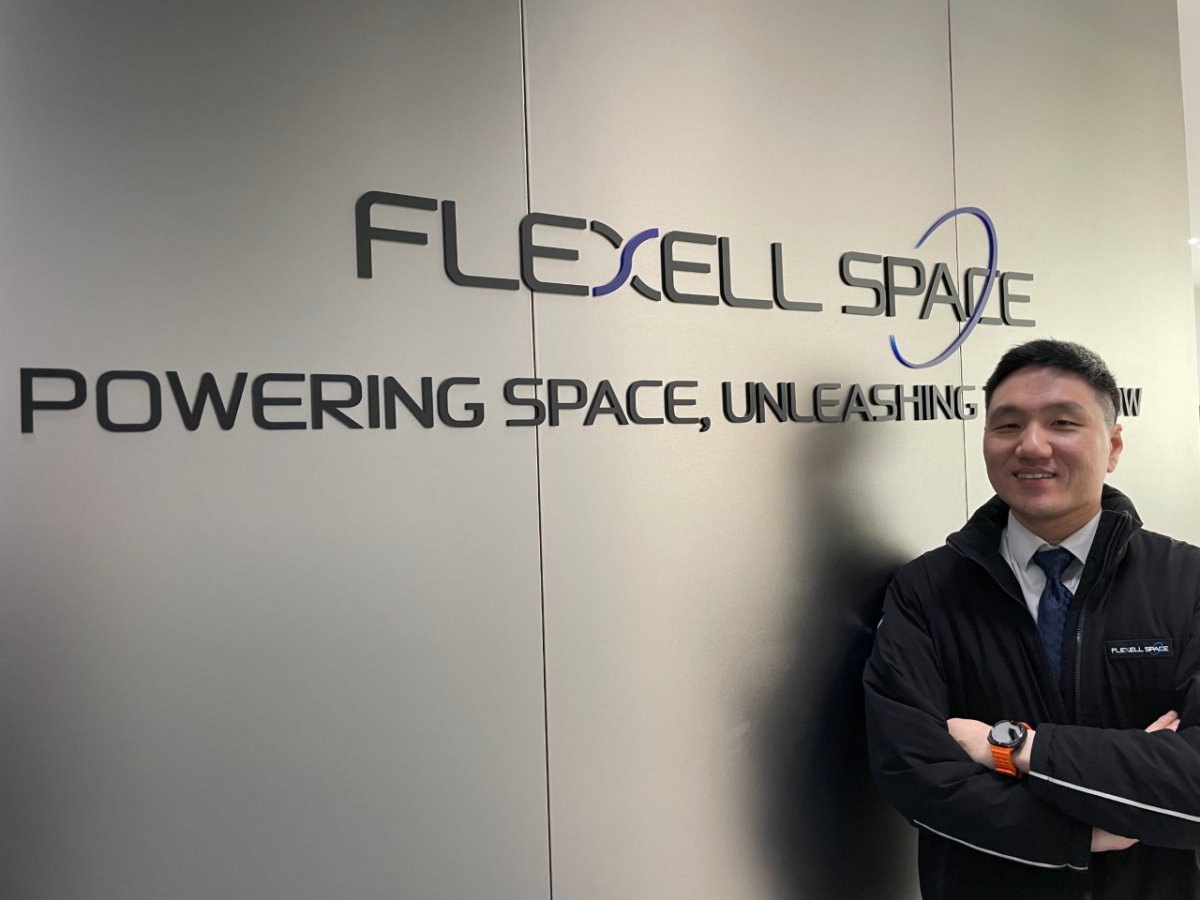
As the privately led "New Space" era fully unfolds, demand for satellite manufacturing is surging. However, the high cost and supply shortages of space-grade solar cells are identified as obstacles to industry growth. Flexcell Space, which started as an internal venture of Hanwha Systems before spinning off, has embarked on solving these issues by applying its proprietary photovoltaic technology to the space environment.
An Tae-hoon, CEO of Flexcell Space, confirmed a common "pain point" among global satellite manufacturers while in charge of space business development and low-earth orbit satellite communication projects during his tenure at Hanwha Systems. The core problem faced by overseas manufacturers such as OneWeb was the "high unit price" and "supply delays" of existing space-grade solar cells.
An (CEO) stated, "It is no exaggeration to say that solar cells account for the longest lead time in satellite projects," adding, "With so many companies entering the market, existing supply of space-grade solar cells cannot keep up with demand, forcing customers to wait at least a year or more."
Solving Satellite Solar Cell Bottlenecks with New Materials and Technologies
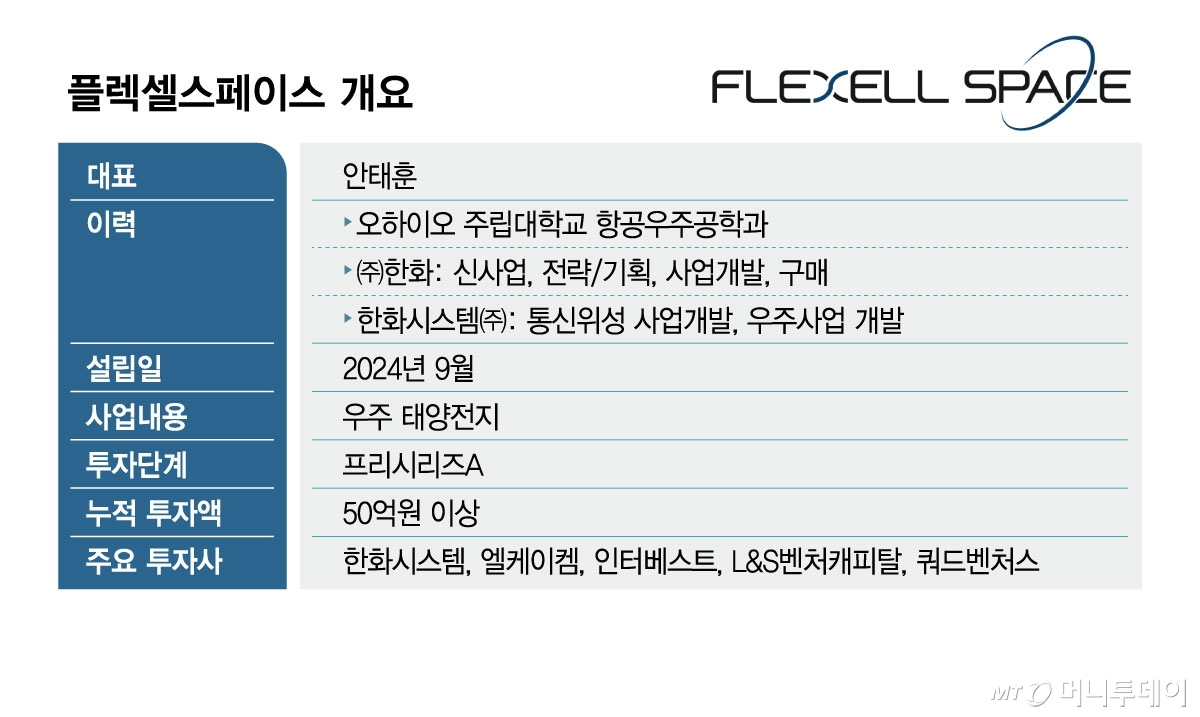
An (CEO) identified the root cause of these issues in the manufacturing methods of existing space-grade solar cells. Currently, space-grade solar cells primarily use high-efficiency cells based on gallium arsenide (GaAs). The production process is complex, and the number of manufacturers capable of producing them is limited, resulting in high prices and constraints on increasing supply volumes. Flexcell Space began researching and validating space-specialized materials through its internal venture starting in 2023. Subsequently, it spun off as an independent corporation while maintaining Hanwha Systems' equity investment to launch full-scale commercialization.
Flexcell Space's core weapon is "tandem" solar cells that maximize efficiency by stacking two types of materials layer by layer. Instead of using expensive materials (gallium arsenide) typically used in existing space-grade solar cells, the company significantly reduced costs by installing relatively cheaper copper-based materials (CIGS) at the bottom layer (lower cell). Additionally, it placed "perovskite," a material recognized as next-generation high-efficiency solar cell technology, on the top layer (upper cell) to secure power generation performance required in space.
Notably, while global competitors such as Swift Solar in the U.S. use organic-based perovskite with high efficiency but vulnerability to temperature changes, Flexcell Space differentiated itself by adopting "inorganic perovskite" from the outset to withstand extreme temperatures and radiation in space. Furthermore, the company developed solar cells that can be rolled like a roll, reducing volume and enabling application across various use cases.
Targeting IPO in 2028… "To Become a Space-Based Solar Power Service Company"
Flexcell Space has established a 5-megawatt pilot line for space-grade solar cell production in Uiwang, Gyeonggi Province. It is the first in Korea to introduce a space-grade solar simulator to independently verify efficiency under space-level environments and has already passed all essential tests for space conditions: temperature, radiation, and high-vacuum testing. The company has also completed testing and delivery for satellitesed on Nuri (Korea's Space Launch Vehicle) and plans to conduct verification by launching solar cells onto a private space station in November this year. Next year, it intends to conduct tests even in geostationary orbit environments at altitudes of approximately 32,000 kilometers. Following this, the company aims to pursue M&A (mergers and acquisitions) and establish overseas factories through investment fundraising.
Flexcell Space targets a full-scale Yangsan operation in the second half of 2027, with an initial public offering (IPO) goal for 2028. Flexcell Space's ultimate vision is to evolve beyond a mere cell manufacturer into a "space-based solar power service company." This includes providing power supply for space data centers with a capacity of 600 gigawatts (GW), as mentioned by Elon Musk, and growing into a core pillar of space energy infrastructure that delivers energy generated in space to Earth and other planets. An (CEO) remarked, "Once space data centers fully develop, an enormous amount of solar cells will need to be deployed," adding, "Our long-term goal is to leapfrog as a provider of space-based energy supply services."
[MoneyToday startup media platform Unicorn Factory]

 in FUTURE

