

[For more diverse company information on the startups mentioned in this article, please visit Unicorn Factory's big data platform 'Data Lab'.]

"Through our recently launched 'Ringdoc Atlas', we help doctors learn the latest surgical techniques without attending conferences and support their pre-surgical decision-making. We aim to go beyond assisting patients with rehabilitation exercises and become the first service that doctors turn to."
Lee Sung-min, CEO of IT-Pi, recently met with MoneyToday's startup media platform 'Unicorn Factory' and stated, "While there are many services providing rehabilitation exercises for patients, platforms that enhance the expertise of medical staff are rare."
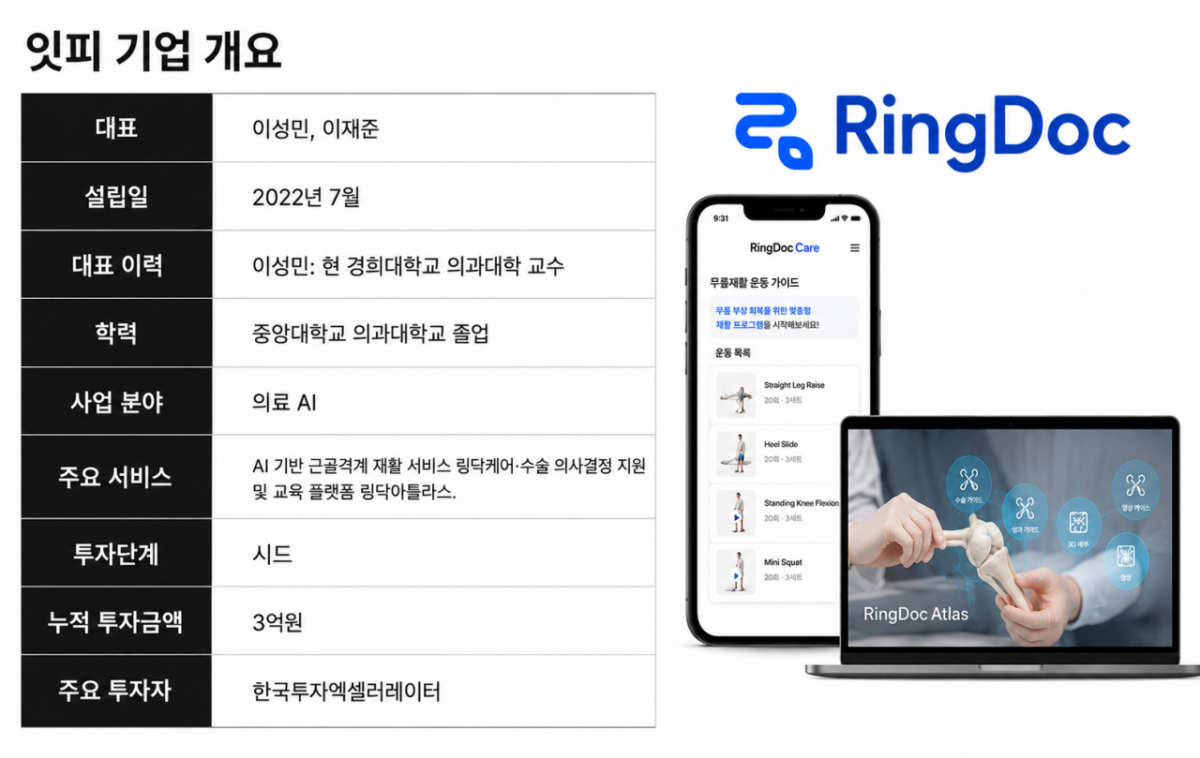
Founded in 2022, IT-Pi operates the AI-based musculoskeletal rehabilitation platform 'Ringdoc'. It supports everything from pre-surgical decision-making to post-surgical rehabilitation management through its doctor-only platform 'Ringdoc Atlas', 'Ringdoc Motion' which analyzes patient movements, and 'Ringdoc Care' where medical staff prescribe customized exercises. Its key feature is supporting not only patient rehabilitation management but also medical staff education and clinical decision-making.
New challenges born from limitations in patient management
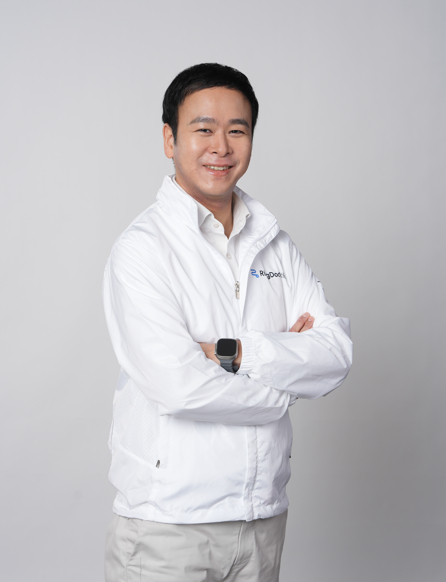
The beginning started with patients. Jeong Hyeong-oe-gwa (Prof.) and Lee (CEO) had always felt frustrated that there was no way to verify whether patients were properly performing prescribed exercises after leaving the hospital. He said, "If rehabilitation exercises are not done correctly, recovery periods can extend up to 1-2 years, yet medical staff cannot even know if patients performed exercises correctly at home." He added, "My decision to start a company came from the desire to manage my patients until the very end."
The service born from this is 'Ringdoc Care'. Patients perform prescribed exercises via a mobile app, and medical staff check performance records to manage rehabilitation progress. Currently, about 30 hospitals have adopted the service, with cumulative exercise prescriptions exceeding 6,000 cases. Notably, it was designed so that even elderly users can easily use it, as they make up the largest proportion of users among those in their 60s.
However, while operating the service, the company's direction changed. It was judged that creating differentiation in the medical field with only a rehabilitation platform for patients would be difficult. Since medical staff are the ones who prescribe rehabilitation exercises to patients, it was concluded that the platform could only spread if it became a service that doctors sought first. Accordingly, IT-Pi expanded its business scope by launching 'Ringdoc Atlas', a doctor-only platform, last May.
"We couldn't just look at patients"... evolving into a doctor platform
Until now, clinical application of AI in the musculoskeletal field has progressed relatively slowly compared to other medical fields. Existing AI solutions focused on analyzing specific images such as X-rays or MRIs (magnetic resonance imaging), leading to criticism that they did not fully reflect the characteristics of musculoskeletal diagnosis, which requires comprehensively considering patient conditions including symptoms, functional assessments, and treatment progress.
IT-Pi is addressing these limitations through 'Ringdoc Atlas'. Medical staff can learn the latest surgical techniques without attending conferences and select specific segments of the latest surgical videos from domestic and international specialists for learning. Additionally, by inputting a specific patient's conditions, it proposes possible surgical strategies and options based on actual surgical outcome data from similar patients, supporting medical staff in clinical decision-making.
For example, when a new patient visits the hospital, past similar cases are analyzed to present to medical staff the likelihood of complications for specific surgical methods and average recovery periods. This approach provides multiple surgical strategies together, helping medical staff establish the optimal treatment plan suited to the patient's condition.
In particular, the founder's on-site experience as an orthopedic specialist and their network with medical staff are cited as IT-Pi's strengths. Lee Seong-mun, team leader of the Investment Division at Korea Investment Accelerator, which led the seed investment, explained, "There is still a conservative aspect when medical staff introduce new digital solutions in actual practice." He added, "In such markets, strategies that penetrate the field based on medical staff networks are ultimately important."
IT-Pi's most confident asset is data. Having been selected for the Ministry of Health and Welfare's medical AI data utilization voucher support project, it has laid the groundwork to secure clinical data from major medical institutions including Seoul Asan Hospital, Samsung Seoul Hospital, and Severance Hospital. Based on this, utilizing the built-up clinical data to support medical staff in clinical decision-making is IT-Pi's core competitiveness.
IT-Pi plans to pursue a pre-Series A investment round based on this and accelerate its entry into the global market. It has recently completed joint research with medical institutional investors in the United States and India. In the U.S., where medical accessibility is relatively low, the remote rehabilitation service 'Ringdoc Care' has attracted attention, while in Southeast Asia and India, interest in the doctor-only platform 'Ringdoc Atlas' has been high.
Lee (CEO) stated, "With population aging and an increase in sports activity participants, the musculoskeletal treatment and rehabilitation market will continue to grow sustainably." He added, "Although we started with patient management, our goal is to evolve into a platform that supports the entire pre- and post-surgical care process and establish itself as a global standard in the musculoskeletal field."
[MoneyToday startup media platform Unicorn Factory]

 in FUTURE


