

[For more diverse corporate information on the startups mentioned in this article, visit Unicorn Factory's big data platform 'Data Lab'.]

Last year, an estimated 4,526 artificial satellites were launched globally, a 58% increase from the previous year. If this pace continues, projections suggest that by 2030, the number of satellites orbiting Earth will reach 100,000. As satellite numbers surge dramatically, the market for 'space solar cells,' the core power source of satellites, is also experiencing explosive growth.
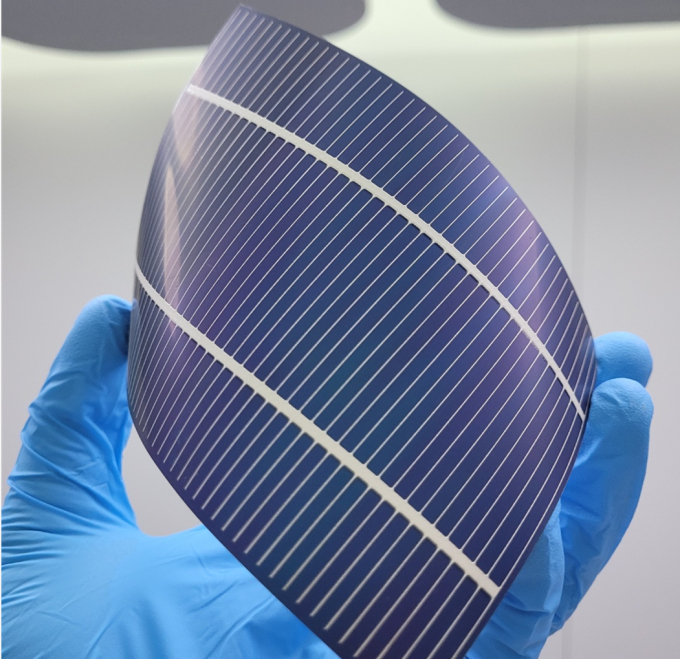
Flexcell Spaceis a startup challenging the market with next-generation space solar cells. Using materials different from existing space solar cells, such as inorganic perovskite and CIGS (copper-indium-gallium-selenium), it has gained attention for producing solar cells that are 30% more efficient and lower in price.
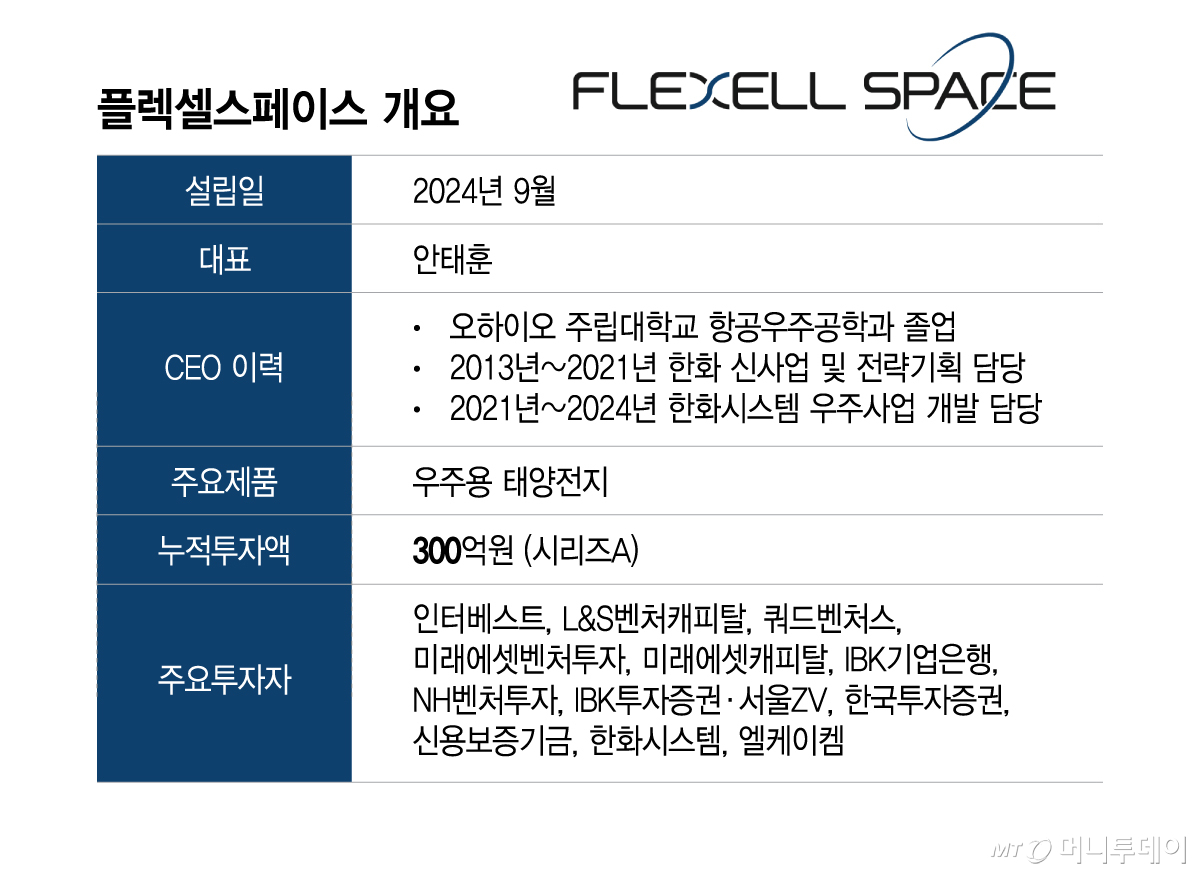
Flexcell Space recently secured a 250 billion won Series A investment to build its Yangsan facility. This round was led by InterVest, with follow-on investments from existing investors L&S Venture Capital and Quad Ventures. New investors included Mirae Asset Venture Investment, Mirae Asset Capital, IBK Industrial Bank of Korea, NH Venture Investment, IBK Investment & Securities·SeoulZV, Korea Investment & Securities, and the Credit Guarantee Fund.
Investors: "Rapidly Growing Market…Unique Technology Offers Opportunity"
Investors focused on the growth trend of the space solar cell market and Flexcell Space's technological capabilities. Lee Chang-seon, Managing Director at Quad Ventures, which has invested in Flexcell Space consecutively, stated, "Not only are satellite numbers increasing, but so is the power consumption per satellite, leading to a surge in demand for solar cells. However, supply cannot keep up, creating severe bottlenecks."
Addressing the supply shortage is difficult in the short term due to the manufacturing methods of existing space solar cells. Currently, space solar cells primarily use high-efficiency cells based on gallium arsenide (GaAs). The complex manufacturing process makes it hard to increase production volume, and the number of companies capable of producing them is limited.
Flexcell Space has changed its approach by using perovskite and CIGS materials instead of gallium arsenide. It employs a 'tandem' structure that places inexpensive CIGS at the bottom and layers high-efficiency perovskite on top. As a result, Flexcell Space's solar cells are over 60% cheaper than existing products while offering 28–30% higher power generation efficiency. Their lightweight design and flexible cells are also key strengths.
Lee Chang-seon noted, "While next-generation satellite solar cells using various materials and designs are being developed, Flexcell Space's products demonstrate superior competitiveness in radiation resistance, heat resistance, and power generation efficiency. The tandem design, which stacks two materials to maximize efficiency, showcases advanced technological capabilities."
A review officer from InterVest, a co-investor, stated, "The solar cell technology utilizing inorganic perovskite suitable for the space environment is unique. Its strength lies in proactively commercializing this technology and achieving results."
"Solid Industrial Network…Rapid Commercialization at Speed"
Domestic research infrastructure is also a positive factor supporting Flexcell Space's technological growth. Lee stated, "South Korea possesses world-class perovskite technology and a robust research ecosystem, creating an environment highly favorable for continuous technological advancement and securing top talent."
Finally, investors highlighted the achievement of 'space heritage'—a key metric for space companies—and its network within the industry as strengths. The InterVest review officer remarked, "The fact that Flexcell Space's solar cells were used in a secondary payload during the fourth Nuri rocket launch has already accumulated space heritage. This is a strength, and further demonstrations are planned, including on the International Space Station (ISS)."
Lee Chang-seon also said, "Flexcell Space began as an internal venture of Hanwha Systems, leveraging its solid global network of space companies built during its time at Hanwha Systems. Based on this, it is conducting pilot tests with global companies such as Airbus and Terran Orbital. Once the Yangsan facility is operational, revenue generation will accelerate rapidly."
[MoneyToday Startup Media Platform Unicorn Factory]

 in FUTURE


