

[For more diverse company information on the startups mentioned in this article, visit the Unicorn Factory Big Data Platform 'Data Lab'.]
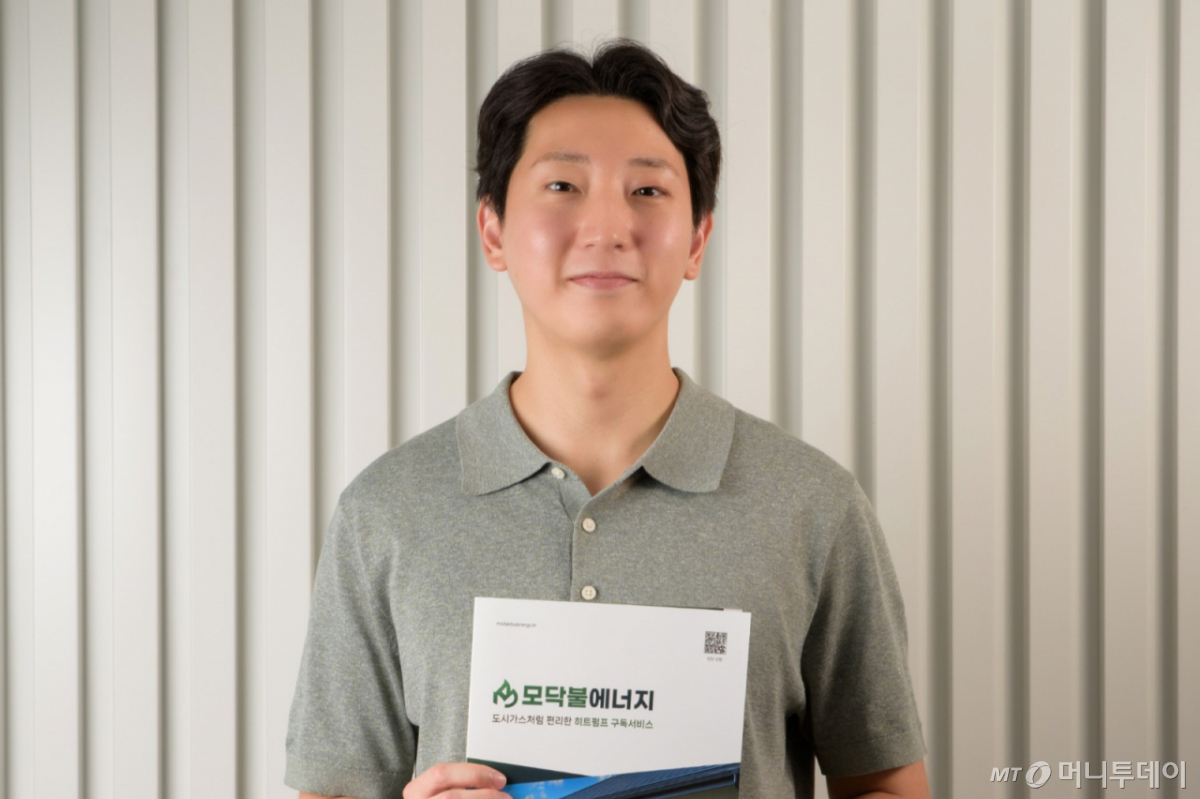
"As I observed the shift toward solar power for energy generation and electric vehicles for transportation, I realized that the last remaining energy domain is 'heat.' In the U.S. and Europe, heat pumps are already replacing gas boilers, so I envisioned a similar transformation in Korea and conceived this business."
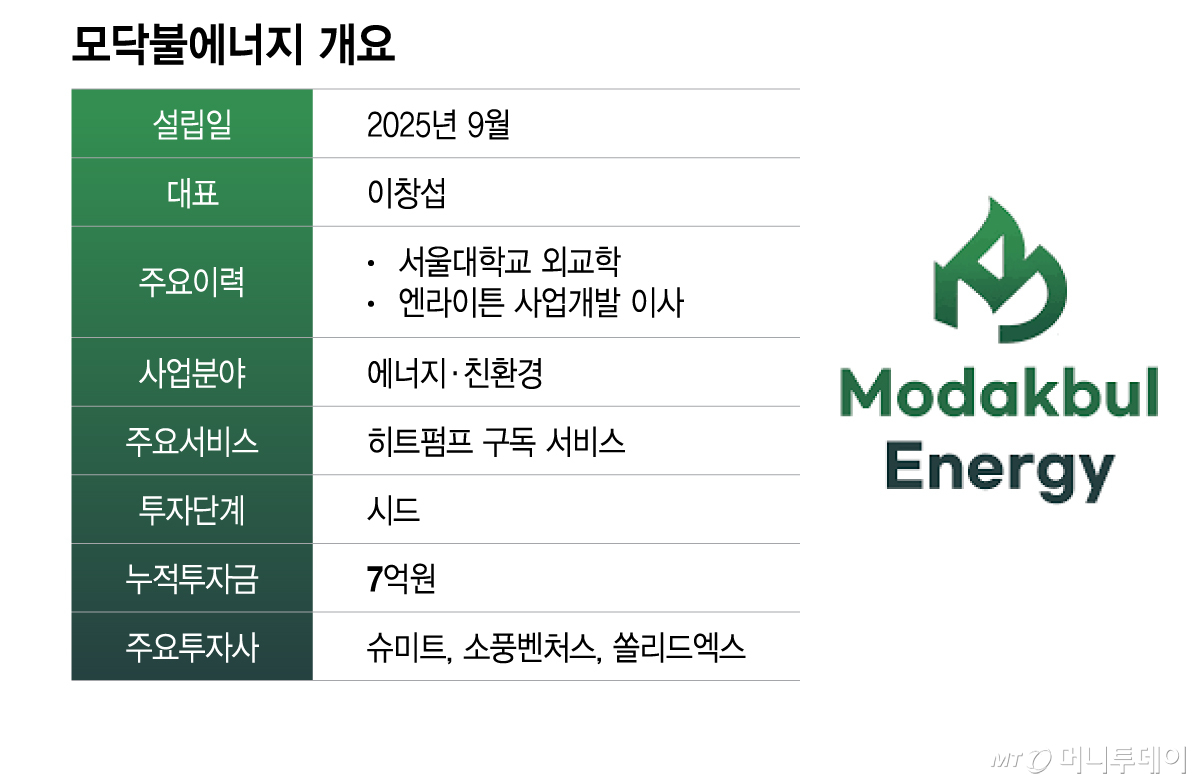
Lee Chang-seop, CEO of Modakbul Energy, spent about nine years at a solar startup before entering the heating sector. He joined Enlighten as one of its founding members, where he was responsible for installing solar facilities and collecting subscription fees. Lee (CEO) conceived the idea of applying the same model to heating and founded Modakbul Energy in September last year. The company's core service is a heat pump heating subscription.
Lee (CEO) stated, "Overseas forecasts suggest that starting next year, more heat pumps than gas boilers may be sold. While there has been policy support in Korea, the high costs and other burdens have made it difficult for individuals to actually adopt them."
Business Model Proven Through Solar Subscription… Combining 'Financing' Capabilities
The principle of a heat pump is similar to that of an air conditioner. Instead of burning fuel to generate heat, it circulates refrigerant to transfer external heat indoors. After removing existing boilers, the heat pump unit in outdoor unit form and a hot water storage tank are connected via piping. However, the high initial installation cost compared to standard household boilers remains a barrier. The installation cost per unit is approximately 10 million won, reaching five to ten times that of conventional boilers.
Lee (CEO) said, "Although the initial installation cost is high, we believe that integrating financing can lower consumer entry barriers since long-term energy cost savings are achievable."
To address this upfront cost burden, Modakbul Energy designed a structure where financial institutions cover the installation costs while users pay monthly subscription fees. Additionally, through guarantees from Seoul Guarantee Insurance, it enhances collection stability, allowing financial institutions to secure AAA-level bond-grade security.
Lee (CEO) explained, "Stable revenue can be generated based on monthly subscription fees, encouraging financial institutions to actively participate in funding installation costs. Thanks to this financial structure, consumers can now adopt heat pumps without the burden of large upfront payments."
The background for designing such a financial structure lies in Lee's experience operating solar subscription businesses at Enlighten. At that time, Lee (CEO) managed fundraising tasks by creating project financing (PF) funds using capital from asset management companies and insurance firms, and structuring factoring arrangements with capital companies and credit card issuers.
For the heat pump business, a strategy was adopted to raise funds step-by-step while considering the characteristics of each financial institution. He noted, "It is difficult to secure investment from asset management companies for a small-scale project with no success stories from the outset. Therefore, we created a structure where capital companies first validate the business viability even at slightly higher interest rates, and once performance data accumulates, larger institutional investors such as asset management firms join in subsequent stages."
Targeting 200 Units This Year → 1,000 Units Next Year
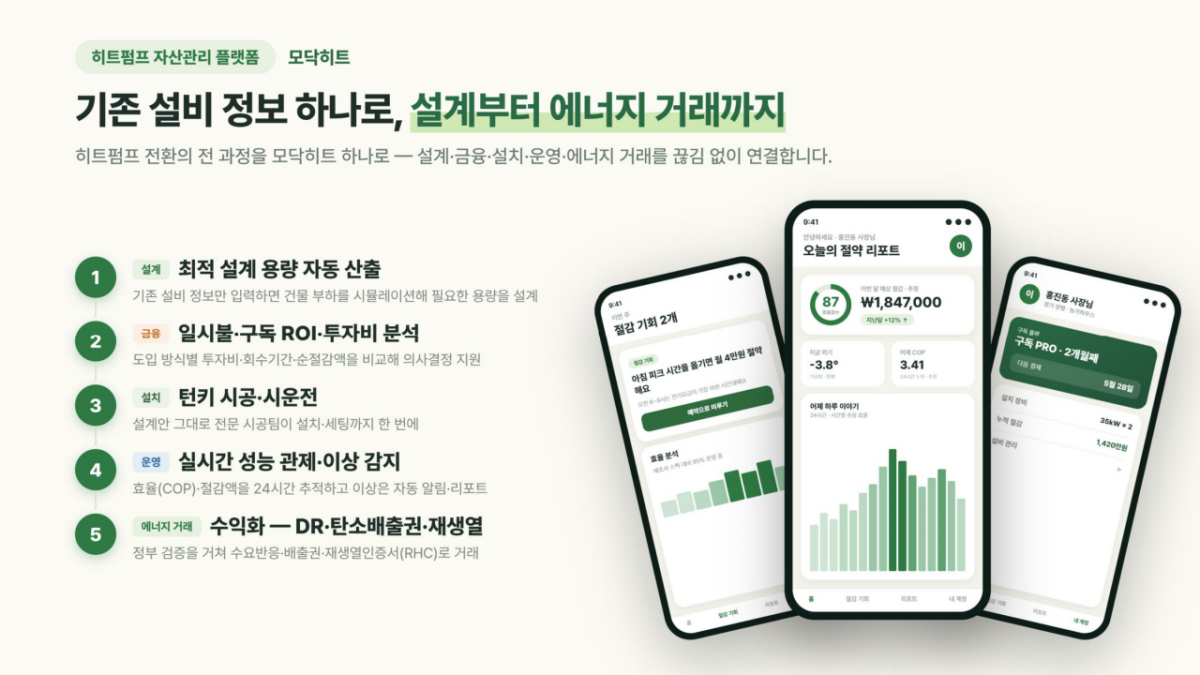
Modakbul Energy's primary revenue sources are construction sales from heat pump installation projects and financial profits generated by securitizing installation costs with financial institutions. In the future, the company plans to generate additional revenue through carbon emission rights and electricity trading based on installed facilities.
Last year, Modakbul Energy secured contracts for approximately 100 heat pump installations. This year, it aims to install 200 units and achieve 2 billion won in sales, with a goal of expanding to 1,000 units next year. Lee (CEO) estimates the potential domestic market for heat pumps at around 5 million households.
Lee (CEO) highlighted, "A key strength is our ability to directly leverage the customer base and construction network built during our solar business. After securing initial references, we plan to rapidly scale up installation volumes."
Modakbul Energy secured a 700 million won seed investment from Schmidt and Soeung Ventures in May and was also selected for TIPS (Technology Investment Program for Startups). This year, it will accumulate operational data in commercial and residential facilities, and next year plans to expand its application scope to industrial sites to attract follow-on investments.
Lee (CEO) identified artificial intelligence (AI) control technology and data as the company's core competitive advantages. Energy savings vary significantly depending on control methods, such as storing hot water during low-rate periods or recovering waste heat.
Lee (CEO) remarked, "The boiler and heating/cooling equipment market remains an industry where on-site experience is crucial. Since few companies handle everything from direct construction to operations, we plan to build our own unique competitiveness."
[MoneyToday startup media platform Unicorn Factory]

 in FUTURE


