

[For more diverse corporate information on startups, visit the Unicorn Factory big data platform 'Data Lab'.]
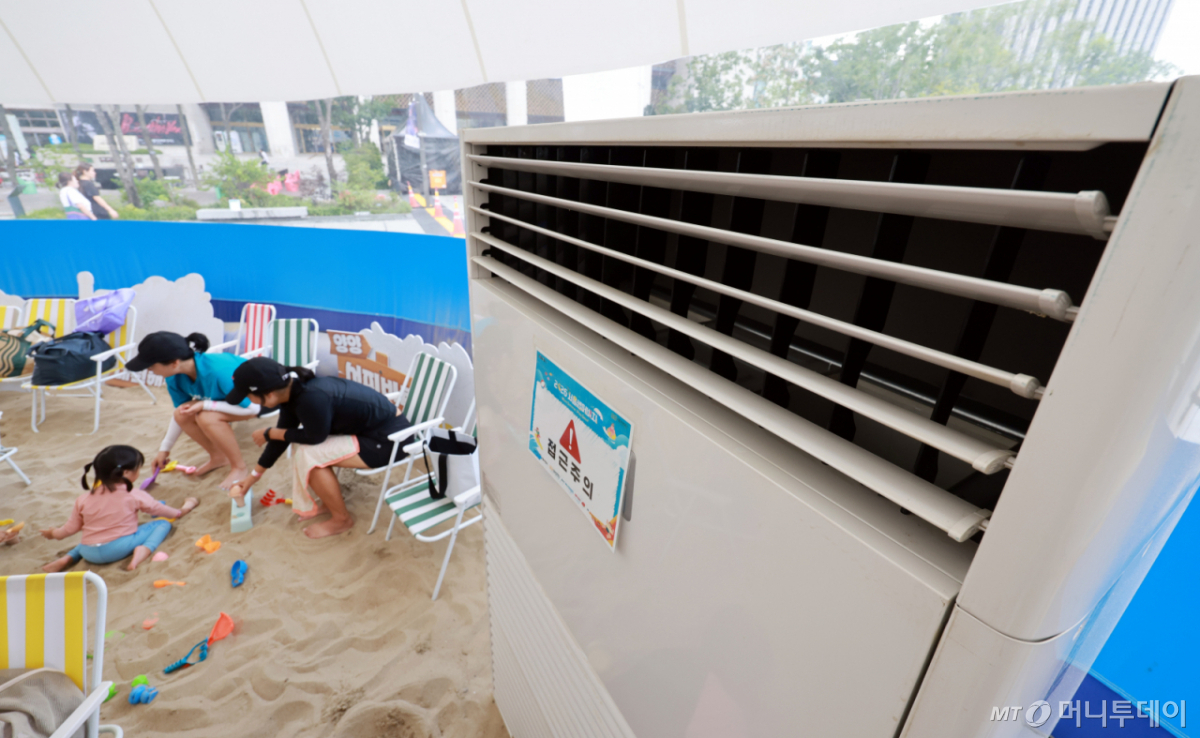
Record-breaking heatwaves that struck in early August pushed power demand close to an all-time high. With the vacation season ending and industrial operations resuming in mid-August, forecasts suggest power demand could even break the previous record. In response, 'VPP' (Virtual Power Plant) startups are gaining attention for their approach of gathering scattered power resources instead of building new power plants. These companies store excess electricity to sell later and convert unused power into revenue. Their technology acts as a buffer to withstand power peaks, drawing both capital and major corporations into the energy tech market simultaneously.
All-Time High Power Demand Approaches
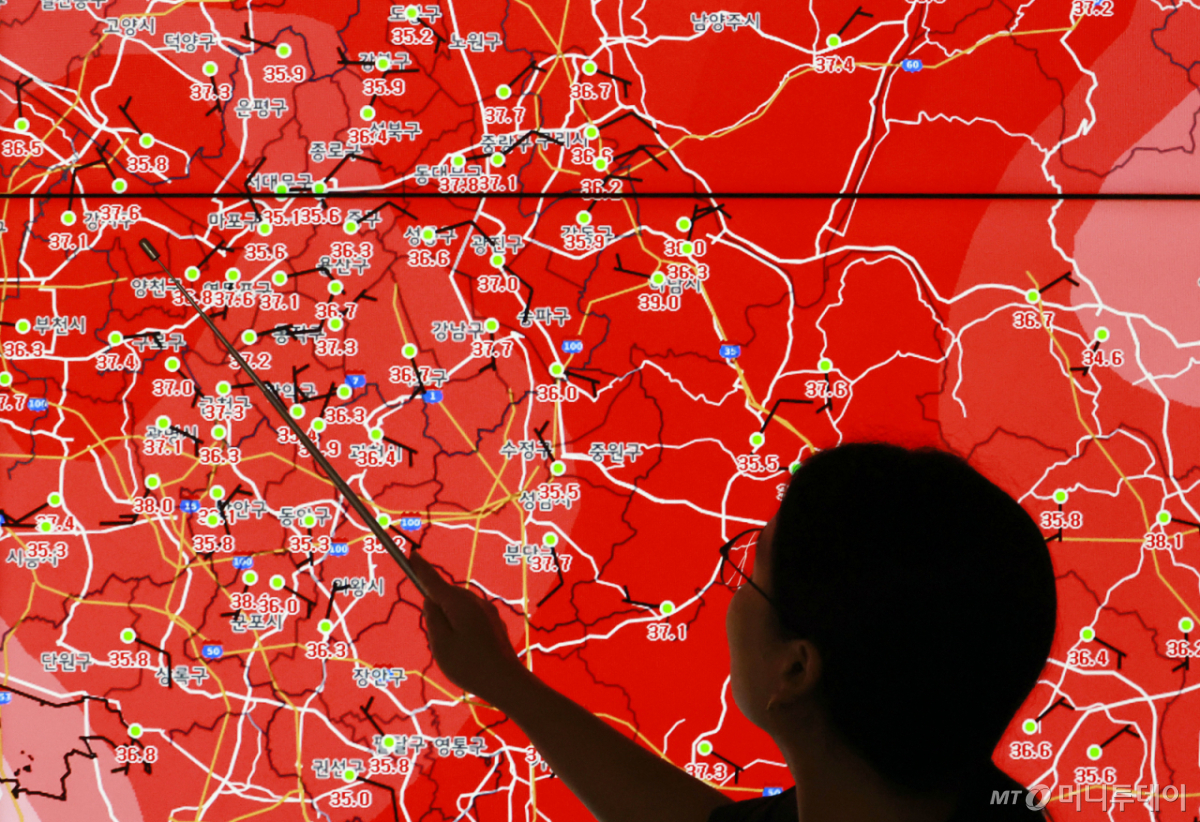
According to the Ministry of Climate, Energy and Environment on the 10th, power demand in the third week of August is expected to reach an all-time high for this summer of 94.1~98.8GW (gigawatts). Observations indicate that if heatwaves persist and cloudy weather reduces solar power generation, demand could rise to the upper limit of 98.8GW. In such a scenario, it would surpass the previous record of 97.1GW set in August 2024.
There are limits to simply generating more power. Building new power plants just to handle peak hours that occur only for a few days a year is inefficient. Consequently, VPPs have emerged as an alternative solution by consolidating scattered solar panels, ESS (Energy Storage Systems), electric vehicle chargers, and even energy-saving capacity in factories and buildings into a single operation resembling a power plant. This amounts to supplying electricity without traditional generators.
Unused Electricity Becomes Profit
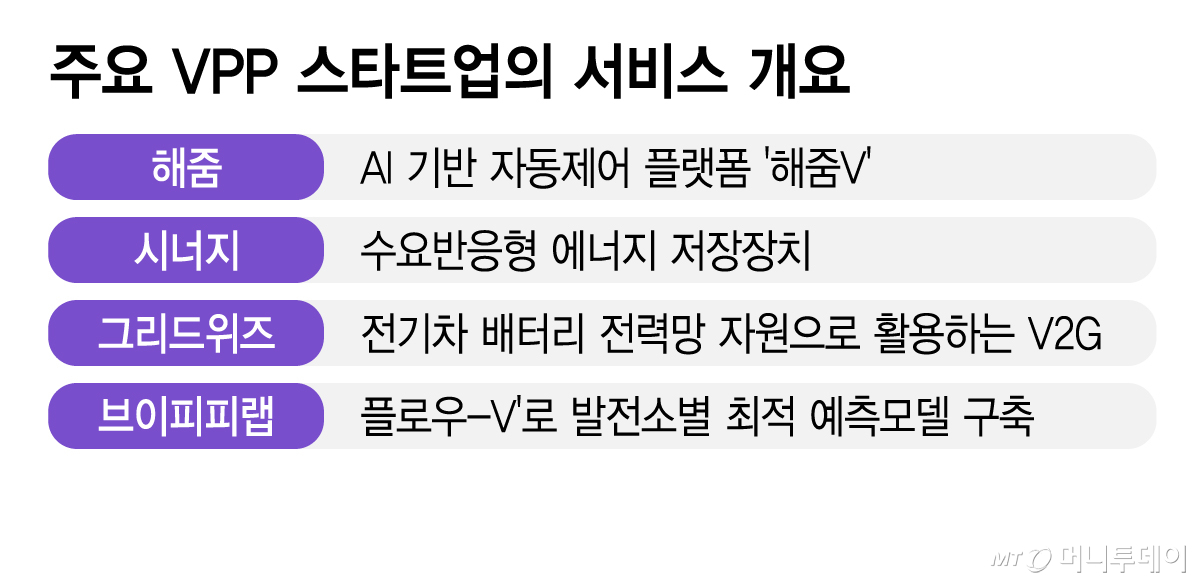
Domestic VPP companies have already proven their technical capabilities through actual performance. 'Haejoom', registered as South Korea's first VPP company in 2019, is currently operating approximately 233MW (megawatts) of resources under the quasi-central dispatch system registration for renewable energy using its AI-based automatic control platform 'HaejoomV'. Quasi-central dispatch is a system that adjusts power generation according to dispatch instructions from the Korea Electric Power Market and receives settlement payments based on performance rates. The core innovation lies in transforming output control, previously viewed only as a source of loss, into a revenue model.
The 'Demand Response' (DR) system, which pays compensation when factories or buildings reduce usage during periods of lowest power supply by treating the saved amount as generated power, also presents business opportunities. Energy tech company Synergy has focused on 'ESS-DR' (Demand Response-type Energy Storage System), generating revenue through electricity price differentials and ESS discharge, securing a Series A investment of 10 billion won in October 2024. GridWise, which became the first energy tech startup to list on the stock market in June 2024, is working to expand V2G (Vehicle to Grid) technology that utilizes electric vehicle batteries as grid resources alongside VPPs.
Renewable Energy Bidding System Expands Market… Major Corporations Join In
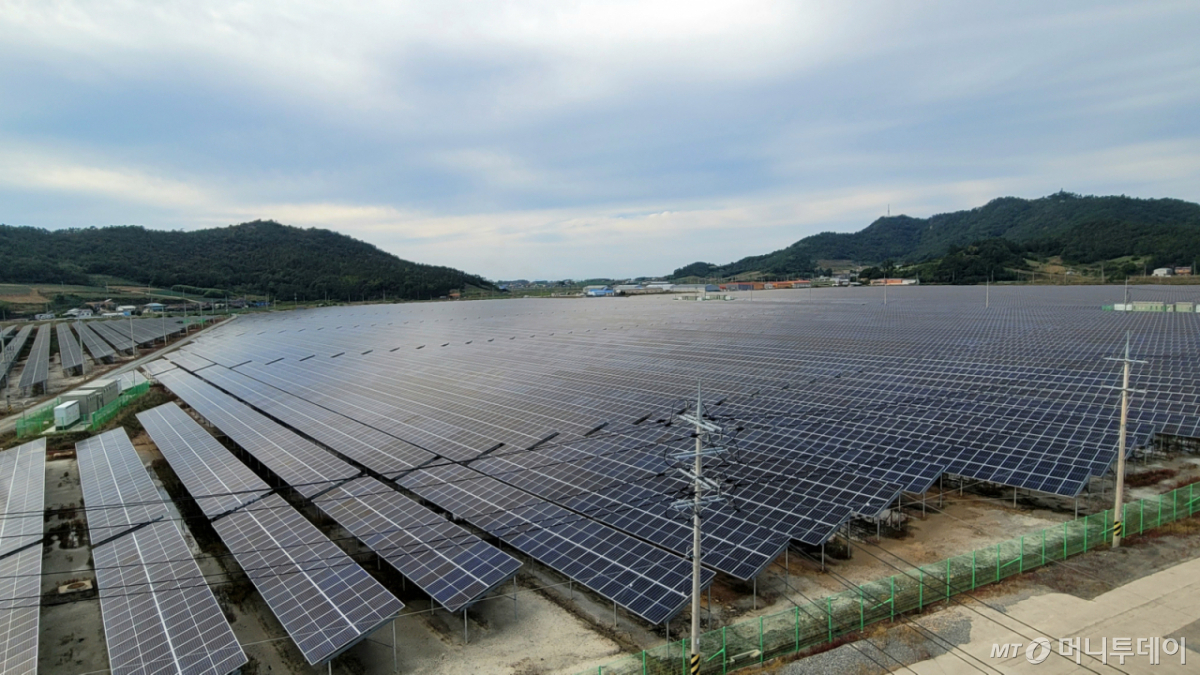
With the implementation of the Special Act on the Promotion of Distributed Energy in 2024 and the introduction of a renewable energy bidding system by the Korea Electric Power Market, a path has opened for solar and wind power exceeding 1MW to bid on generation volume and prices just like conventional generators and receive settlement payments. Operators with installed capacity exceeding 3MW are required to participate. This presents direct business opportunities for VPP operators who bundle scattered small-scale resources and offer them to the market.
The number of players is also increasing. 'VPP Lab' has applied AI to its proprietary platform 'Flow-V' to build optimal prediction models for each power plant and has adopted a strategy combining demand response and V2G resources with VPPs verified in Jeju. 'Energy Dot' merged with energy new business company Inyupsa, securing 120MW of demand management resources and 141MW of small-scale power trading capabilities. These companies have gained experience by participating in the Korea Electric Power Market's VPP pilot project and Jeju's renewable energy bidding system.
Competition has intensified as major corporations like LS Electric and state-owned power generation companies recently entered the power trading and VPP markets. This marks a trend where major corporations with capital and construction capabilities are entering a market initially pioneered by startups.
An executive at an energy tech startup stated, "With AI data centers already driving up power demand, power output control will become commonplace." He added, "How precisely these startups bundle scattered power resources and accurately predict them is the key to their success."
[MoneyToday Startup Media Platform 'Unicorn Factory']

 in FUTURE


