

[More diverse corporate information on the startups mentioned in this article can be found on Unicorn Factory's big data platform, 'Data Lab'.]

As venture capital floods into AI (artificial intelligence) startups worldwide, Silicon Valley investors are turning their attention to the "real world," including sports teams, live entertainment, and travel. This emerging investment strategy, dubbed "AI contrarian investing," involves betting on assets and experiences that are difficult for AI to easily replace or replicate. Sports stands out as a prime example of such investment destinations.
S12 Capital, a U.S. venture capital firm that has invested in global AI companies such as OpenAI and Databricks, signed an agreement in April to acquire a minority stake in the San Francisco Giants of Major League Baseball (MLB). This marks the first investment by S12 Eternal, a permanent capital vehicle newly established by S12 Capital. S12 Eternal was created to hold long-term assets that are difficult to replicate through AI, such as sports franchises or cultural institutions, similar to how institutional investors operate.
In particular, Joshua Kushner, founder of Scribe Capital, has recently been taking active steps in sports investments. Last month, he decided to acquire a management stake in the prestigious American professional basketball team, the Los Angeles (LA) Lakers, alongside former Walt Disney Company CEO Bob Iger. The corporate valuation of the Lakers in the transaction was $12.5 billion (16.8937 trillion won), marking the highest level ever recorded for a sports franchise deal. Once the transaction is finalized, Kushner and Iger will become co-owners of the Lakers. Kushner's brother is Jared Kushner, who is also the son-in-law of U.S. President Donald Trump.
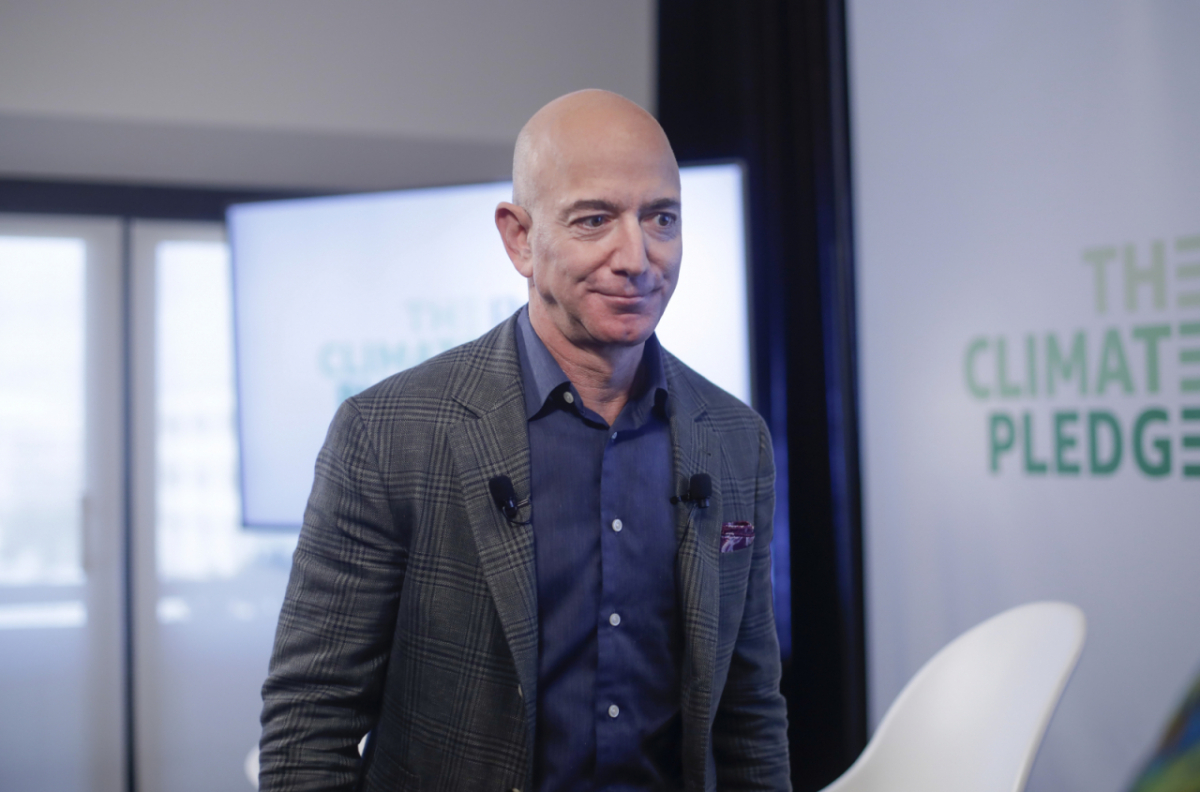
Big tech moguls have also joined in. Amazon founder Jeff Bezos is participating in an investment consortium aiming to acquire approximately 33% of Liverpool FC in the English Premier League (EPL), alongside Facebook co-founder Eduardo Saverin and others. In the transaction, Liverpool was valued at over $7 billion (approximately 9.46 trillion won).
“Even with an LLM, fandoms cannot be replicated”... VC funds pour into emerging sports leagues
On the 4th, The Wall Street Journal (WSJ) analyzed that instead of businesses where competitiveness can quickly flip-flop due to technological changes like AI models or software, investors are betting on businesses with loyal fanbases, scarcity, and experiences that must be directly experienced. It was also diagnosed that there is an underlying judgment that as people spend more time in front of screens due to the spread of AI, the value of experiences that can only be enjoyed in reality will increase.
The primary reason sports teams attract investor interest is "scarcity." Popular teams are difficult to create from scratch and possess a loyal fan base cultivated over decades. The ability to secure diverse revenue streams through media broadcasting rights, ticket sales, sponsorships, and merchandise sales is also cited as an attractive feature.
Another appealing factor is that the industry remains relatively free from the influence of artificial intelligence. Even as AI rapidly automates tasks ranging from software development to legal and financial work, it is difficult for such technology to replace the actual experience of athletes competing in games and fans enjoying them on-site.
Sudip Ramnani, founder of 885 Capital, which invested in the Professional Fighters League (PFL), a mixed martial arts (MMA) league, said, "People want to see real humans competing in sports," and added, "Considering the direction in which the world is changing, this is an investment that is fully understandable."
Investment targets are expanding from famous sports teams requiring massive capital to new leagues. This is based on the judgment that it is possible to create a new fan base in niche sports not yet dominated by existing professional sports and grow them into a single media and entertainment business.
Notably, U.S. venture capital firm Left Lane Capital participated as an early investor in Real American Freestyle, a family-friendly wrestling league co-founded by former professional wrestler Hulk Hogan last year. Left Lane Capital has also invested in the professional padel league Pro Padel League, The Snow League, a professional winter sports league established by snowboard star Shaun White, and League One Volleyball, a professional volleyball league.
Harley Miller, founder and CEO of LeftTrain Capital, said, "This business involves tangible assets that are difficult to replicate easily," adding that it is not a speculative venture that could lose its competitiveness overnight just because a new large language model (LLM) emerges in a year.
“Does SpaceX stock really exist?” … U.S. SEC targets a flood of indirect investments
![[CAPE CANAVERAL, Fla. (AP/NEWSIS)] On May 26, 2020, a SpaceX logo is seen on a building at Kennedy Space Center in Cape Canaveral, Florida. Elon Musk's SpaceX signed a deal with EchoStar worth approximately $17 billion (23.6249 trillion won) on the 8th for frequency licenses to be used to strengthen its Starlink satellite network. /Photo=Yoo Se-jin](https://thumb.mt.co.kr/cdn-cgi/image/f=avif/21/2026/09/2026090410402862106_3.jpg)
As special purpose vehicles (SPVs) that claim to allow investment in popular private companies such as SpaceX and Anthropic have surged, U.S. financial authorities have launched an investigation into their actual operations. They have begun examining whether these SPVs have actually secured the stocks or investment rights of the companies they promoted as investment targets.
According to the Wall Street Journal and Reuters, the U.S. Securities and Exchange Commission (SEC) has recently strengthened its scrutiny of special purpose vehicle (SPV) managers offering investment opportunities in private companies. The SEC is requesting that registered investment advisers provide evidence demonstrating whether the SPVs hold shares in or possess investment rights over the private companies they have proposed as investment targets.
This move comes amid growing investor complaints regarding SPVs, as the number of related investment products has surged ahead of SpaceX's major initial public offering (IPO) and Anthropic's push for a listing. The inspections are primarily conducted through document submission, while on-site inspections are also being carried out at some asset management firms.
An SPV is an investment vehicle established separately for a specific investment. It pools funds from multiple investors to directly purchase shares of private companies or invest in other funds that hold stakes in those companies. As startups raise large amounts of private capital and remain unlisted for longer periods, SPVs have increasingly absorbed demand for indirect investment in prominent unicorns.
In particular, the AI boom has caused the valuations of private companies such as Anthropic to soar, driving funds seeking to secure pre-IPO investment opportunities into the SPV market. However, there are concerns that many investment structures involve multiple layers of other funds or SPVs, making it difficult for final investors to determine which stocks or rights they are actually investing in.
Unlisted companies have also begun to respond. Anthropic announced in May that it would not recognize any transactions involving its own shares that were not approved by the board of directors. The company also urged investors to exercise caution regarding certain online platforms that sell equity stakes, directly or indirectly, through special purpose vehicles (SPVs) and similar structures.
In Korea, a controversy over the appropriateness of pre-marketing recently erupted surrounding investment opportunities in SpaceX. Mirae Asset Securities participated in the joint underwriting team for SpaceX's IPO in June and applied for housing subscription of the public offering shares but ultimately received not a single share. Earlier, Park Hyun-ju, chairman of Mirae Asset Group, stated in an April media interview that there would be a significant volume of SpaceX public offering shares and expressed his intention to provide investment opportunities to many investors. This led to criticism that the company actively promoted investment opportunities and raised investor expectations even though the final volume had not yet been determined.

AI Startup Valuation Jumps Threefold in Two Years, Early Investors Smile at Jackpot Success

World's largest cybersecurity firm Palo Alto Networks has acquired AI startup Console for approximately $500 million (about 67.6 billion won) just two years after its founding. The move aims to secure technology that automates repetitive IT (information technology) tasks using AI agents and strengthen competitiveness in "autonomous security."
According to IT specialty media such as TechCrunch, Palo Alto Networks recently acquired Console for $500 million in a combination of cash and stock.
Palo Alto Networks plans to integrate Console's technology into its AI-based security platform, Cortex. The goal is to combine Console's AI agents with Cortex, which detects and analyzes cyber threats using AI, so that when security personnel issue commands in natural language, the system automatically performs tasks ranging from alert investigation to problem resolution.
Nikhesh Arora, chairman and CEO of Palo Alto Networks, explained that the company's console technology will provide "arms and legs" to Cortex capable of generating autonomous security outcomes across the entire enterprise. The vision is to expand into 'autonomous security,' where AI does not merely analyze threats and propose countermeasures but also executes actual follow-up actions.
Founded in 2024, Console is a startup that automates corporate IT support tasks using AI agents. It handles tasks such as resetting employee passwords, granting access permissions to work applications like Figma and Miro, and resolving recurring IT incidents without human intervention. The company has secured customers including Lamp, Floxafety, and Scale AI.
Console raised a total of $29 million (approximately 39.2 billion won) in two investment rounds since its establishment. According to PitchBook, just before the acquisition, its corporate valuation was assessed at $157 million (approximately 212.2 billion won). Since this acquisition price exceeded three times the previous corporate valuation, early investors such as SV Angel and Abstract Ventures also gained the opportunity to recover their investments within two years of the company's founding. CEO Aurora is also reported to have invested in Console as an individual angel investor.
[Money Today Startup Media Platform Unicorn Factory]

 in FUTURE


