

The power shortage in the United States is not a new issue for Suga, but the situation continues to worsen. The particular problem lies in the fact that electricity demand from data centers operating AI services has surged far beyond initial expectations.
Goldman Sachs estimates that U.S. data center power demand will surge from 31 gigawatts (GW) last year to 41 GW this year and 66 GW next year. The 10 GW increase this year is equivalent to the output of 10 nuclear reactors, while the 25th GW increase next year matches the capacity of 25 nuclear reactors. The U.S. Department of Energy has warned that without an additional 100 GW of power by 2030, annual blackout duration will jump from eight hours to 800 hours—a 100-fold increase. That 100 GW is equivalent to the total electricity consumed across all of South Korea during the peak summer months. The current reality is that any source capable of generating electricity—from nuclear power to desert solar farms and offshore wind projects—is being pursued without discrimination.
The problem is that it takes considerable time to install and operate most power generation facilities, and there are also significant drawbacks. Solar power cannot operate on cloudy days or at night, and wind power relies entirely on the wind. Gas power plants emit carbon, and small modular reactors (SMRs) will not be available until at least 2030. This is why technologies such as hydrogen fuel cells, once considered unprofitable, are now gaining prominence. Perbo Energy holds technology for generating electricity using geothermal energy and has recently attracted attention from Wall Street.
Google's Favorite Underground Power Producer: Perbo Energy
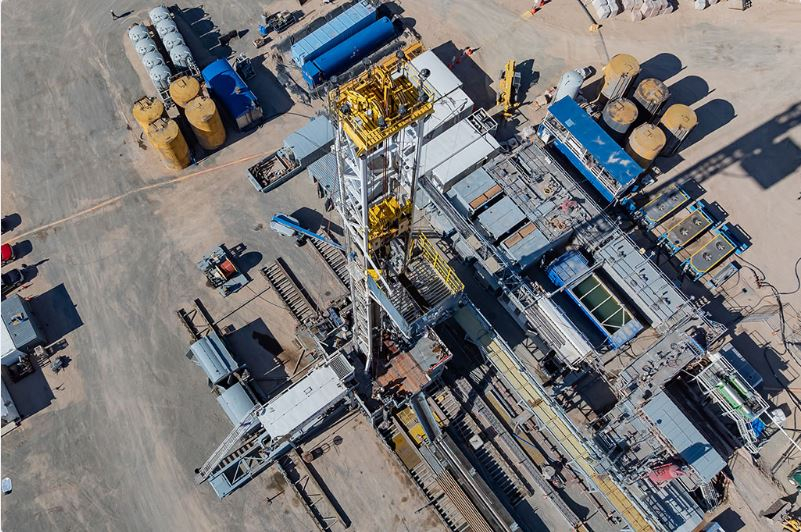
Pervo Energy is a company founded by Tim Latimer, a young engineer who was drilling wells in oil fields. After graduating from university, Latimer worked as a drilling engineer for Australian mining firm BHP in 2012. His workplace was Permian and Eagle Ford, the central hubs of U.S. shale gas development. While working there, he acquired various drilling technology know-how. In the past, wells were drilled vertically or horizontally by laying them on their sides, or rock formations were fractured using water. The longer the drilling section, the higher the underground temperature becomes; if this is not properly managed, water that seeps in can instantly vaporize and trigger an explosion.
While contemplating geothermal issues, Latimer one day conceived the idea of utilizing geothermal energy instead of oil. In fact, geothermal power generation is not a new technology, but commercializing it is a different matter. For geothermal power to be feasible, one must find land with cracks that allow water to seep through. Conventional geothermal power generation was possible only in places where hot water naturally rose up, like hot springs. This explains why it has been limited to volcanic regions such as Iceland and California's Geysers.
Latimer decided to research the technology of injecting water into drilling wells by leveraging his experience in shale gas extraction, quit BHP, and enrolled in Stanford University's graduate school. While pursuing both an MBA and a master's degree in environmental resources, he met Jack Norbeck, who was researching geothermal reservoirs. This was a combination of a drilling practitioner and a subsurface simulation expert. The two founded Fervo Energy in Houston in May 2017. Breakthrough Energy Ventures by Bill Gates, shale giant Devon Energy, Google, and others entered as investors. Norbeck continues to serve as chief technology officer (CTO).
The two individuals founded Perbo Energy, which is based on a technology called Enhanced Geothermal Systems (EGS). The name may sound difficult, but its structure resembles Korea's ondol heating system. Below 3 kilometers underground, granite exceeds 200℃. A well is drilled vertically to this depth and then extended horizontally for an additional 2 kilometers. Two such wells are drilled side by side: one is an injection well where water is pumped in, and the other is a production well that extracts hot water. The rock formation between the two wells is fractured dozens of times, similar to shale, to create pathways for the water.
When cold water is injected, it heats up as it passes through the bedrock and rises to an adjacent well as hot steam. This heat drives a turbine. The design has now evolved from using just two wells to a "wine rack" configuration, where multiple wells are stacked like wine racks on shelves. Each well covers a larger volume of bedrock, and the water paths do not overlap. The deepest well at the Cape Station reaches a total depth of 6,054 meters—a depth equivalent to stacking 11 Lotte World Towers.
While conventional geothermal power plants must locate natural hot springs, Perbo Energy can build a power plant anywhere as long as there is hot rock. This eliminates site constraints. Perbo Energy's power plants use binary generators from Turboden of Italy, a subsidiary of Mitsubishi Heavy Industries. The method involves heating a liquid with a low boiling point using hot water to drive the turbine.
Perbo Energy's competitiveness lies in its ability to simulate and analyze subsurface structures. This method involves inserting fiber-optic cables into drilling wells to analyze the sounds of rock fracturing and the temperatures of flowing water, utilizing distributed acoustic sensing (DAS) technology common in the shale industry. It allows operators to see from the surface where blockages occur and where water leaks. Novex's simulations, developed through research at Stanford University, are integrated into this system.
Although there are many geothermal power companies, Perbo Energy has attracted attention because its drilling data is reliable. The first well in Nevada was completed in 70 days in 2022, while at the Utah Cape Station in 2024, the period was reduced to just 21 days. A significant portion of geothermal power plant costs goes toward drilling wells, and Perbo Energy boasts a very high success rate. The company initially estimated its success rate at 18%, but it actually reached 35%. In June 2025, it drilled a well with a depth of 4,805 meters and a temperature of 271°C in just 16 days. In July this year, it completed a well with a total length of 5,928 meters, a horizontal section of 2,286 meters, and a temperature of 238°C in 21 days. The drilling speed has become 143% faster than at the first Cape site.
Power generation performance is also improving. The first generation produced 3 MW from a single production well. The second generation reached 10 MW, and the third generation currently being drilled achieves 15 MW. This is because the drill hole has become more than twice as thick, expanding from 12 cm to over that size, and its length has increased from 914 meters to 2,286 meters, while the geothermal energy serving as the source of power generation has risen from 177°C to 221°C. The facility investment cost was at a level of 20.25 million won (15,000 dollars) per kW, which dropped to 9.45 million won (7,000 dollars), and has now improved to a level of 7.43 million won (5,500 dollars). The industry views the point where horizontal sections reach 4,572 meters, temperatures exceed 260°C, production wells generate 25 MW each, and costs fall to 4.05 million won (3,000 dollars) per kW as the threshold for achieving economies of scale.
Rapid improvements in power generation efficiency underway
Perbo Energy is currently operating three Helmerich & Payne (H&P) drilling rigs. Each rig can create 1.5 wells per month, or 54 wells annually. This equates to a construction speed capable of building over 400 megawatts per year. Third-generation wells generate 27% more electricity at the same cost compared to previous generations. Technology validation is also complete. Perbo Energy's Nevada "Project Red," which served as a pilot site for data centers, has operated continuously for over 600 days since its launch in 2023, achieving an availability rate of 98.4%. The wells have required no maintenance, and the temperature drop over 500 days was only 1.4℃. The Cape Station test well produced more than 10 megawatts from a single production well, three times that of Project Red.
Perbo Energy signed a massive power supply contract with Google, a major shareholder, on the 1st of this month. The agreement entails supplying 396 megawatts (MW) of geothermal electricity extracted from underground in Utah's desert to Google for 15 years. Google has also offered an option to purchase an additional 600 MW; combined, this approaches 1 gigawatt (GW). It is the largest contract in U.S. geothermal power history, equivalent to the capacity of one nuclear reactor. On the day the contract was made public, Perbo Energy's stock price surged by more than 30% during trading hours.
In addition to Google, numerous data center companies are paying attention to Power Energy. The reasons are multifaceted, but the most significant factor is the short period required to build power facilities. Google's investment in the SMR company Kairos Power targets its first reactor for 2030, with full completion of a 500-megawatt unit scheduled for 2035. In contrast, Power Energy will deliver its first batch by the third quarter of 2028. Latimer stated in the second-quarter earnings announcement that "for companies needing carbon-free baseload power before 2030, Power is practically the only option."
The pricing is also competitive. The PPA unit price the company is negotiating ranges from 135,000 to 175,500 won per megawatt-hour (MWh), equivalent to $100 to $130. This is lower than the new nuclear power generation cost of 190,000 to 298,000 won ($141 to $221) and gas peaking power costs of 155,000 to 298,000 won ($115 to $221), as compiled by investment bank Lazard.
A key advantage is that it requires a smaller land area and achieves higher resource recovery rates compared to solar power. According to an analysis by Wonri Research, the entire Cape Station site for a 2GW facility covers 2.55 square kilometers, which is only one-twentieth the size of a solar power plant with the same capacity. Water circulates underground, achieving an utilization rate of 83%, four times higher than that of solar power (in the 20th% range). According to standards from the U.S. National Renewable Energy Laboratory (NREL), lifecycle carbon emissions are 37 grams per kilowatt-hour, which is one-thirteenth of gas-fired power generation (486g) and one-twenty-seventh of coal-fired power generation (1001g).
In addition, Perbo Energy also succeeded in experimenting with a "underground battery (FervoFlex)" that pumps water into the ground when electricity is surplus and extracts it when needed. The system completed five cycles of 12-hour charge and discharge. Another merit is that geothermal power generation produces carbon-free electricity, unlike thermal power generation. California mandated in 2021 that power companies secure 1,000 megawatts of carbon-free power sources independent of weather conditions.
Currently, Perbo Energy's confirmed PPA stands at 658 MW as of the end of June, with an additional 396 MW from this Google deal included. The order backlog is 9.72 trillion won (7.2 billion USD) as of the end of June. This means a company with no revenue yet has secured 15 years' worth of sales in advance. Google also signed a basic contract in March to purchase up to 3 GW on a priority basis. Customers currently under negotiation consist of 50% hyperscalers, 35% power companies, and 15% industrial firms. Recently, the company has also been promoting a "behind-the-meter (BTM)" model that places power plants directly next to data centers without using the transmission grid. With no transmission fees involved, as data centers grow, they can simply attach "geoblocks" in 50 MW increments alongside them. The first BTM contract is expected to be announced within this year.
Of course, competitors are also moving quickly. Next-generation geothermal power technologies are broadly divided into two types: Perbo Energy and Sage GeoSystems have chosen the method of breaking rock to channel water. In contrast, Canada's Eavor and U.S.-based XGS Energy employ a method of burying pipes underground and circulating water only within them, akin to burying radiators in the ground.
The advantage of the IBER method is that it does not fracture bedrock, eliminating earthquake risks and preventing water loss. Meta's reason for contracting with XGS for a 150-megawatt project in New Mexico was also "zero water usage." The drawback is that the heat exchange area is limited to the pipe surface. The first power plant operated by IBER in Germany last December, which drilled four pairs of 16-kilometer wells, produced only 8 megawatts of electricity output. This falls short of the output of a single Perbo Cape well. The German government subsidy rate is approximately 250 euros per megawatt-hour.
Sage uses "pressure geothermal," which drills up to a depth of 6 kilometers and pushes water out using pressure, similar to the method used by Perbo. Sage has contracted with Meta for 150 megawatts and received an investment of 131 billion won (97 million dollars) in January this year, led by Ormat Technologies, the world's leading geothermal company. There are no commercial power plants yet. Quaise Energy is a company that plans to drill up to 20 kilometers by melting bedrock using millimeter waves based on the principle of a microwave oven. Its current drilling record stands at 100 meters.
While the established player Omat operates 1.3 GW of geothermal and solar power globally, its facilities are natural hot spring-based, leaving almost no new sites available. This is why its January contract with data center company Switch was limited to just 13 MW. The key differentiator from Perbo Energy is commercial viability. Perbo Energy has drilled more than 25 wells, reducing drilling time by 75% and drilling costs per meter by 70%, and it openly shares these figures, whereas other companies do not disclose such data.
Eight banks including Barclays, JPMorgan, and MUFG have provided $421.4 million (568.9 billion won) in project financing support.
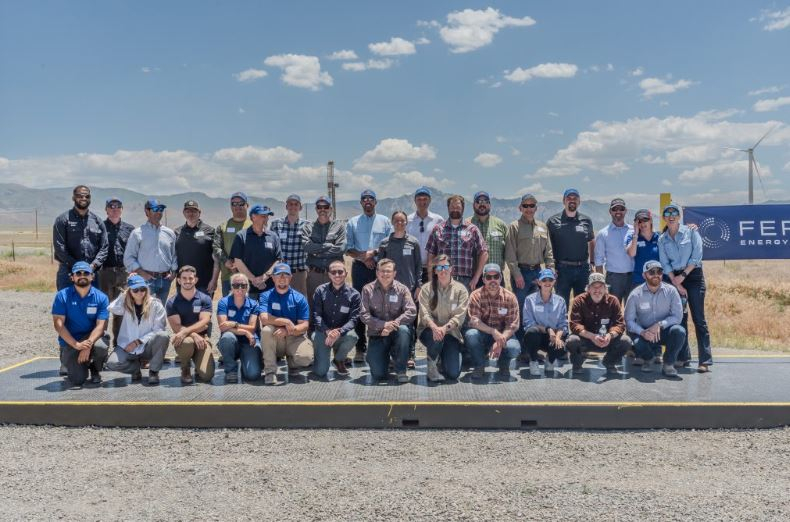
Perbo Energy has approximately 260 employees, most of whom are engaged in research and development or serve as field engineers, with a particularly high number hailing from the shale industry. Its total recordable incident rate (TRIR) of 0.34 is an excellent level even by oil industry standards. The management team and shareholder structure are also strong. Meg Whitman, former CEO of HP and eBay, serves as an independent director. Board members include Jessica Ull, a former chief financial officer at Shell, and Troy Low, former chief technology officer at Devon Energy. Devon Energy, a major shale producer and the company's largest shareholder, holds a 12.5% stake.
Perbo Energy, in particular, leverages a structure that utilizes the equipment and know-how of companies developing shale oil fields. Its financial investors are also solid. Eight banks, including Barclays, JPMorgan, and MUFG, provided 568.9 billion won (421.4 million dollars) in project financing. This is being evaluated as the first major project financing for next-generation geothermal energy backed by the banking sector.
A drawback is that Perbo Energy's financial statements are not yet robust. Last year, the company reported revenue of 190 million won and a net loss of 78 billion won (577.9 million dollars), with a net loss of 55.5 billion won (411.1 million dollars) in 2024. Revenue for the first half of this year was only 2.75 trillion won (174,000 dollars), and the net loss reached 118.4 billion won (877.4 million dollars). However, the company has sufficient cash on hand. Perbo Energy raised 275 billion won (2.04 billion dollars) when it listed on the New York Stock Exchange in May this year, and all of these funds remain intact.
The assets under construction amount to 1.67 trillion won ($1.235 billion), and the planned equipment investment for the second half of the year is between 1.15 trillion and 1.215 trillion won ($850 million to $900 million). There will be no major funding issues through the end of 2027. Meanwhile, Cape Station Phase 1, with a capacity of 100 MW (comprising three 33 MW geoblocks), is scheduled to begin full-scale operations by the end of this year or early next year, which is expected to increase revenue figures. According to Perbo Energy's plans, the currently developed area covers 2,630 square kilometers, and the pipeline capacity exceeds 50 GW.
Wall Street analysts view Perbo Energy's potential positively, though some caution that it remains to be seen when the virtuous cycle of investment-revenue-profit will be fully realized. The company has set its 2027 revenue guidance at 81 billion to 108 billion won ($60 million to 0.8 billion won). This figure is less than half of what could be generated if the 100th-megawatt facility were operating at full capacity. Cape Station's transmission line will now be shared with other power plants in the region, resulting in output curtailment for the entire year of 2027. In effect, there are no transmission lines available to supply the electricity that has been generated. Following this news, the stock price fell by 16% on August 12.
Rising producer prices in the United States and soaring industrial costs could also pose a burden. Perbo Energy is estimated to require construction costs of 95 billion won (7 million dollars) per megawatt, which is more than five times that of solar power. The company also relies heavily on U.S. investment tax credits (ITC). Phase 1 financing includes an ITC bridge loan of 82.3 billion won (61 million dollars). Additionally, the Google contract contains a clause stipulating that if Perbo fails to propose an additional 600-megawatt option, it must pay a "power supply compensation fee."
Nevertheless, Wall Street's overall assessment remains positive. In June, shortly after Perbo Energy's listing, J.P. Morgan issued a "buy" recommendation with a target price of 63,450 won (47 dollars). Piper Sandler set its target at 68,850 won (51 dollars), RBC at 62,100 won (46 dollars), and BAEIRD at 63,450 won (47 dollars). Jefferies issued a "hold" recommendation with a target price of 56,700 won (42 dollars). The average target price from 12 securities firms stands at 56,700 won (42 dollars), which is 2.4 times the current stock price.
A key point to watch is the operational schedule for Cape Station, where the first power generation is expected to begin. If electricity production starts as scheduled in the fourth quarter, the company will be re-evaluated from a "loss-making startup" to a "power generator." Until then, Global Investment Information Company Wonrisachi advises that investors should coordinate their buying timing with the supply-demand pressure anticipated from the November release of locked-up shares.


 in STOCK


