

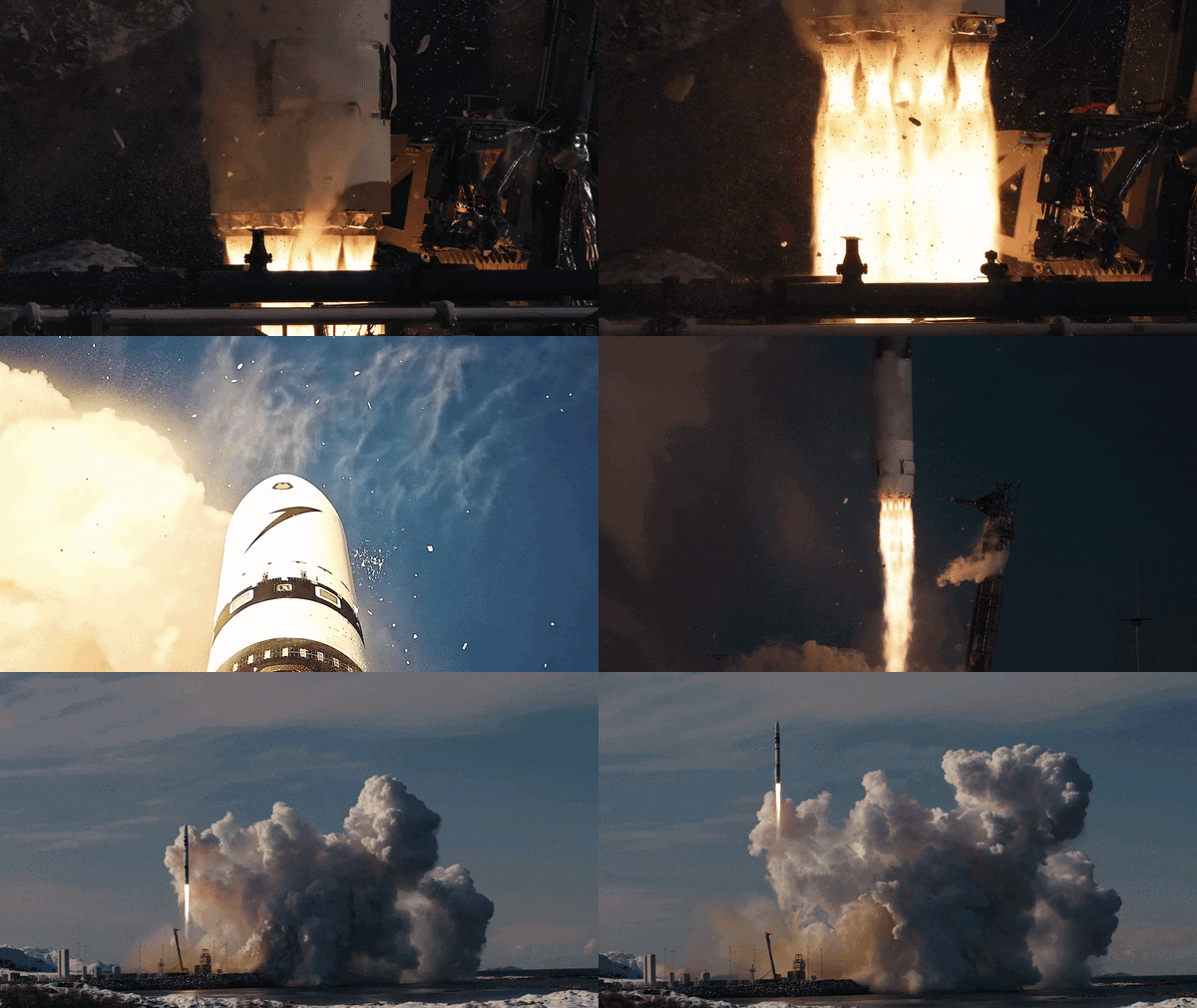
German aerospace startup Isar Aerospace announced on the 5th (local time) that it successfully launched its 'Spectrum' rocket from a launch site in Norway's Arctic region, placing its payload satellite into orbit.
Founded in March 2018, Isar Aerospace is a launch vehicle company headquartered in Ottobrunn near Munich, Germany, developing rockets to send small and medium-sized satellites and satellite constellations into Earth orbit.
The launch took place at 10:12 p.m. local time on the day at Andøya Spaceport in northern Norway, where a dedicated launch complex for Isar Aerospace has been established.
Spectrum is a small-to-medium satellite launch rocket measuring 28 meters in length. The mission, named "Onward and Upward," carried five small satellites selected through the European Space Agency's (ESA) "Boost!" program along with equipment for in-flight technology experiments.
The rocket sequentially achieved its goals at each launch phase. After passing through the maximum dynamic pressure zone (Max-Q), it completed first-stage engine cutoff (MECO) and stage separation, then ignited the second stage as planned. It subsequently separated the payload fairing after crossing the Kármán line at an altitude of 100 kilometers but before reaching orbital velocity.
After successfully completing the circularization burn for orbit insertion, the satellite was deployed without issue. Daniel Metzler, CEO of Isar Aerospace, stated, "We have opened a path from the European continent to space." He added, "Launch vehicles were once the biggest bottleneck in the global space industry, but now there is a genuine alternative for commercial and institutional investor customers."
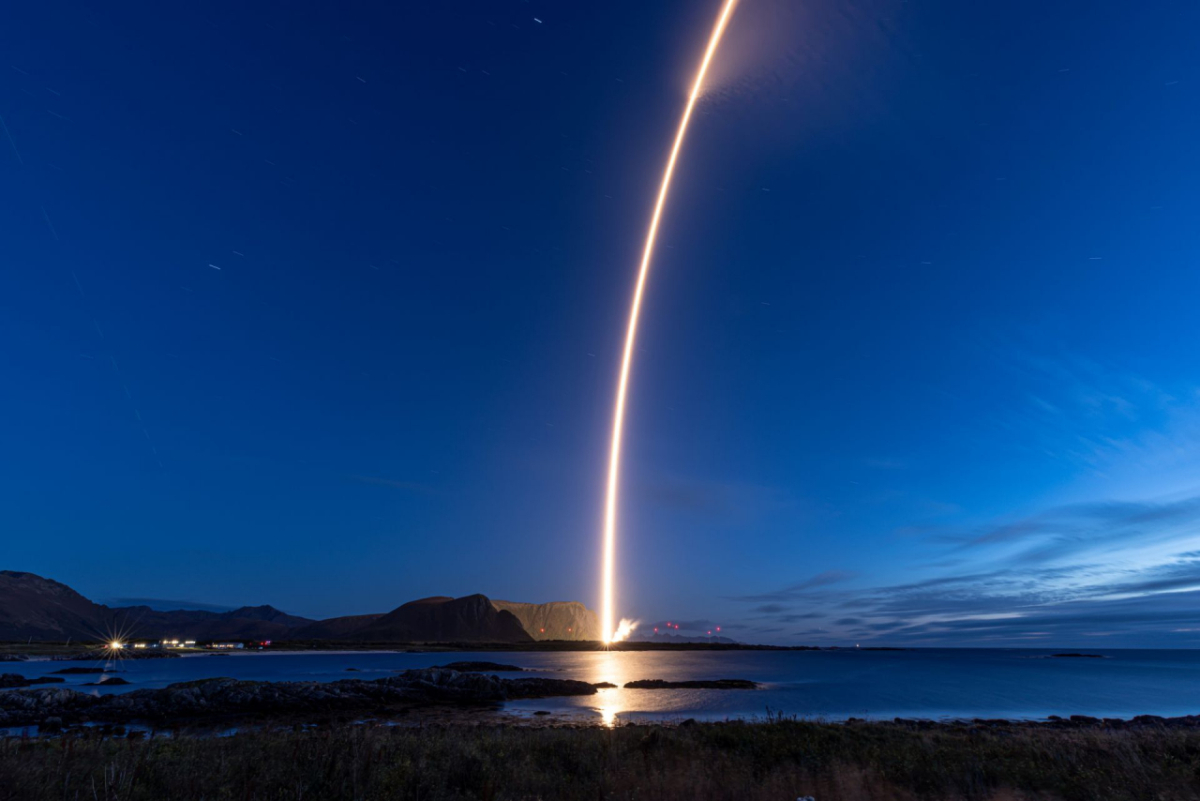
This launch marked the second flight of Spectrum and its first mission carrying actual payloads. Isar Aerospace conducted an initial test launch at the same site last March, but the flight ended after approximately 30 seconds, with the rocket crashing into the sea and exploding.
With this success, Isar Aerospace became the first European private space company to deploy a satellite into orbit. The achievement is considered particularly significant as it represents the first commercial rocket launched from the European continent to reach orbit.
Europe has historically relied heavily on foreign launch services such as SpaceX in the United States. In recent years, European countries have accelerated efforts to secure independent satellite launch capabilities amid growing recognition of the importance of the space industry in areas including satellite communications, Earth observation, and national defense and security.
Cecilie Myrseth, Norway's Minister of Trade, Industry and Energy, described this launch as a "groundbreaking turning point" for Europe's launch industry. She stated, "The ability to launch satellites from Andøya will help strengthen the security of Norway and Europe during turbulent times."
Isar Aerospace recently secured approximately €200 million (about 313.5 billion won) in funding from ESA. These funds are earmarked for developing next-generation rockets and expanding testing and launch infrastructure. In addition to Norway, the company is currently constructing a second launch base in Nova Scotia, Canada.
The company is also scaling up rocket production. A new 40,000-square-meter production facility, set to become Europe's largest integrated launch vehicle manufacturing plant, is nearing completion. Once operational, the facility will have the capacity to manufacture up to 40 launch vehicles annually.
Metzler emphasized, "Europe has achieved in just a few years what its space industry could not accomplish over several decades, and now Europe has secured sovereign access to space." He added, "We will focus on rapidly expanding rocket production to fulfill our order backlog and meet the surging global demand."
[MoneyToday startup media platform 'Unicorn Factory']

 in FUTURE

