

[For more diverse corporate information on startups mentioned in this article, visit Unicorn Factory's big data platform 'Data Lab'.]
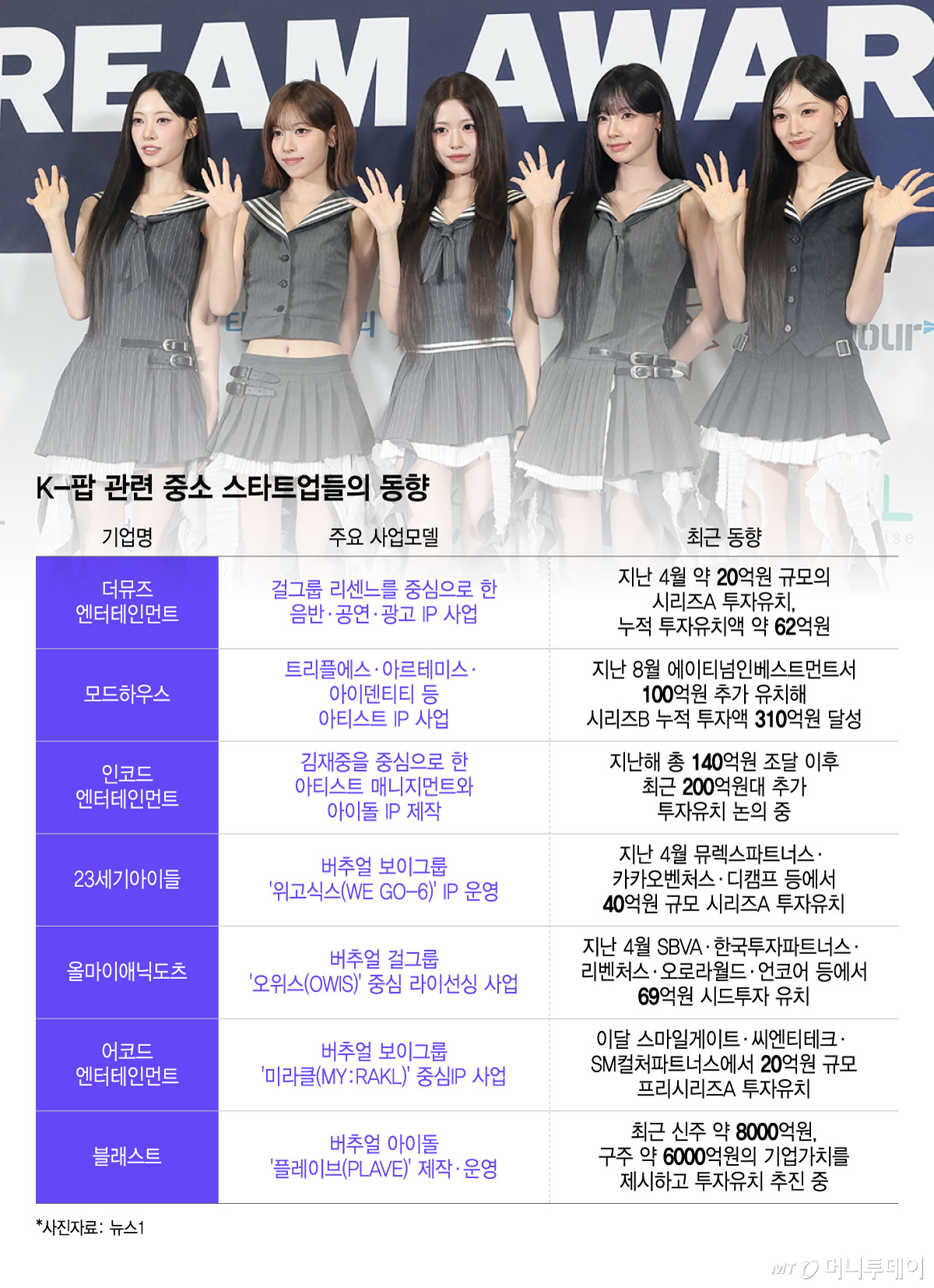
K-pop girl group Rescene's chart-resurgence success story is drawing attention from the venture-capital industry. It has shown that even an idol group from a smaller agency can shake up the market when distinctive creative planning, a dedicated fan base and well-timed investment come together.
Consequently, capital flows once concentrated on listed major agencies such as HYBE, SM, JYP, and YG Entertainment are now shifting toward small-and-mid-sized agencies and entertainment technology startups.
According to the venture investment industry on Monday, Rescene's agency, TheMuse Entertainment, saw its corporate valuation rise from around 80 billion won at the time of its March 2021 fundraising to nearly 60 billion won recently — a jump of almost 75 times. Cumulative funding raised so far totals 6.19 billion won.
Of that amount, 5.5 billion won, or 88 percent of the total, came from sub-funds backed by the Korea Venture Fund and managed by SmartStudy Ventures, K-Net Investment Partners, JB Investment and Michigan Venture Capital. The investments are credited with helping the company survive until Rescene's resurgence.
In fact, TheMuse Entertainment recorded an operating loss of approximately 5.6 billion won last year and entered a state of capital impairment. Due to the nature of the idol business — which requires upfront investment in trainee education, music production, album creation, music video production, and marketing — small agencies struggle even to produce their next album if they fail to deliver results immediately after debut.
The Rescene case effectively provided investors with 'time' for capital to endure until the potential for commercial success materialized. Lee Dae-hee, CEO of Korea Venture Investment, evaluated that "the case demonstrated that small-and-mid-sized content companies can achieve meaningful market performance when differentiated planning capabilities are combined with appropriate investments."
Investing in 'the scalability of IP value'
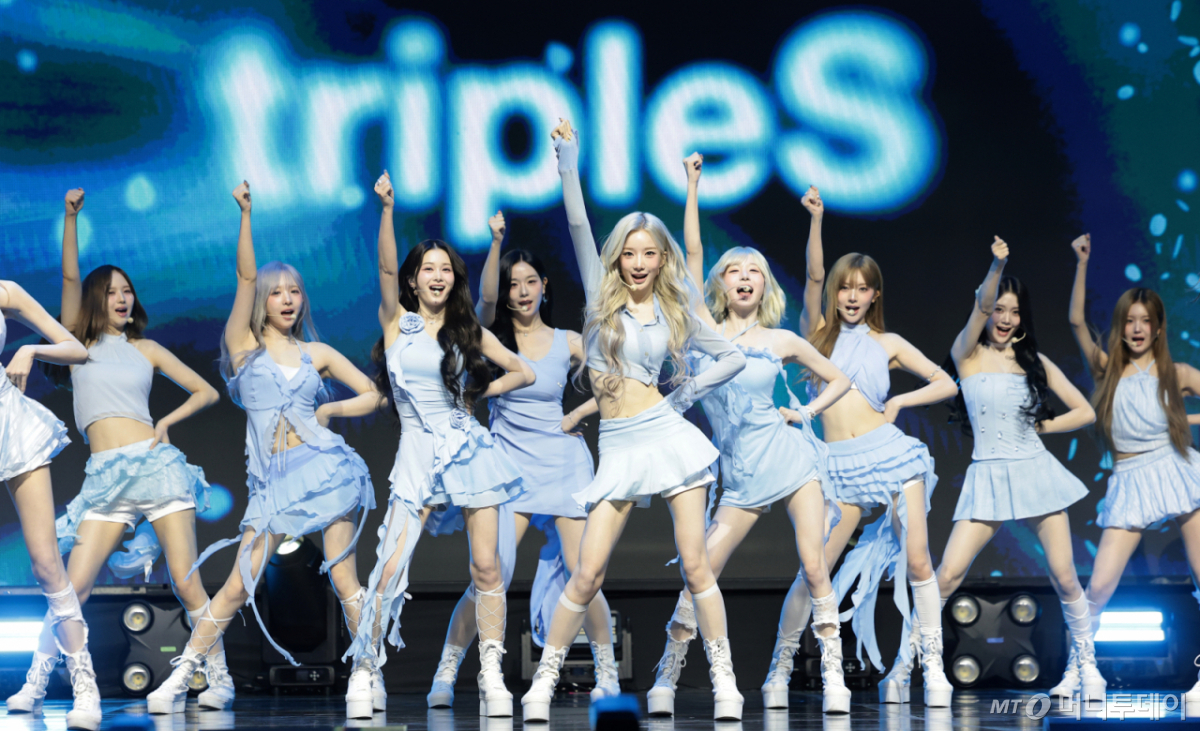
Another company attracting venture investment attention is ModeHouse, the agency behind TripleS, Artemis, and Identity. ModeHouse recently secured an additional 10 billion won from ATN Investment.
Adding this round to previous investments totaling 21 billion won from IMM Investment, LB Investment, Interwest, and Smilegate Investment, the cumulative Series B funding reached 31 billion won.
What investors focused on was not merely an idol production company but the 'combination of IP (intellectual property) and platform.' On ModeHouse's fan platform 'Cosmo,' fans participate in major decisions regarding artists' activities, including title tracks, active units, and concert setlists.
Fan participation is accumulated as digital photocard purchases and voting data, which are then reused for planning new IP projects. Based on this model, the company has achieved tangible results, recording 32.3 billion won in revenue last year and selling 1.16 million albums annually.
Capital also flowed into small-and-mid-sized agencies founded by star artists. Incode Entertainment, established by TVXQ's Kim Jae-joong, issued 12 billion won worth of convertible bonds (CB) in March last year. Stick Ventures invested 5 billion won, CJ Investment invested 3 billion won, and SL Investment and │Future Asset Venture Investment│each invested 2 billion won.
Subsequently, │Hyundai Technology Investment│added another 2 billion won, bringing total fundraising to 14 billion won. Incode is reportedly discussing an additional investment round of around 20 billion won with new financial investors (FIs).
Virtual idols: positioning as IP companies rather than technology firms
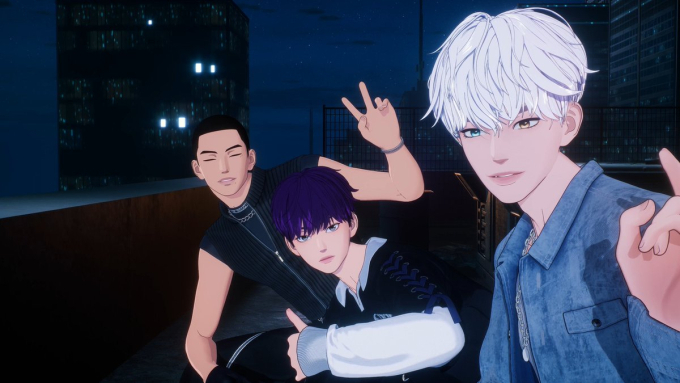
Venture investment in the virtual entertainment sector is also active. 23seKiaideul, which produced the virtual boy group 'We Go Six,' secured a 4 billion won Series A investment in April from Murex Partners, │Kakao Ventures│, and Decamp, followed by additional investment from Naver D2SF in July.
Naver D2SF noted that 23seKiaideul is producing expanded entertainment IP by leveraging content creation capabilities that maximize the advantages of virtual artists and its proprietary technology pipeline.
Accord Entertainment, the agency behind the virtual boy group 'Miracle,' recently secured a pre-Series A investment of around 2 billion won. Investors decided to invest after highly evaluating Accord's growth potential in virtual artist IP, content planning capabilities, production capacity, and prospects for expansion into the global K-pop market.
In April, All Myanic Dots, which produced the virtual girl group 'Owis,' received a 6.9 billion won seed investment led by │SBVA│from │Korea Investment Partners│, Reventures, Aurora World, and Uncoer. The involvement of investors capable of generating strategic synergies drew particular attention.
All Myanic Dots expects to broaden opportunities for character merchandise and licensing of its own IP, including Owis, through collaboration with Aurora World, which has strengths in characters, toys, and global licensing, as well as to expand secondary businesses by leveraging Aurora World's global distribution network.
The most telling example of expectations for the virtual entertainment market is Blaste, the producer of 'PlayV.' Blaste is reportedly pursuing fundraising with a corporate valuation of approximately 80 billion won on a fully diluted basis. Compared to its recognized corporate valuation of 8 billion won in May 2024, its value has increased tenfold.
An industry insider stated, "As small-and-mid-sized agencies and entertainment technology companies continue to demonstrate their growth potential through actual revenue and fanbase metrics, investments from venture capitalists (VCs) seeking to secure new IP outside major agencies will likely persist."
│[MoneyToday Startup Media Platform ││'Unicorn Factory'││]│

 in FUTURE


