

[For more diverse information on startups, visit the Unicorn Factory Big Data Platform 'Data Lab'.]
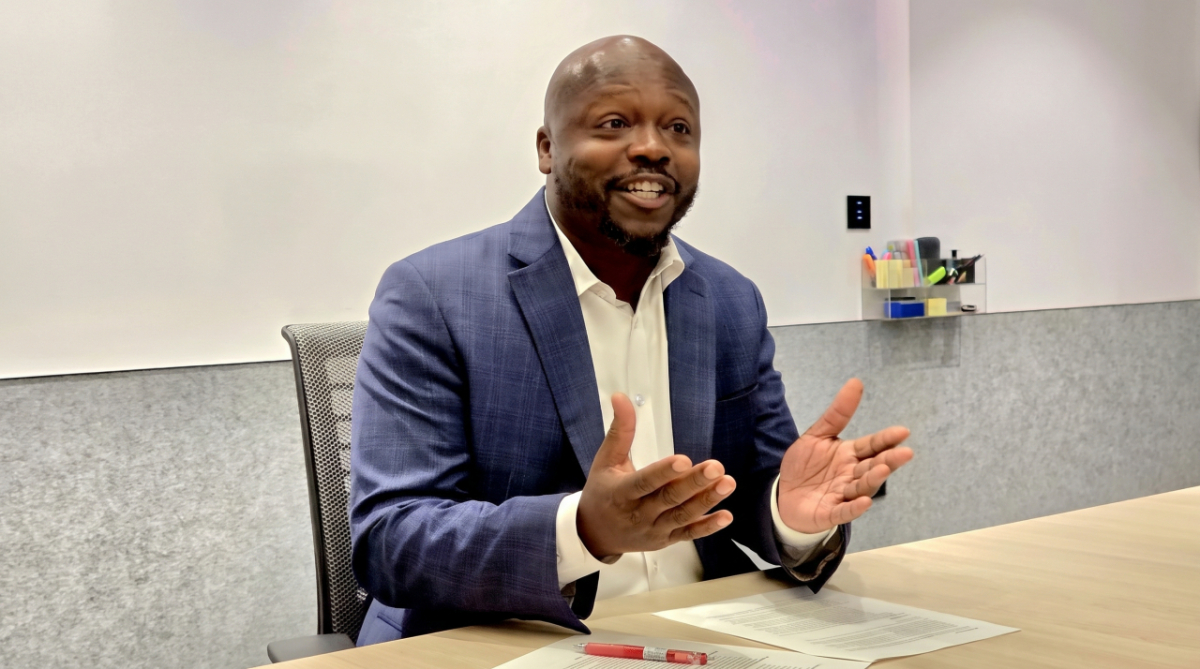
"Once payments occur outside the Google Play platform, the risk of malicious attacks increases. We must protect not only users but also developers' apps."
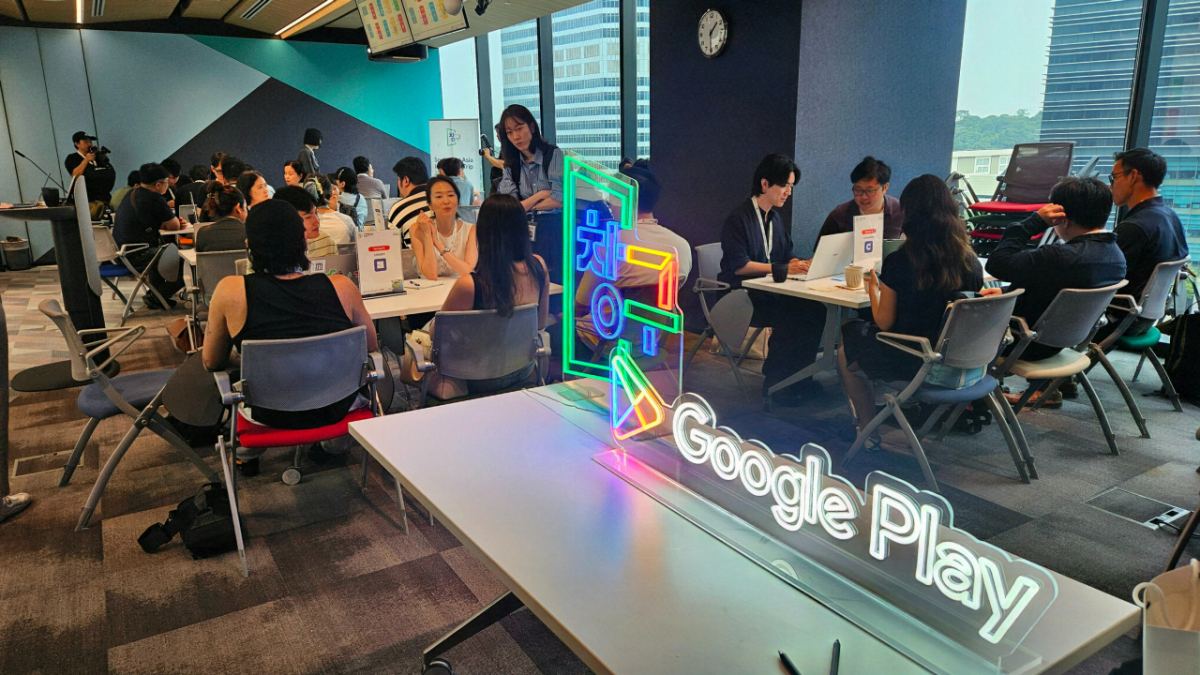
Wilson White, Senior Vice President of Google Asia-Pacific (APAC) for External Policy and Public Policy, made these remarks on the 17th (local time) in Singapore during the '2026 Changgu Emergence Trip,' speaking with reporters about key challenges in Google Play's payment policies.
Google is preparing a new model in South Korea that allows developers to choose payment methods more freely. In addition to the existing method using the Google Play payment system, options include embedding links in apps that connect to alternative payment methods or redirecting users to external websites for transactions.
Additionally, Google has decided to reduce in-app purchase fees from a maximum of 30% to levels ranging from a maximum of 20% down to a minimum of 10%, depending on the payment method and conditions. Changes to Google Play's business model related to this are scheduled to take effect starting December 31.
On the surface, this appears to be a change that expands payment choices for app and game developers. However, Vice President White emphasized that opening payment channels is not enough; platforms must also address security risks and user experience (UX) issues that can arise outside the platform.
Analysts suggest this could place significant burdens on early-stage startups. While they can choose payment methods suited to their services and customer profiles and diversify monetization strategies, they must also independently build capabilities to respond to fraud, personal data leaks, refunds, disputes, and user attrition that may occur during the payment process.
White stated, "The process of moving outside the platform can create new opportunities for malicious actors," adding, "We must not only protect end users safely but also safeguard developers' apps and businesses."

Google continues to invest in 'Google Play Protect,' which checks the safety of Android apps. According to Vice President White, Google Play Protect inspects more than 10 billion apps daily.
He said, "Payment flexibility, user experience, and security are not issues where one can be chosen over the others." He added, "While giving developers more choice, we must find a balance that safely protects both users and developers."
Google's stated direction for its payment policy includes openness, choice, and flexibility. This means moving away from applying uniform standards to all developers in terms of payment methods as well as service fee structures.
White noted, "Developers are not a single homogeneous group; their services and business models vary widely." He explained, "By listening to the developer community's feedback, we have evolved our service fee model over several years to allow each developer to operate in ways that suit their own businesses."
He added, "The new payment model reflects the flexibility developers have continuously requested. The time required to implement this new model stems from our joint effort to design solutions that safely protect both users and developers."
White drew a line against the claim that app markets should bear full responsibility for child protection measures such as age verification. He pointed out that the Android ecosystem includes not only Google Play but also various app markets like Galaxy Store, and apps are distributed through pre-installation or sideloading methods.
He stated, "Shifting responsibility solely to app stores may appear to solve the problem, but it is a selfish approach." He emphasized, "Accurately determining users' ages and granting appropriate content access rights is a shared responsibility across the entire ecosystem."
He further noted, "Questions remain about how age information verified in one app store can be communicated to other app markets or developers, and how apps not distributed through app markets should be managed." He stressed, "Rather than superficially simple solutions, we need fundamental discussions that define the roles of all participants."
Additionally, Vice President White highlighted 'support for developers' as a core pillar of Google's strategy. He explained that Google invests funds and personnel in supporting Korean startups not as charity or one-off social contributions, but because it is directly tied to the sustainability of its platform business.
Google Play currently serves over 2.5 billion users across more than 190 countries. The diagnosis is clear: if developers who create apps and content for users cannot grow, the platform ecosystem itself cannot be sustained.
White said, "Google Play's success depends entirely on the success of its developer partners." He added, "Supporting developers' global expansion is not merely a good deed; it is also a rational business decision for Google."

White introduced the 'Changgu Program,' operated by Google in collaboration with the Ministry of SMEs and Startups and the Korea Entrepreneurship & Small Business Administration, as a representative initiative reflecting this philosophy. The name 'Changgu' combines the first characters of 'startup' (창업) and 'Google Play' (구글플레이), while also symbolizing its role as a gateway for Korean startups to go global.
He said, "Early-stage startups may have great ideas, but turning them into actual businesses requires multiple capabilities simultaneously." He added, "It is not enough to focus only on technical maturity; cloud infrastructure, marketing, app visibility, and investor connections must all be considered."
White shared that the biggest lesson Google learned from operating Changgu is that developers should not receive uniform support. Some companies need technical training, while others seek to increase brand awareness for already completed apps or acquire international users.
Google incorporates feedback from participating companies in each Changgu cohort into its program. Support items have been continuously refined based on the growth stages and needs of participating companies, including technical education, marketing, app visibility, and entry into overseas markets.
White described Changgu as "the most exemplary case compared to developer support programs operated by Google in other countries." He explained, "This is because it has established a structure where companies, government agencies, developers, and Google employees collaborate over the long term, going beyond simple financial sharing between businesses and governments."
He added, "Supporting more than 760 startups over eight years would have been difficult without government cooperation. Government participation enabled us to identify more promising companies and connect strong startup growth ambitions with support resources."
He further stated, "The South Korean government has made the global expansion of startups and SMEs (small and medium-sized enterprises) a core goal, which aligns perfectly with Google's business interests. This has created an excellent Venn diagram where the shared interests of the government and Google overlap."
However, he identified the 'silo' phenomenon, where South Korean government policies are fragmented across different ministries, as a challenge that needs improvement. He pointed out that while one ministry encourages startup growth, another regulatory body may restrict specific functions of large platforms, and the impact can be transferred to small and medium-sized developers operating on those platforms.
Vice President White said, "One side demands more action for startups, while another imposes regulations simply because they involve large platforms. When government objectives conflict, the effectiveness of startup support policies diminishes."
He emphasized that platform regulations should not be viewed as affecting only large corporations like Google. When a platform's functions and business models change, the costs and growth strategies of developer companies that rely on those platforms to acquire users and generate revenue will also shift accordingly.
White stated, "Policies targeting large platforms have second- and third-order impacts on the numerous developers and startups operating on them." He questioned, "When designing new policies or regulations, is there sufficient consideration of the ripple effects these measures will have on such companies?"
He further suggested, "If startup development is a national goal, it should not be treated as the sole responsibility of one ministry; the entire government must approach it collectively." He recommended an 'all-government approach' that comprehensively examines the balance between competition, user protection, innovation, and startup growth.
[MoneyToday startup media platform 'Unicorn Factory']

 in FUTURE


