

[For more diverse corporate information on the startups mentioned in this article, please visit the Unicorn Factory big data platform 'Data Lab'.]
Analysis indicates that investment bottlenecks for domestic deep tech startups are more pronounced in mid-to-late stages than in early stages. While funding is relatively active in the early phase, the proportion of deep tech companies advancing to the next investment round lags significantly behind the U.S. Academia and industry experts cite the lack of 'hub VCs' in Korea—entities capable of leading follow-on investments for large-capital-requiring deep tech firms and attracting other investors—as a key reason.
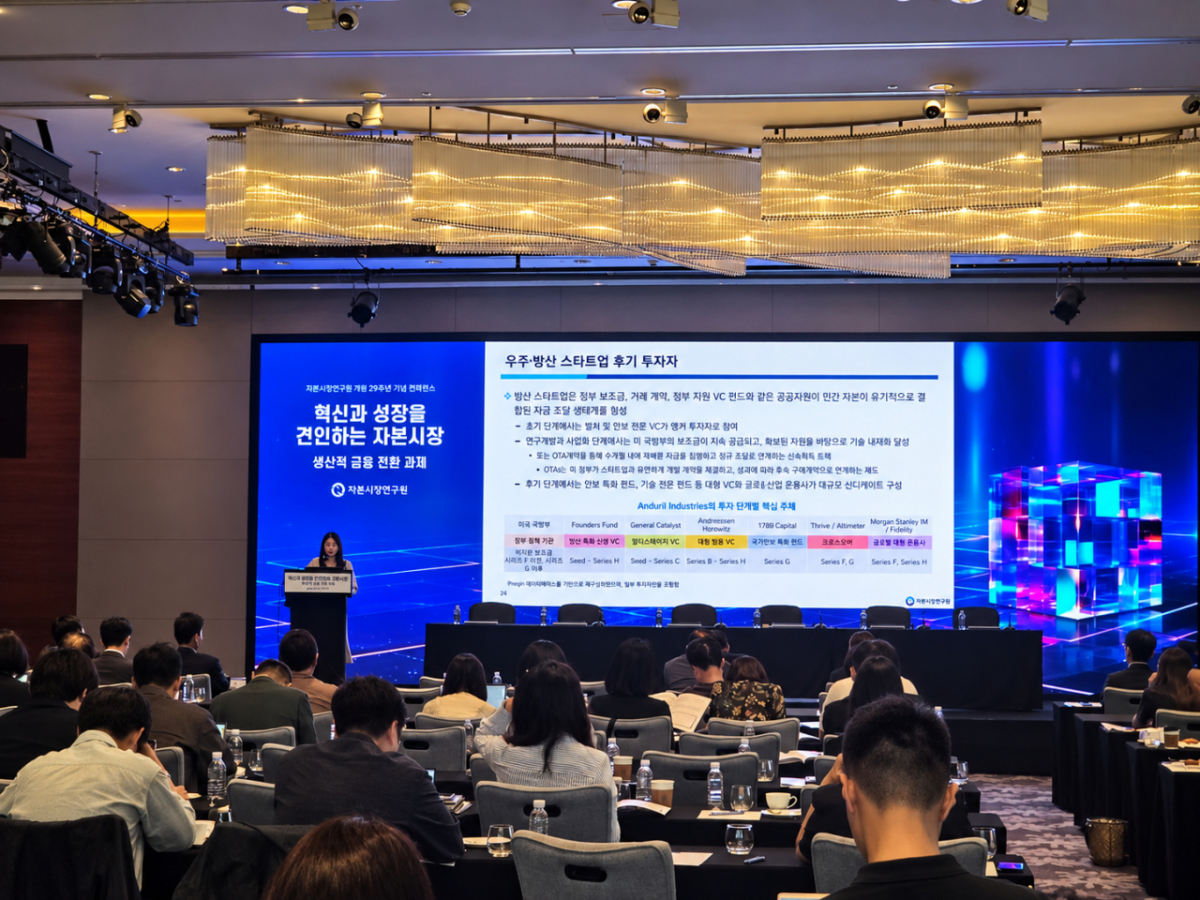
According to the Korea Development Institute of Capital Markets (KDICM) on the 21st, researcher Kim Jin-young presented research results comparing the investment structures of Korean and U.S. deep tech startups at the 'Capital Market-Productive Financial Transition Task Driving Innovation and Growth' conference held on the 18th to mark the institute's 29th anniversary.
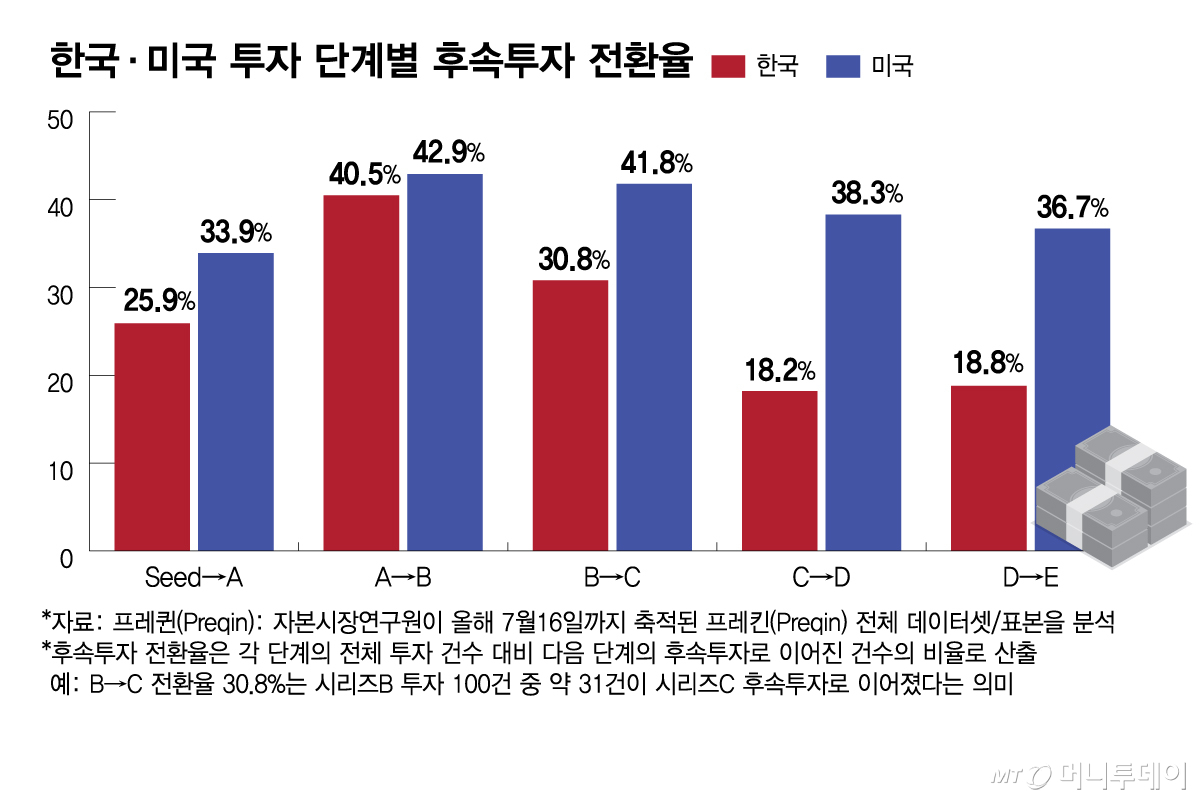
Analysis by researcher Kim of the entire Preqin sample accumulated through July 16 this year revealed that, based on the number of investment deals, the follow-on conversion rate for deep tech startups was 30.8% in Korea versus 41.8% in the U.S. from Series B to C. From Series C to D, the rates were 18.2% in Korea and 38.3% in the U.S., widening the gap to 20.1 percentage points.
Such a follow-on investment cliff is particularly problematic in the deep tech sector because it requires large-scale funding over an extended period from technology development to commercialization. Biotech must withstand clinical trials and regulatory verification; aerospace and defense must meet government demand and certification requirements; advanced computing faces high technological uncertainty and computing costs. If funding dries up during growth, these companies struggle to cross the 'Death Valley.'
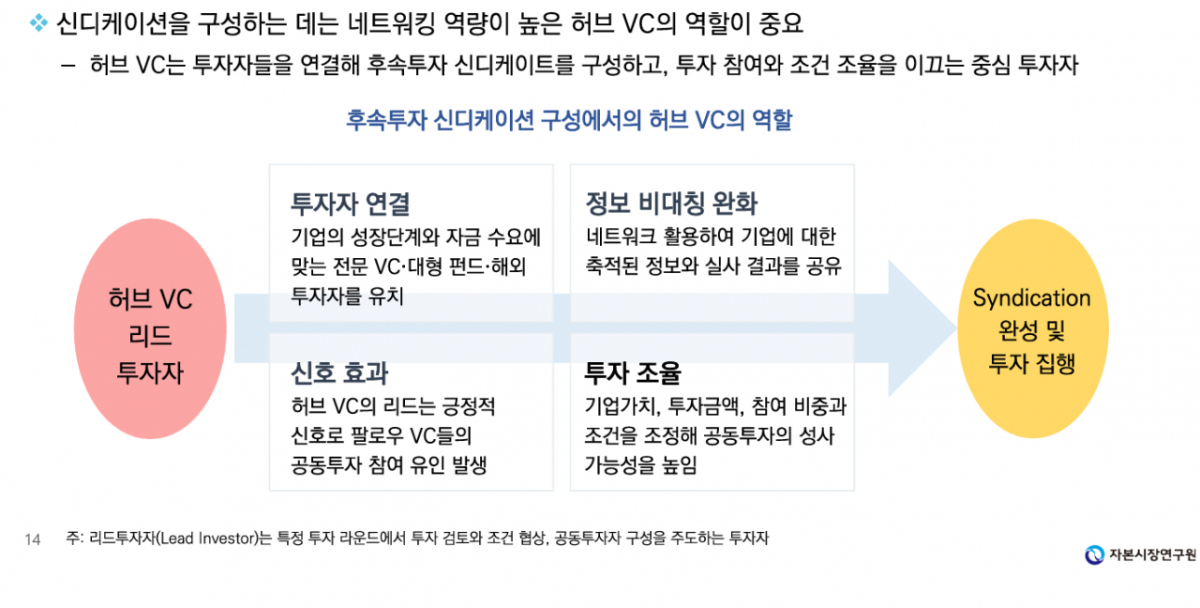
Researcher Kim identified the lack of 'hub VCs' leading follow-on investment syndication (co-investments) as one reason for the gap between Korea and the U.S. In the case of deep tech startups, it is difficult for a single VC to bear all investment funds amounting to hundreds of billions of won; thus, a structure is needed where large VCs that continuously invest in a company take the lead and attract other VCs and institutional investors.
Researcher Kim noted, "In the U.S., as companies move to later stages, co-investment networks form around large VCs, whereas in Korea, the connection and intermediary roles among investors are relatively weak."
Diversity of capital participating in deep tech late-stage investments also differed. In the U.S., not only VCs but also CVCs (corporate venture capitals), strategic investors (SIs), asset management firms, private equity (PE), and sovereign wealth funds invest in growth companies.
In fact, according to the National Venture Capital Association (NVCA) of the U.S., transactions involving non-traditional investors such as hedge funds, sovereign wealth funds, nonprofit institutional investor funds, and corporations (SIs) accounted for about 30% of all U.S. VC deals last year but represented 83% of the investment amount. NVCA estimated that these entities injected at least $80 billion (approximately 111 trillion won), and in reality, over $100 billion—larger than the entire European VC market, which is about $70 billion.
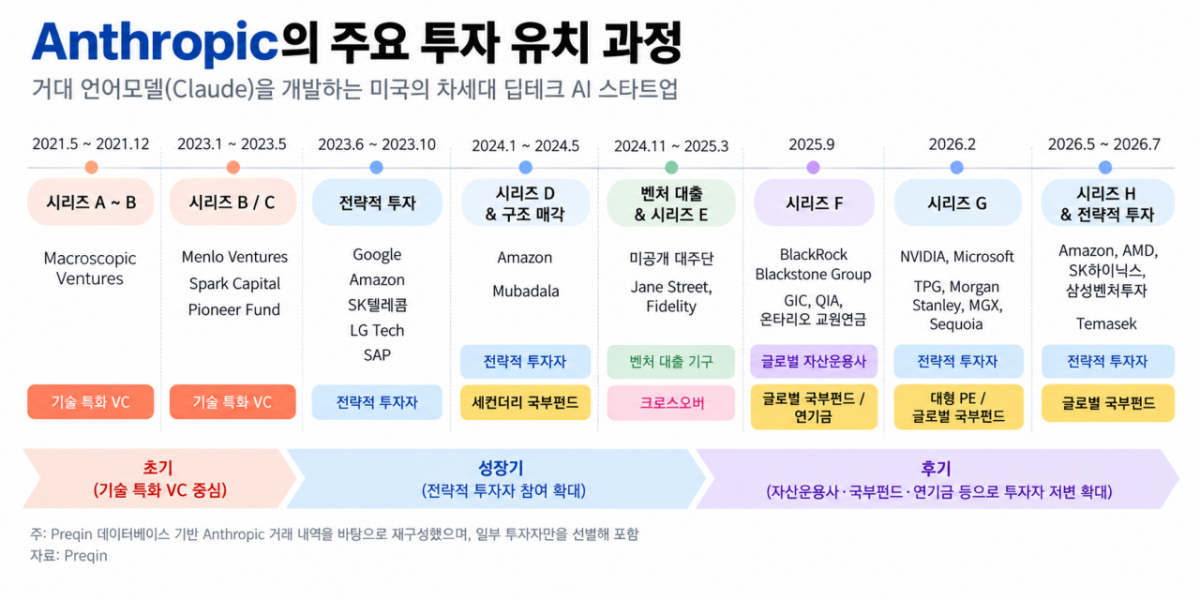
For example, AI deep tech startup Anthropic is a representative case of growth through diverse investors. During Series A to C, technology-focused VCs such as Menlo Ventures and Spark Capital primarily invested, but later Amazon and Google joined as strategic investors. From Series F onward, asset management firms like Blackstone, sovereign wealth funds including GIC and Qatar Investment Authority (QIA), and pension funds also participated.
Researcher Kim proposed solutions for the domestic follow-on investment cliff: concentrate policy funds on VCs active in follow-on investments and attract participation from diverse investors such as CVCs, large institutional investors, and asset management firms. Especially, funding supply methods must be diversified according to the company's growth stage and characteristics. For companies in the Yangsan and infrastructure construction stages, non-equity capital such as government guarantees and low-interest loans should be supplied in addition to equity investment.
Expanding the exit market was also identified as a challenge. The suggestion is to activate intermediate exit mechanisms such as secondary markets, buyouts, and quasi-liquid funds to help existing investors recover their funds and redirect them into long-term investments.
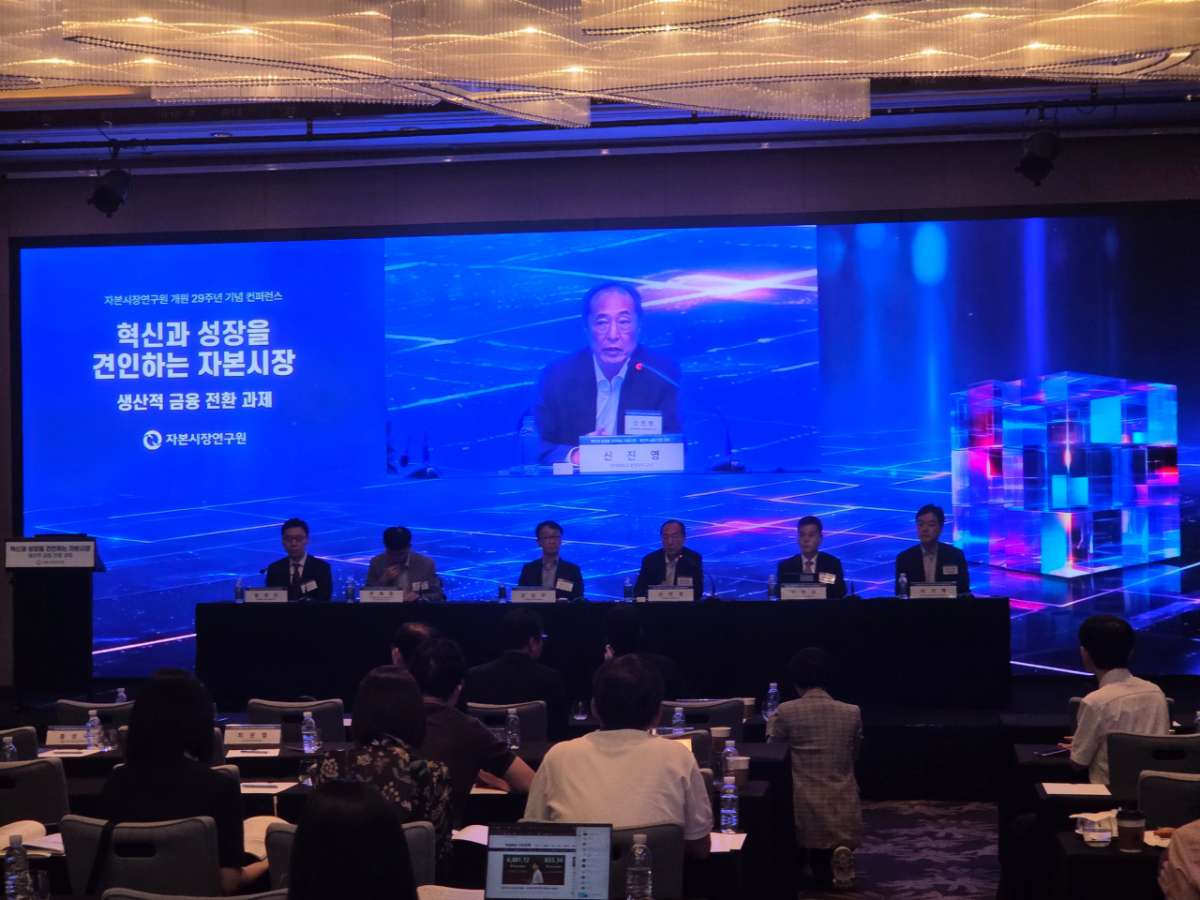
During the panel discussion that day, voices were raised calling for improvements to the domestic venture investment environment where hub VCs struggle to grow. Lee Gi-baek, Jeong Chaek-sa-eop (Head)(Director) of the Korean Venture Capital Association, cited investment contract practices and fund structures as causes. The head explained, "In Korea, VCs and companies sign contracts individually, often resulting in different rights and obligations for each investor, whereas in the U.S., contracts between investors coordinate these terms, making it relatively easier for existing investors to participate in subsequent rounds."
Short fund terms are also an obstacle. Even if large-scale follow-on investments become necessary 3-4 years after initial investment, existing funds may lack sufficient investment capacity. The head stated, "Venture funds should be scaled up and their operating periods extended so that existing VCs can fill funding gaps arising during the growth process of invested companies."
Kang Shin-woo, CEO of Stick Investment, emphasized expanding the exit market. Kang (CEO) said, "Even if large-scale capital is supplied through funds such as the National Growth Fund, a market to recover these funds must be supported," and added, "Exit pathways concentrated on IPOs (initial public offerings) must be diversified through M&As (mergers and acquisitions)."
[MoneyToday startup media platform Unicorn Factory]

 in FUTURE


