

[For more diverse corporate information on the startup mentioned in this article, visit Unicorn Factory's Big Data Platform Data Lab.]
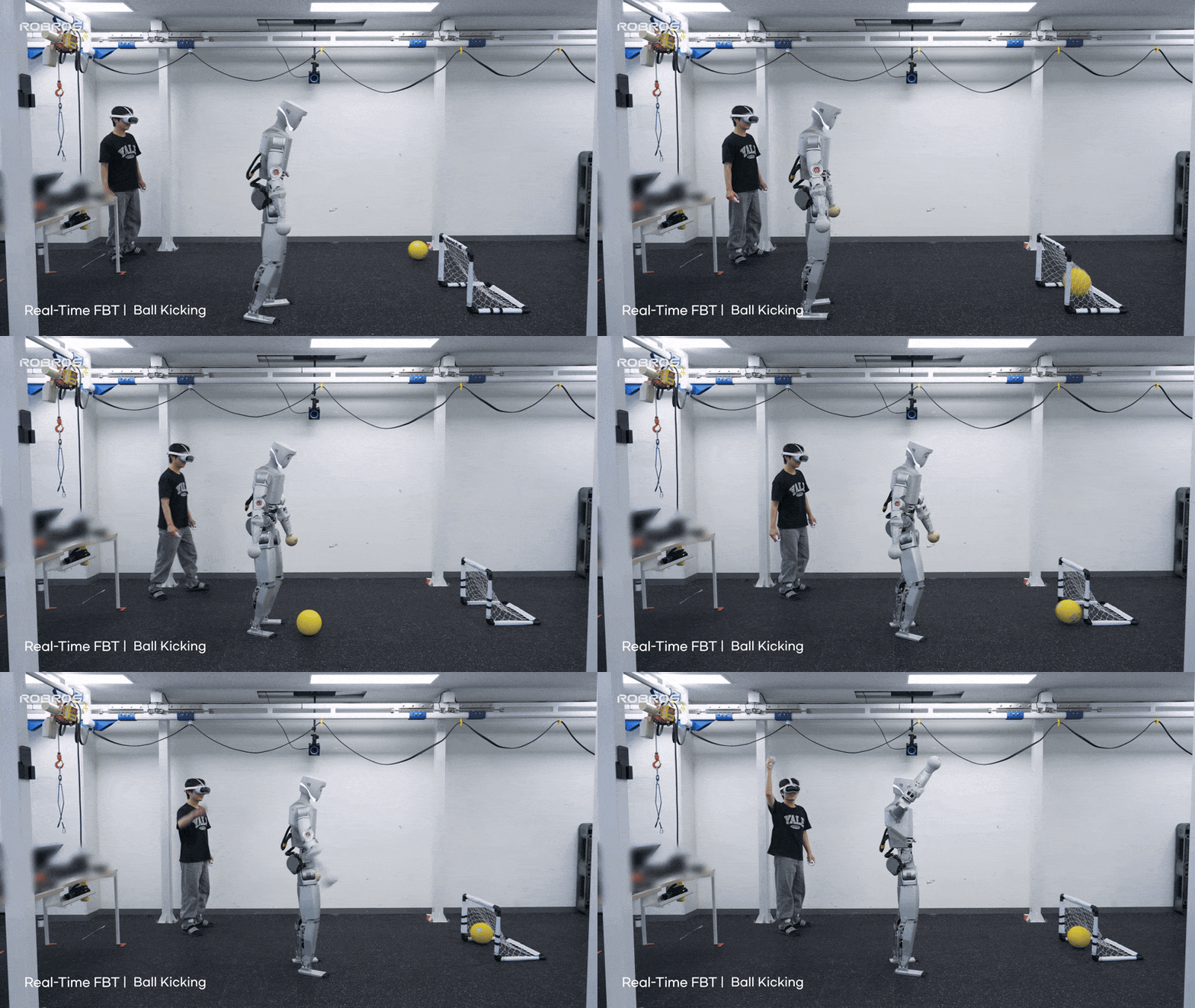
On the 22nd, Robros, a developer of hardware and software for humanoid robots, announced that it has released a video demonstrating real-time full-body teleoperation technology for its bipedal humanoid 'IGRIS-C'.
Robros has previously showcased teleoperation technology focused on replicating human movements primarily through the upper body of IGRIS-C. This time, it expanded the application range to include the lower body, enhancing the technology to connect the operator's movements with the robot's full-body motion and enable integrated control of walking, posture, and upper- and lower-body actions.
In the released video, viewers can see IGRIS-C simultaneously moving its upper and lower bodies in response to the operator's movements, striking a punching bag, kicking a ball with its feet, and interacting with surrounding environments and objects.
The core of real-time full-body teleoperation lies not in replaying pre-programmed motions but in enabling operators to directly assess their surroundings and integrate control of the humanoid's movement and tasks in real time.
While upper-body-centric teleoperation was mainly used for tasks involving arm movements at fixed positions, full-body teleoperation allows the robot to move, adjust its posture, and manipulate objects with both arms.
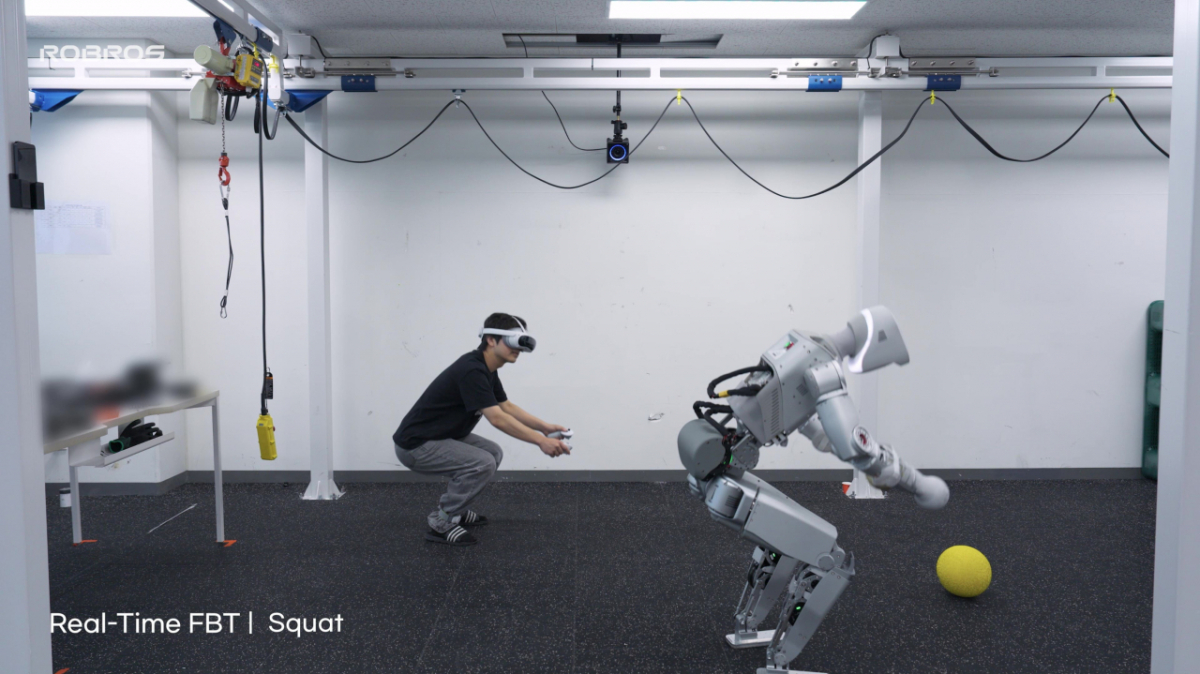
Robros considers this functionality essential in industrial settings where targets, locations, and surrounding environments constantly change. In factories and logistics centers where standardized automation equipment alone cannot cope, humanoid robots must be able to move and adjust their postures according to on-site conditions to perform tasks.
A Robros representative stated, "Teleoperation technology can expand its application range even into environments that are difficult for humans to access directly," adding, "It involves deploying robots at hazardous sites while operators control them remotely from safe locations."
The representative also emphasized the significance of full-body teleoperation in securing learning data for humanoids. When operators physically perform robot movement and manipulation in real-world environments, they can collect motion data from a wider variety of positions, postures, and task scenarios.
A Robros representative noted, "Since humans can assess situations and connect them to the robot's movement and manipulation in real time, this is a crucial technology for applying humanoids in industrial settings where defining all possible scenarios in advance is difficult."
They further added, "The work data accumulated during the teleoperation process can also be utilized for future humanoid learning and technological advancement. We will continue to develop full-body teleoperation technology to enable the performance of diverse tasks required in industrial settings."
[MoneyToday startup media platform 'Unicorn Factory']

 in FUTURE

