

[For more diverse corporate information on the startup mentioned in this article, please visit Unicorn Factory's big data platform 'Data Lab'.]
The global population is projected to approach 10 billion by 2050. The issue, however, is not just a rise in population numbers. With per capita protein consumption also increasing, total protein demand is expected to grow by more than 50% from current levels.
Currently, humanity's protein supply relies heavily on meat, milk, and proteins derived from milk. Bio-foodtech company 'Intake' has set its sights squarely on this supply-demand imbalance and is expanding its business with a new solution.
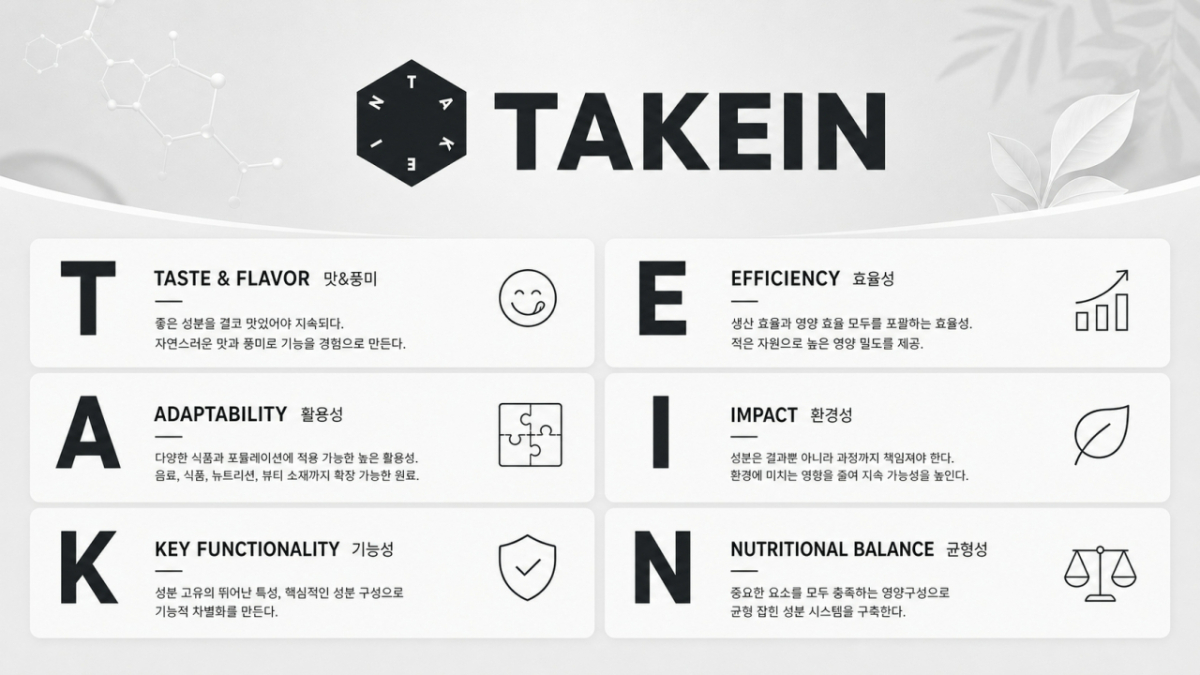
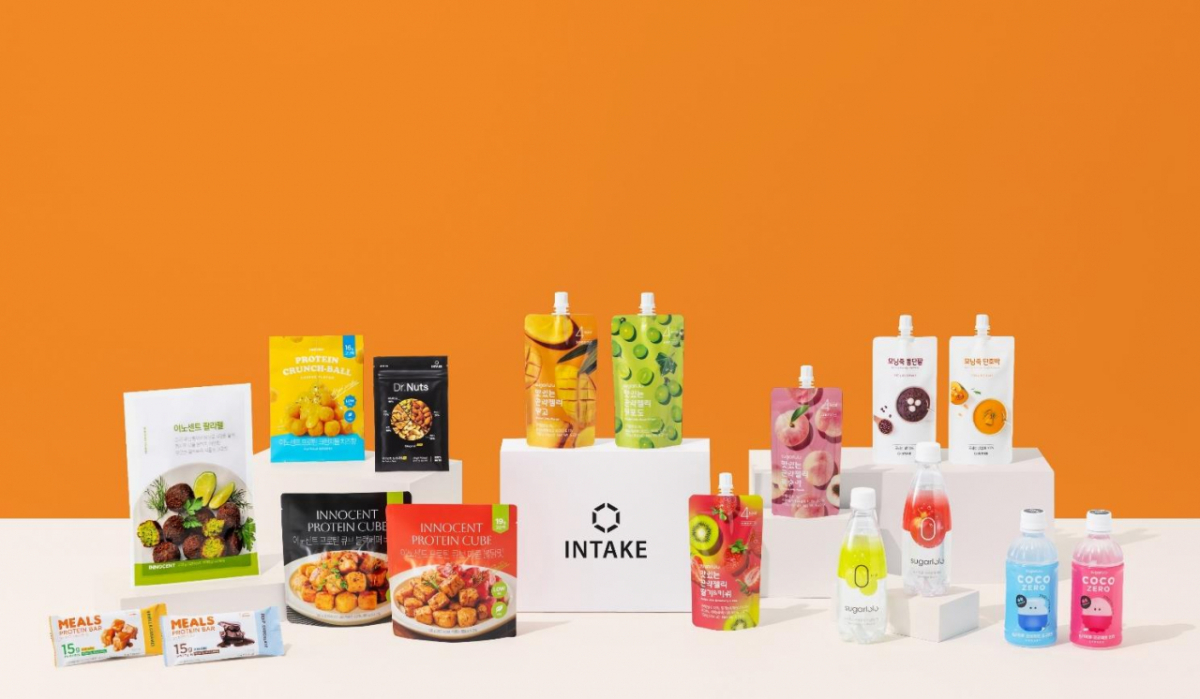
Intake has established its foothold through B2C businesses in the alternative food sector, including alternative sugar, alternative meat, and alternative eggs. During its business operations, it observed firsthand the surge in protein demand and raw material supply instability, recently declaring a shift to a B2B materials company by launching its proprietary material brand 'Takein (TAKEIN)'.
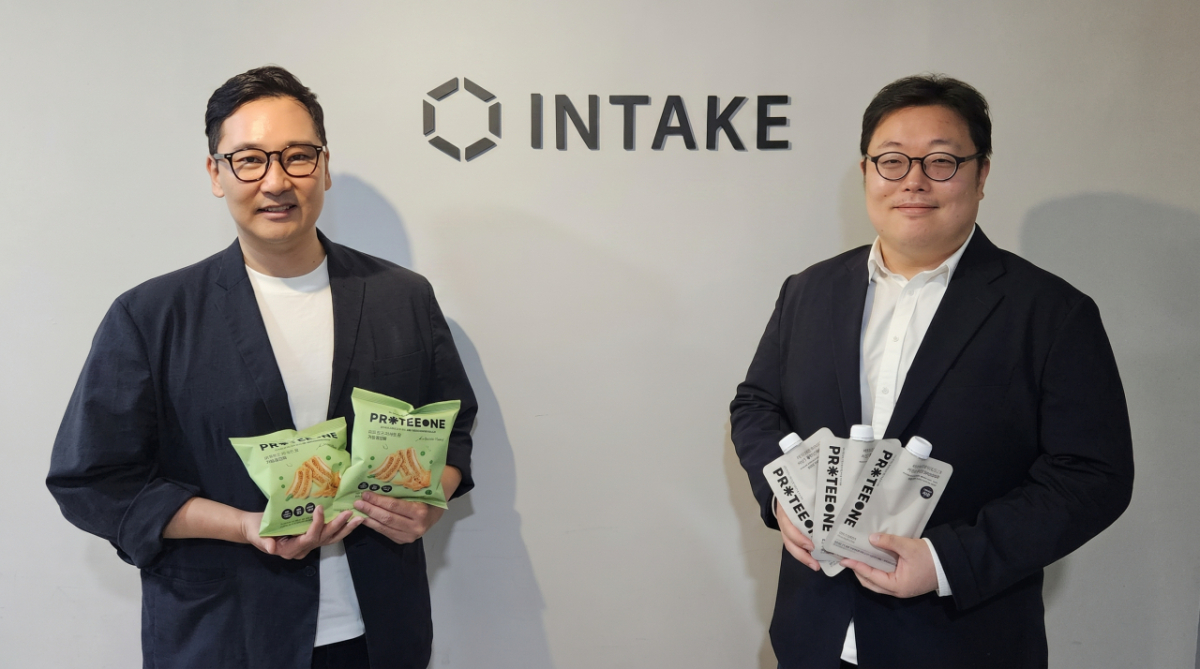
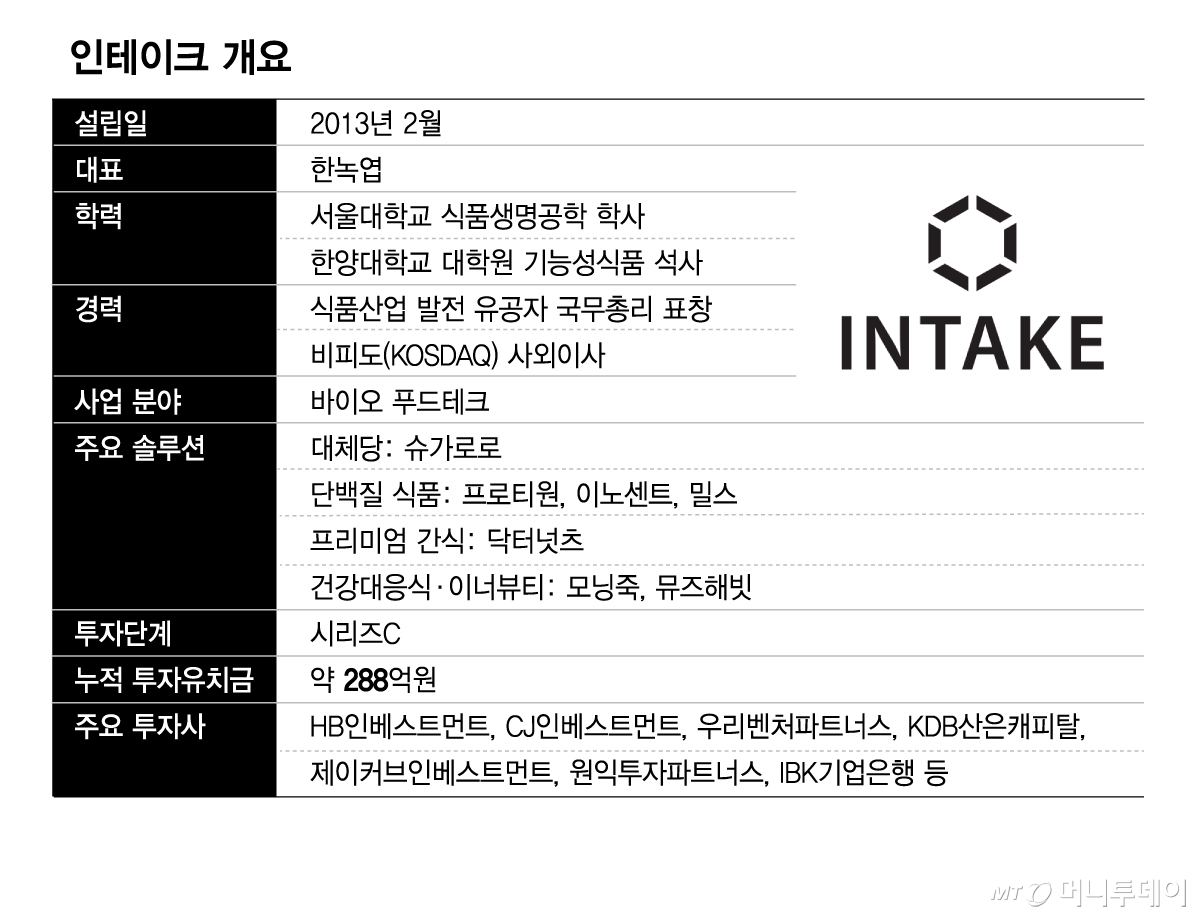
Han Nok-yep In Te-i-keu (CEO) stated, "While operating a B2C finished product business, we personally experienced the instability of the raw material supply chain and price spikes. To fundamentally resolve this, we began R&D on alternative materials in 2016 and have now entered commercialization for '3rd Generation Misaeng Water Protein (Yeast Protein)'."
He pointed out, "Plant-based proteins, often cited as alternatives to existing proteins, are incomplete proteins with a Biological Value (BV) of around 70%. They also continue to cause consumer issues such as soy allergies and digestive problems. Furthermore, they are highly susceptible to climate impacts, making prices and supply volumes unstable."
From barren land with even no samples... Overcoming barriers by leveraging pharmaceutical technology
Intake's developed 3rd generation protein is produced by cultivating Misaeng Water in fermentation tanks rather than pastures or fields to extract protein. Among Misaeng Waters, yeast was selected.
Han (CEO) said, "Yeast is a safe and human-friendly strain that has coexisted with humans for thousands of years while making alcohol and bread. As a complete protein, it can be matched one-to-one with animal proteins. It also contains functional substances like beta-glucan and mannose, giving it additional functional value as premium dietary fiber."
Commercialization of Misaeng Water protein had been difficult due to high technical complexity. Kim Jeong-hoon, Intake's CTO (Chief Technology Officer), recalled, "When we began our research, the environment was so harsh that even obtaining samples of Misaeng Water protein was difficult."
Especially since yeast already had sufficient demand in traditional industries like bread and beer, few studies aimed to utilize it as a protein material. CTO Kim stated, "Extracting protein from general yeast strains did not yield efficiency. We solved this problem by applying technologies from the medical and pharmaceutical fields."
The technological barriers built by Intake consist of three main elements. First is 'Super Protein Strain Improvement.' While general yeast strains contain about 40% protein when dried, Intake secured a high-content strain with protein levels raised to around 60% through a non-genetically modified (Non-GMO) improvement method.
Second is the technology for controlling the environment and conditions to rapidly and stably cultivate strains in fermentation tanks. Third and the core moat is 'Separation and Purification Technology.' Yeast is a microorganism with a very difficult cell wall to break; Intake has perfected a purification process that crushes it to maximize protein content and separates useful Busan substances.
Turning discarded cell walls into materials... Aiming for the 50th Trillion Won Raw Material Market
The competitiveness of Intake's B2B material business lies in cost-performance. Whey protein prices have nearly doubled over the past two years, reaching the range of 40,000 to 50,000 won per kg, whereas Intake's target unit price is at 50% of whey protein production costs.
It also possesses strengths in terms of environmental sustainability and long-term viability. Han (CEO) said, "Regardless of price, just looking at the land and water inputs, yeast protein production differs significantly from general livestock farming. Water usage is reduced by 97%, and arable land by 99%. Dependence on climate is also very low."
The target market size is also massive. Intake is targeting a huge raw material market approaching 50 trillion won, comprising the global whey and powdered protein market of 35 trillion won and the dietary fiber market of 14 trillion won. The company's strategy involves extracting dietary fiber materials from the crushed cell wall residue left after producing yeast protein for separate commercialization.
Han (CEO) stated, "For food and beverage manufacturers suffering from deteriorated profitability due to skyrocketing whey protein prices, high-nutrition, low-cost yeast protein is an excellent alternative. Beyond substitution, companies are responding positively as they can reduce cost burdens by blending it with existing protein raw materials and adjusting formulation ratios."
Intake is currently applying the yeast protein material to its own protein shake brand 'Protywon' to verify market viability. Han (CEO) said, "We have already received responses from major corporations stating that if the product succeeds, they will actively consider using our company's materials. Full-scale B2B deliveries are expected to begin next year."
Preparing for a Tech-Listed IPO... Aiming to Become the First Bio-Foodtech Listing on KOSDAQ
Intake's revenue last year was 40 billion won. The target for this year is set at a minimum of 70 billion won. Global revenue recorded 7.1 billion won last year, with expectations to reach 15 billion won this year. With products currently exported to 31 countries including North America, Europe, and Southeast Asia, the company plans to expand to 50 countries in the future.
The next pipeline is also being prepared. Protein based on seaweed has entered the early stages of commercialization, and research on mycelium materials is underway. CTO Kim stated, "If yeast protein becomes a material that rapidly replaces a major industry, seaweed protein and seaweed polysaccharides will become high-value-added raw materials with enhanced functionality."
Intake is pursuing a KOSDAQ listing using its proprietary material technology as a weapon. Daishin Securities has been selected as the lead underwriter. The company plans to undergo a technical evaluation next year and enter KOSDAQ via a tech-listed IPO, aiming to become 'South Korea's first listed bio-foodtech company.'
Han (CEO) emphasized, "Intake's vision is to help people enjoy better daily lives more easily through the simple moments of eating and drinking. We will be a bio-foodtech company that breathes in close sync with consumer demand and leads the evolution of food."
He added, "Just as the 'Intel Inside' logo on PCs guarantees performance, our goal is to have Takein engraved on labels for protein foods and dietary fiber foods. We aim to become Intel in the food and foodtech sectors, a specialized material brand trusted by consumers for safety and nutrition."
[MoneyToday startup media platform 'Unicorn Factory']

 in FUTURE


