

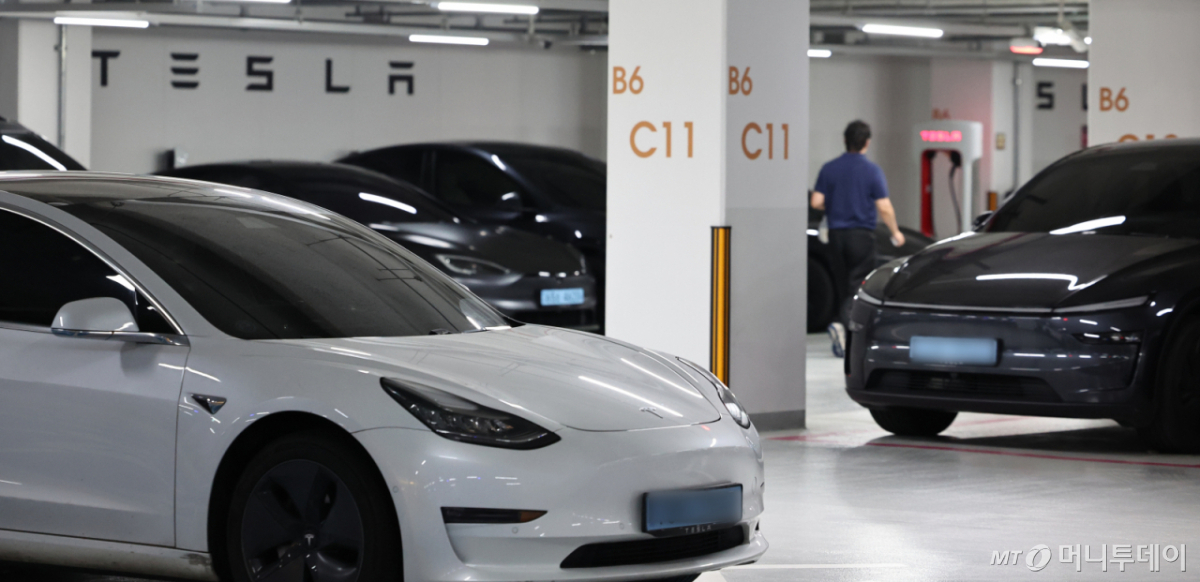
As Chinese-made cars overtook Germany to claim the number one spot in the imported car market this year, the Korea Automotive Mobility Industry Association (KAMA) called for policy support to protect domestic production bases and parts ecosystems.
According to KAMA's report titled "Analysis of New Domestic Vehicle Registrations in the First Half of 2026," released on the 4th, total new vehicle registrations in the first half of this year reached 850,063, a 1.3% increase compared to the same period last year.
Electric vehicles (EVs) surged by 113.6% to 198,509 units, with electric powertrains including HYBE-led and hydrogen fuel cell vehicles accounting for 57.8% of all new registrations. EVs alone made up 23.3% of the market, meaning roughly one out of every four new cars was an EV.
KAMA analyzed that the increase in EV sales during the first half was largely driven not by organic demand growth but by policy and external factors such as the introduction of EV conversion subsidies, early disbursement of local government grants, and high oil prices. With a significant portion of local subsidies already exhausted, concerns were raised that EV demand may slow down again in the second half of the year.
Meanwhile, imported electric vehicles have been leading the growth trend in Korea's EV market. New registrations of imported cars reached 192,703 units in the first half, a 30% increase from the same period last year. The share of imported vehicles among all new registrations expanded to 22.7%.
By country of manufacture, Chinese-made vehicles jumped 127.8% year-on-year to 79,444 units. Their share in the imported car market rose from 23.5% in the first half of last year to 41.2% this year, surpassing Germany to take the top position.
The surge in Chinese-made vehicles was led by Tesla Model Y and Model 3 produced at its Shanghai factory. Sales expansion of BYD's Sealion 7 and Dolphin, as well as Polestar 4 models manufactured in China, also contributed to the growth.
In fact, new registrations of Chinese-made EVs increased by 178.7% to 69,513 units. Their share in Korea's domestic EV market grew from 26.8% to 35%. In contrast, German-made vehicles declined by 3% to 57,954 units, with their share in the imported car market falling from 40.3% to 30.1%.
During the same period, domestic EV sales also rose by 92% to 114,046 units. However, since imported EVs increased by 151.9% to 84,463 units, the share of domestic vehicles among all EVs dropped from 63.9% to 57.5%. When looking only at EVs, the share of imported cars rose to 48.7%.
KAMA noted that while the expansion of Chinese-made EVs could positively contribute to lowering vehicle prices and expanding consumer choice, it may pose a burden on domestic manufacturing bases and supply chain competitiveness. The association argued that electric vehicles should be included in the Domestic Production Promotion Tax System, which supports companies producing vehicles domestically, separate from EV purchase subsidies.
KAMA President Jung Dae-jin stated, "As Chinese-made EVs accelerate their onslaught not only in global markets but also in the domestic market, Korea's automotive industry faces serious threats to its manufacturing base and supply chain competitiveness." He urged, "It is necessary to include electric vehicles in the Domestic Production Promotion Tax System to enhance the competitiveness of the entire domestic production infrastructure and ecosystem." He further emphasized, "With concerns about demand slowdown due to the exhaustion of local subsidies, additional supplementary budgets for local government grants should be secured promptly. To maintain momentum for the transition to future vehicles during the electrification process, tax benefits such as reductions in individual consumption taxes for eco-friendly vehicles including HYBE-led models must continue."

 in INDUSTRY
