

Price increases for older-generation DRAM are expected to continue through the second half of this year. This is due to memory semiconductor manufacturers focusing production on HBM (high-bandwidth memory) and server-grade DRAM, leading to tight supplies of general-purpose DRAM. With sustained growth in HBM demand, analysts predict that shortages and price hikes for older-generation DRAM will persist long-term.
According to industry sources on the 20th, global investment bank Morgan Stanley forecasts that DDR4 (Double Data Rate 4) prices will rise by 50% compared to the previous quarter in the third quarter of this year. A further 10% increase is expected in the fourth quarter. DDR4 is a general-purpose DRAM used in PCs and other devices, representing an older generation product compared to the current flagship DDR5.
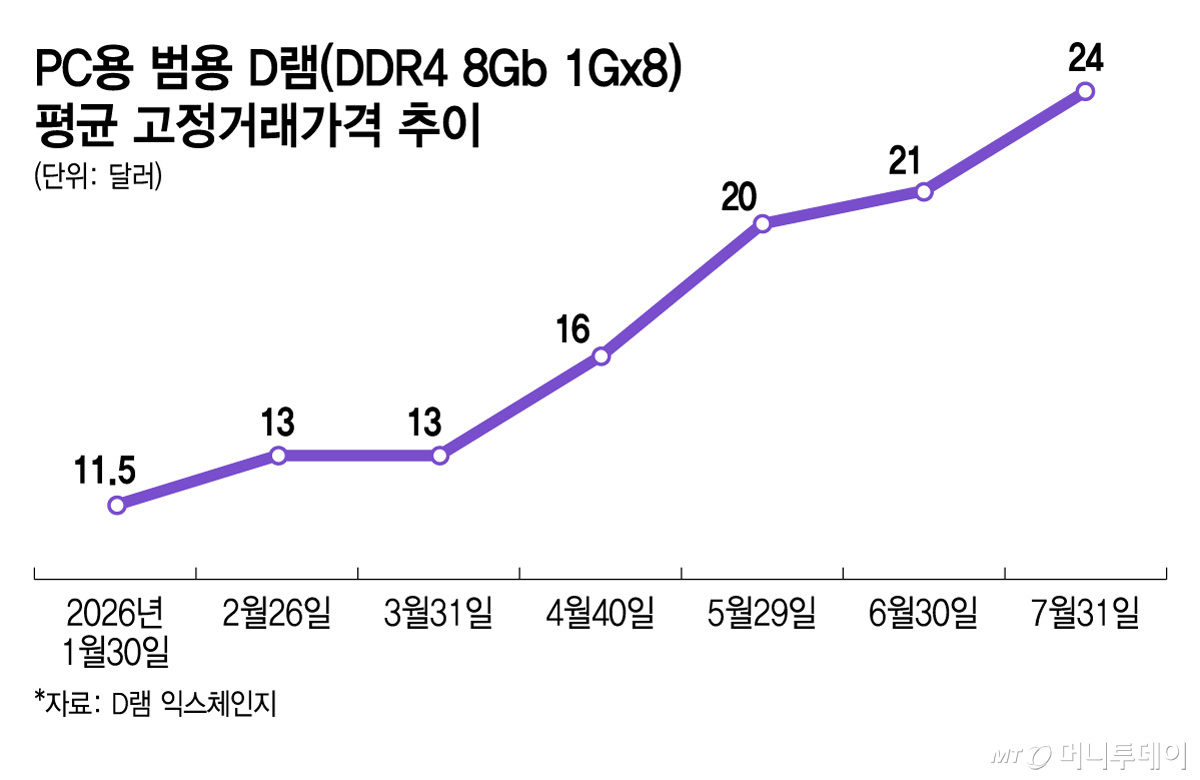
DDR4 prices have already surged to record highs. According to DRAM exchange market research firm, as of last month's 31st, the average fixed transaction price for DDR4 8Gb (gigabit) 1Gx8, a general-purpose PC DRAM, reached $24, setting a new all-time high. Compared to the starting point of the survey in June 2016 at $2.9, prices have more than doubled eightfold over ten years.
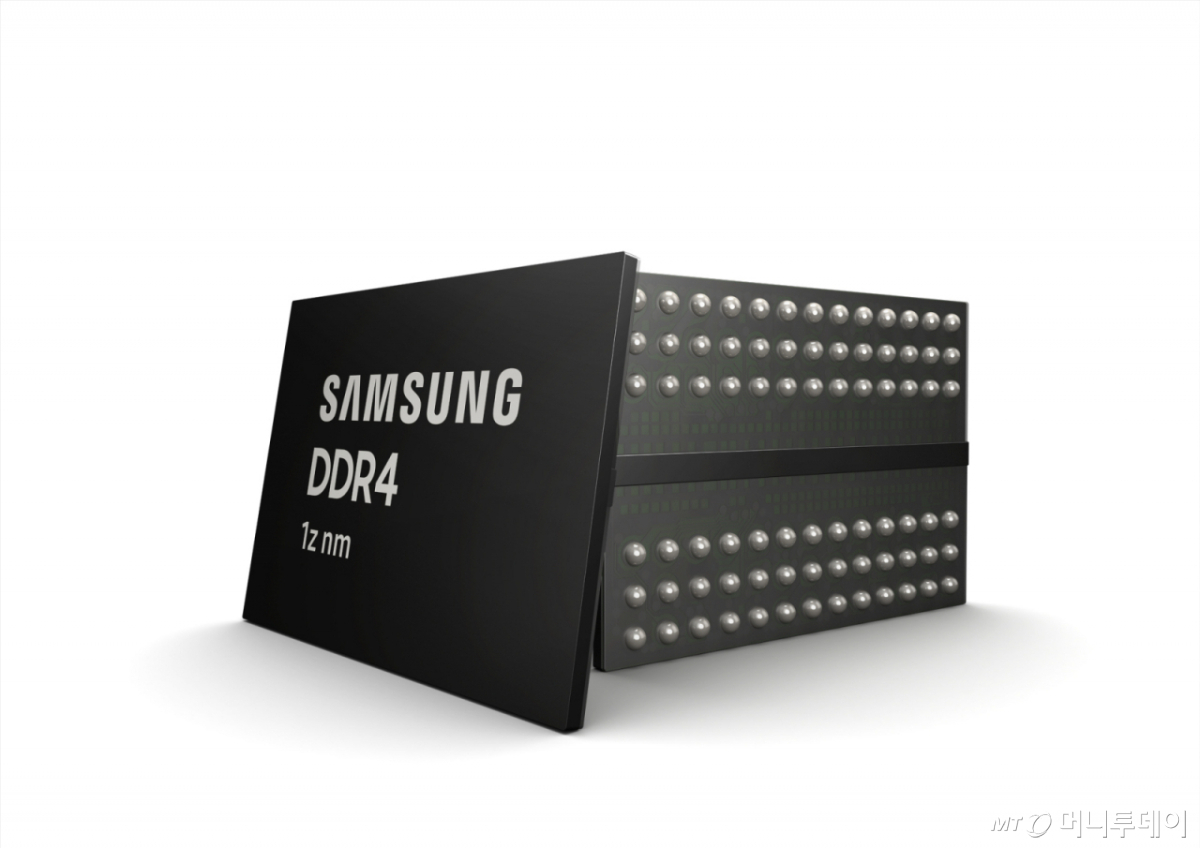
The background for price increases lies in reduced supply of older-generation DRAM. The "three major memory companies" — Samsung Electronics, SK Hynix, and Micron — have prioritized allocating production capacity to HBM and server-grade DRAM, leading to decreased production of older products like DDR4. HBM requires significantly larger chip area and a more complex manufacturing process, needing three to four times the production capacity to produce the same volume compared to general-purpose DRAM. Considering limited production capacity, as the proportion of HBM increases, the supply of general-purpose DRAM inevitably decreases.
Especially with recent requests from CSPs (large cloud service providers) to expand HBM supply, constraints on general-purpose DRAM supplies are expected to intensify. In fact, major customers are continuously revising their medium-to-long-term demand plans upward in response to expanded AI (artificial intelligence) investments. According to Meritz Securities, as of this month, the 2028 HBM demand plans for major customers stand at: Broadcom 35 billion–40 billion Gb, NVIDIA 30 billion Gb, Google 20 billion Gb, and AMD 10 billion Gb. Kim Sun-woo, a researcher at Meritz Securities, stated, "With limited DRAM production capacity in 2027–2028, competition for securing HBM volumes will intensify," and predicted that "shortages of general-purpose DRAM will worsen further."
Disruptions in general-purpose DRAM supply are becoming a reality. Taiwanese memory module manufacturer Apacer analyzed that the volume of DRAM supplied by major DRAM manufacturers to independent memory module companies next year could decrease by more than 70% compared to this year. Apacer CEO Chang Tzu-kun expressed concern, stating, "The biggest threat facing Apacer is not paying excessively high chip prices, but failing to secure supply itself." He projected that the DRAM shortage would continue at least until mid-2027. Earlier, SK Hynix President Kwak No-jung also mentioned the possibility of a prolonged supply shortage, noting, "From a supply perspective, 2027 will be the worst year in industry history."
This trend is inevitably favorable for the three major memory companies. As HBM sales expand, they can expect price increases driven by reduced general-purpose DRAM supplies. An industry insider stated, "The expansion of HBM demand is restricting general-purpose DRAM supply and driving up prices," adding, "A favorable environment is being created for memory manufacturers."

 in INDUSTRY

