

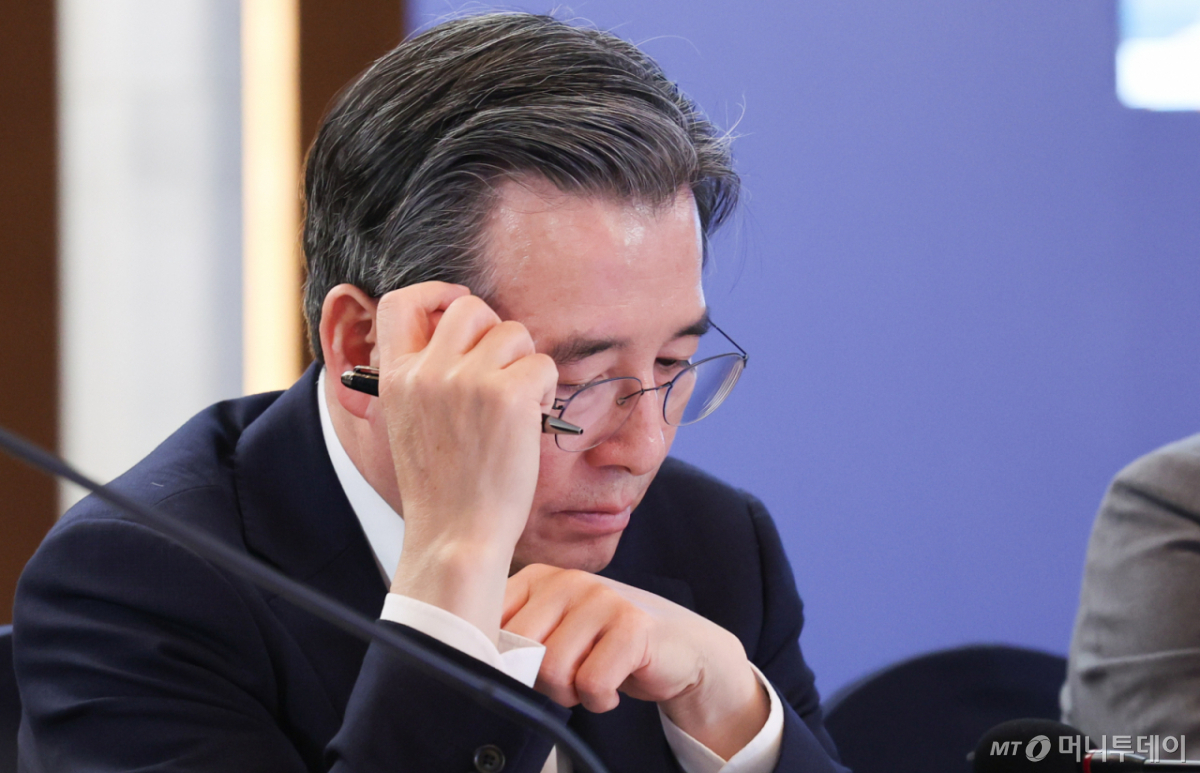
Business circles were shocked by the sudden resignation of former Cheong Wa Dae Jeong Chaek (Head) Kim Yong-beom. "We did not expect this," was a bewildered reaction heard from various quarters. Corporate executives became busy trying to understand the inner workings of Cheong Wa Dae, including the background of personnel changes and potential shifts in the government's direction. A senior executive at a major conglomerate remarked, "Whether we like it or not, it feels as though the beacon we have been watching and running toward has suddenly disappeared."
Recently, there have been voices in the industry saying, "The biggest variable in the global semiconductor market is the South Korean government." This indicates that direct government intervention plays a significant role, with former Chief Kim at the center. Throughout his tenure, whenever former Chief Kim posted lengthy social networking service (SNS) posts on various issues, companies immediately scraped the content for their management teams to share and analyze. It cannot be denied that from the announcement of three mega projects to the astronomical investment in semiconductor factories in Honam, companies followed along, whether due to external pressure or voluntary action, under the grip of former Chief Kim.
Flustered companies are now waiting for the government's next signal. Uncertainty is the worst trap, especially as they prepare to execute massive investments both domestically and internationally, including in physical AI (artificial intelligence). With investment execution in the United States looming, a "one-team strategy" between government and industry has never been more urgent. This is the moment when the state must clearly demonstrate consistent industrial policy and unwavering support for businesses.
However, business circles remain puzzled. This was also evident in the appointment of the newly created Cheong Wa Dae Mega Project Advisor at the senior executive level. Given the government's strong will, there had been expectations that a powerful figure would be appointed to bolster corporate support. Corporate executives had anticipated former or current ministers. However, with a top-tier bureaucrat being selected, the level of attention has relatively diminished.
The issues surrounding laws and regulations are even more severe. It is not a new phenomenon for businesses to complain that despite outwardly proclaiming pro-business policies, expanded investment, and job creation, regulations are moving in the exact opposite direction. The government pushed through the Yellow Ribbon Law (amendments to Articles 2 and 3 of the Trade Union and Labor Relations Adjustment Act), which business leaders fiercely opposed even holding outdoor protests against it, and now even corporate staffing arrangements could become subjects of labor disputes. Even requests for regulatory relief on 52-hour work limits for semiconductor R&D personnel, similar to those in competing countries, are being ignored. A semiconductor industry executive stated, "We have now given up all hope."
The semiconductor industry, which is virtually the lifeline of South Korea today, is spending what can only be described as a time of destiny amidst U.S. pressure and Chinese pursuit. Professor Hanyang University, an expert on global semiconductor industry structures, remarked, "Everyone perceives this as a 'war' and rushes in, yet South Korea remains complacent." This is a message that the new economic commander-in-chief should take to heart.

 in OPINION

