

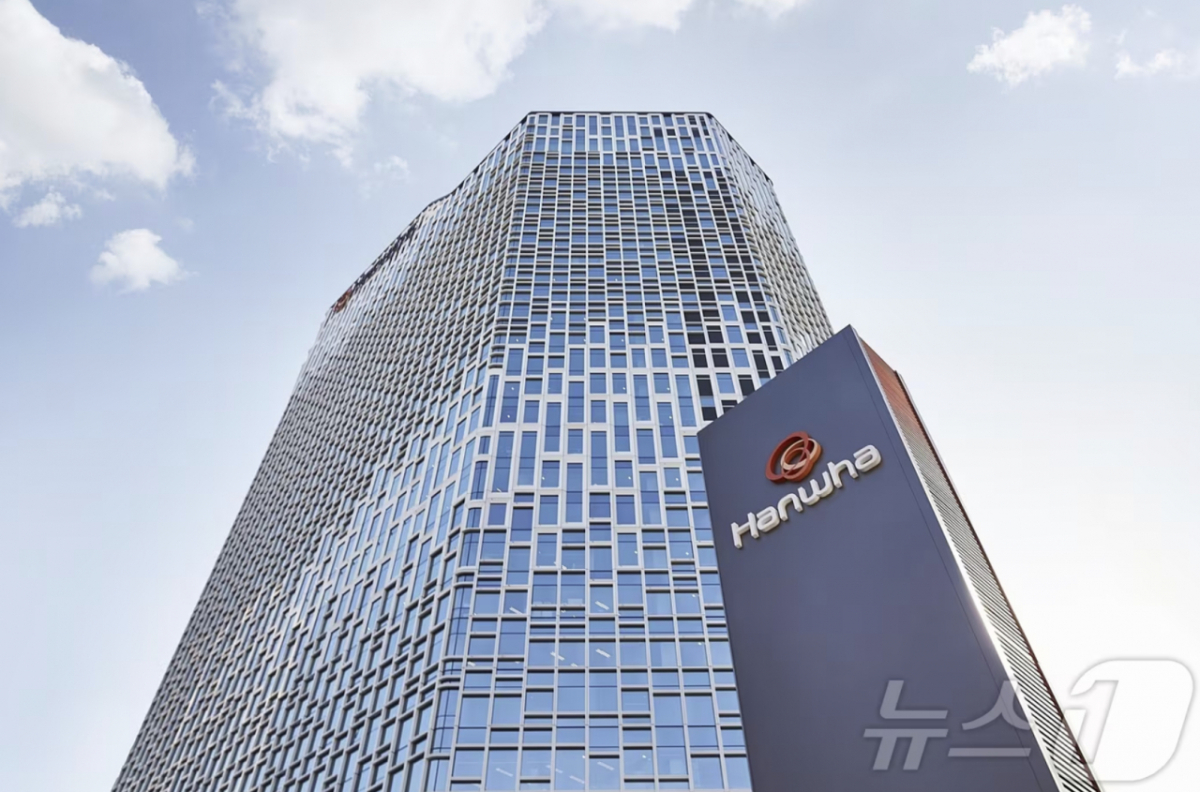
The Korea Fair Trade Commission (KFTC) approved Hanwha Group's acquisition of shares in Korea Aerospace Industries (KAI) on the 31st. In response, Hanwha expressed its welcome and announced plans to strengthen investments aimed at creating a "Korean version of SpaceX" while boosting competitiveness in the defense industry.
In an official statement released today, Hanwha Group emphasized: "We have been acquiring KAI shares while exploring cooperation with KAI to enhance the global competitiveness of South Korea's defense industry and foster an aerospace ecosystem. Going forward, we will continue to seek sustained cooperation with KAI to actively contribute to strengthening the global competitiveness of South Korea's defense industry, advancing the nation's aerospace sector, and revitalizing regional economies."
Previously, the KFTC reviewed the share acquisition by three Hanwha affiliates—Hanwha Aerospace, Hanwha Systems, and Hanwha Aerospace USA—and determined that the transaction would not restrict competition, leading to its approval. Currently, these Hanwha affiliates hold 9.90% (Hanwha Aerospace), 4.98% (Hanwha Systems), and 1.01% (Hanwha Aerospace USA) of KAI shares, totaling a combined stake of 15.89%. Under the Fair Trade Act, acquiring more than 15% of listed company shares triggers a corporate combination filing requirement.
With this approval of KAI share acquisition, Hanwha is expected to accelerate its vision for a "Korean version of SpaceX." In fact, Hanwha already possesses technical and manufacturing capabilities in aircraft engines, guided weapons, radar systems, satellites, and land- and maritime-based defense sectors. Meanwhile, KAI has comprehensive system integration capabilities for fighter jets, helicopters, and unmanned aerial vehicles.
Hanwha is also considering becoming KAI's second-largest shareholder, exploring ways to enhance synergies through business collaboration with KAI and participate in KAI's decision-making processes regarding global export expansion.
Recently, Hanwha announced its "AI Space Powerhouse" strategy, which includes investing 55 trillion won by 2040 to develop an independent launch vehicle, satellites, AI-powered data centers for space applications, and low-orbit communication networks, while securing integrated space and defense infrastructure. The company also plans to establish a comprehensive aerospace belt connecting Changwon in Gyeongsangnam-do (home to Hanwha Aerospace), Sacheon in Gyeongsangnam-do (home to KAI), and Goheung in Jeollanam-do (home of the Naro Space Center).
Kim Dong-kwan, Senior Vice Chairman of Hanwha Group, stated: "South Korea must no longer view space and aviation as separate industries. Only when space, aviation, AI, and national defense are integrated can we truly leap forward as an AI-powered space powerhouse."

 in INDUSTRY
