

"It can perform all combat capabilities that we need."
In May last year, a Polish lieutenant colonel who flew the FA-50 operated by KAI (Korea Aerospace Industries) for one year expressed his satisfaction with the aircraft in these words. Compared to the Russian MiG-29 fighters previously operated, he highly praised the FA-50’s various combat systems specialized for ground target attacks. He also highlighted its intuitive design of operation and maintenance systems, allowing even first-time pilots to adapt easily, as well as its capability for long-duration flights.
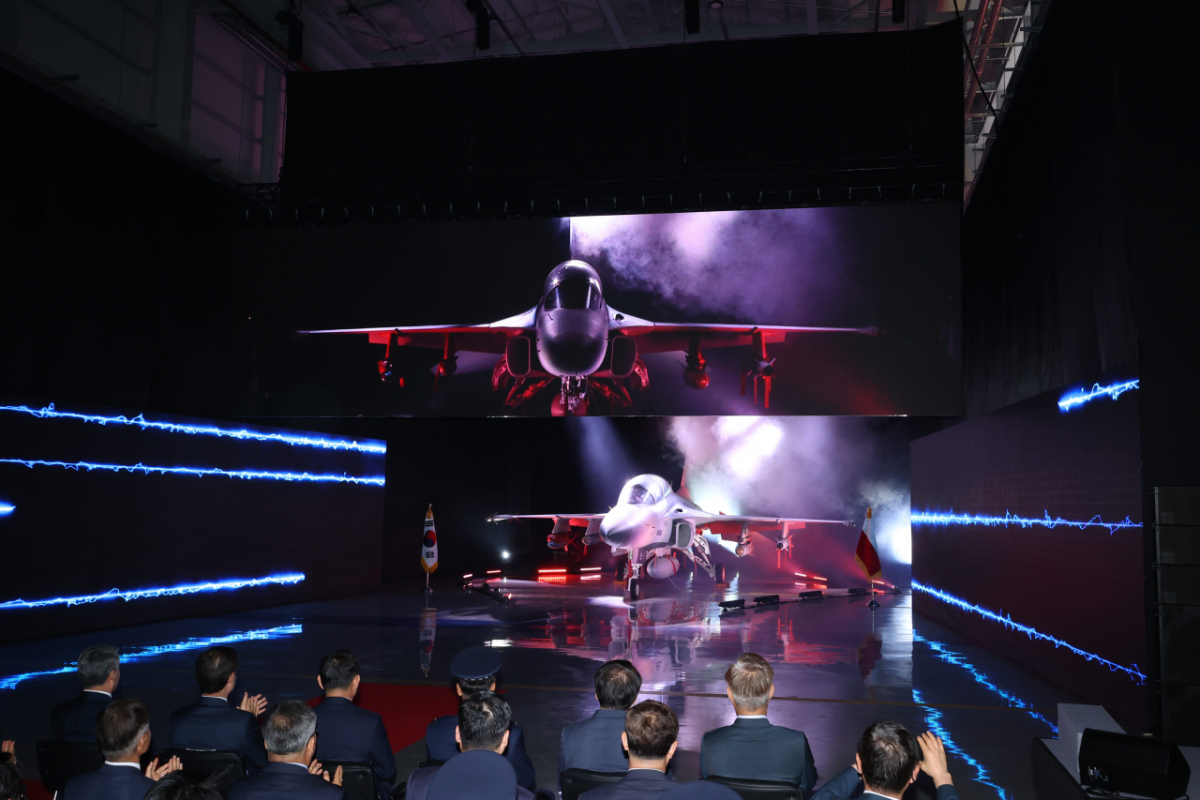
The supersonic light attack aircraft FA-50 is not just a product of KAI but one of the defense exports targeting Han Min-guk-eul (CEO). Based on its proven combat capabilities, it has established itself as an air force asset for countries around the world. To date, more than 150 units have been exported to six countries: Indonesia, Iraq, the Philippines, Thailand, Poland, and Malaysia. A KAI official stated, "As the FA-50 was deployed in actual operational theaters in Southeast Asia, global market attention on its combat capabilities has increased," adding, "Its proven performance, verified based on stable operational data from the Republic of Korea Air Force, also serves as a key marketing point."
The FA-50 was not immediately recognized in the global market. As a light attack aircraft developed based on KAI’s T-50 advanced trainer, it faced significant perceptions as a low-cost model or auxiliary power. The manufacturer KAI itself was viewed as a latecomer in the global aviation industry, making it difficult to break into the high-barrier global aviation market.
While established fighters such as Lockheed Martin’s F-16 and F-35 from the United States, and the Eurofighter Typhoon jointly developed by the UK, Germany, Italy, and Spain, already dominated the market, KAI carved out its own niche by leveraging price competitiveness, proven flight performance, and diverse combat systems. It focused intensively on countries with limited defense budgets and military infrastructure.
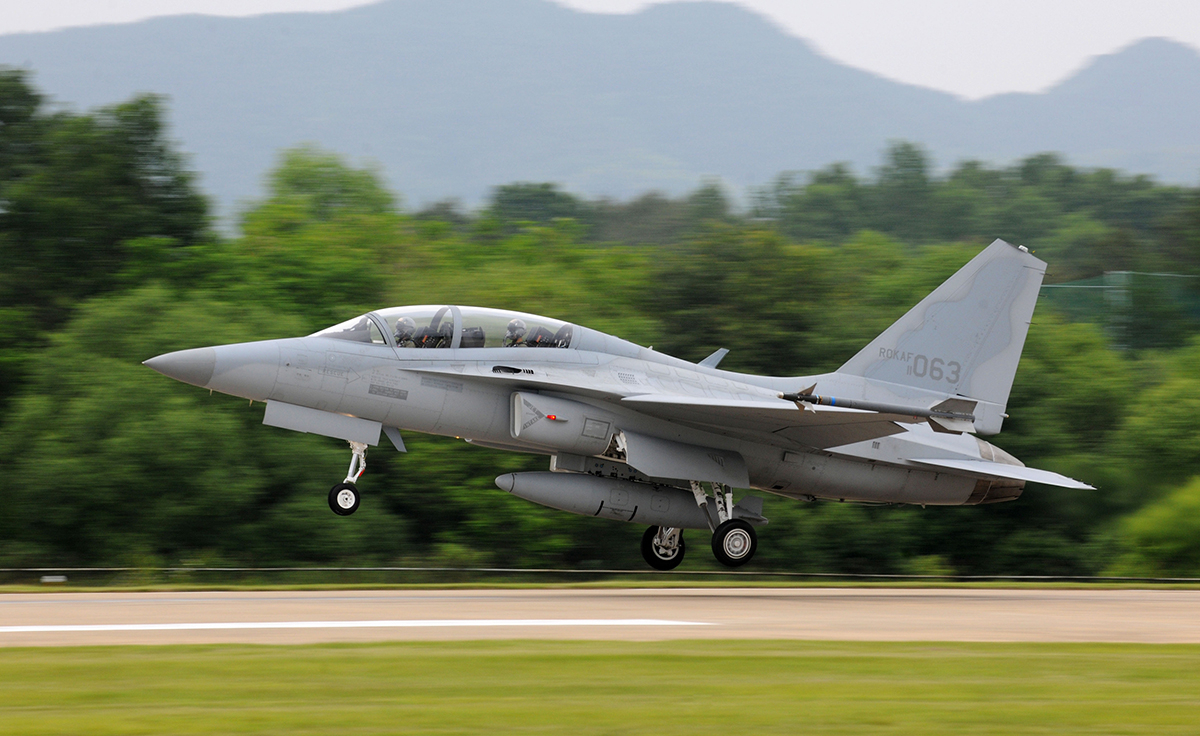
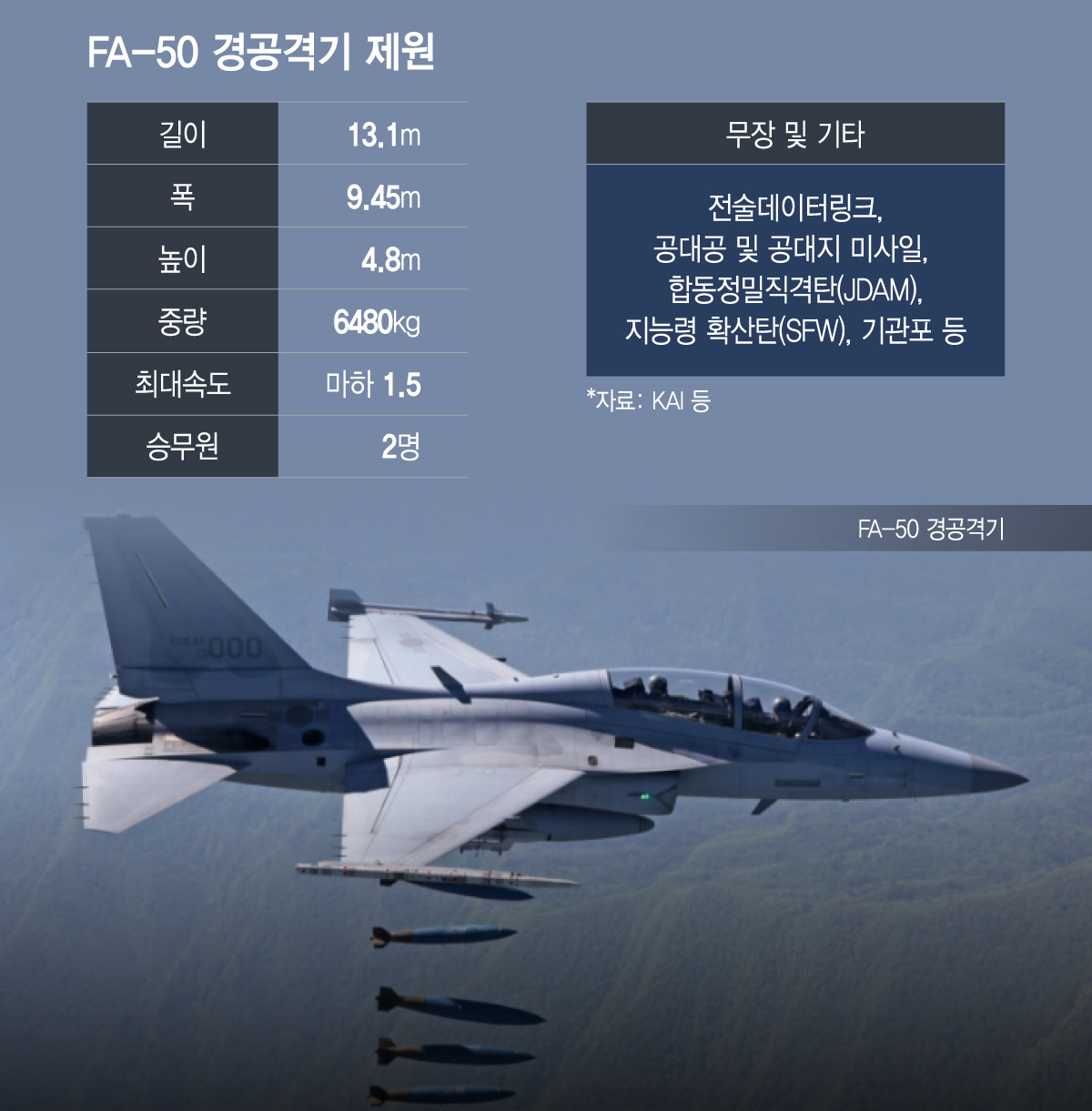
Price competitiveness did not come at the expense of performance. The FA-50’s most distinctive feature is its comprehensive combat system, including a multi-function radar. This radar can simultaneously detect and track multiple air-to-air and air-to-ground targets, supporting weapon deployment regardless of day/night conditions or weather.
The range of deployable weapons is also diverse. In addition to existing air-to-ground weapons used on the TA-50 tactical training aircraft, it can operate GPS-guided Joint Direct Attack Munitions (JDAM) for precision strikes. Equipped with Sniper targeting equipment that precisely identifies targets, it can also conduct precision strikes using laser-guided GBU-12 bombs.
Air-to-air weapon capabilities have also been expanded. In addition to the existing AIM-9 short-range air-to-air missile, it can carry the AIM-9X air-to-air missile, which expands its attack range by utilizing a Helmet-Mounted Display (HMD).
Survival equipment has been strengthened to ensure pilots can safely complete missions and return. It is equipped with Radar Warning Receivers (RWR) that detect unidentified electromagnetic waves to identify threats, and Countermeasure Dispensing Systems (CMDS) for evading tracking. Air refueling capability and a 300-gallon external fuel tank are also included, enhancing operational range and mission performance.
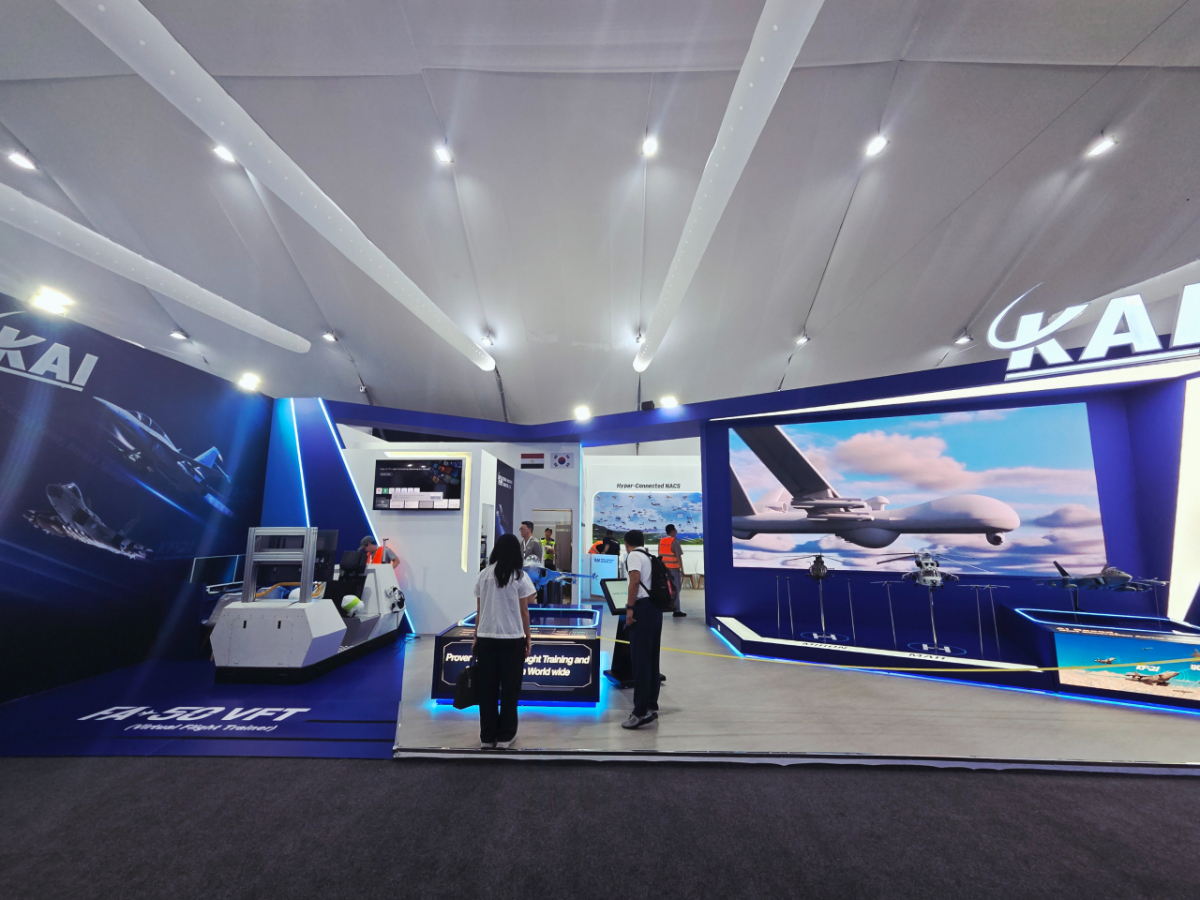
KAI is working to diversify its export markets beyond existing FA-50 operators. A key target market is Eastern Europe. Starting with Poland, it is pursuing new projects in countries such as Romania, Bulgaria, and Slovenia that have fighter replacement needs.
Strengthening its local business presence in Europe is also part of this strategy. In 2023, KAI opened a base office at Minsk Air Base in Poland to provide FA-50 customer and technical support, and last June, it established a European subsidiary in Warsaw.
In addition, interest in the FA-50 is growing in Africa, including Egypt and Morocco. Export markets are also expected to expand in the Middle East and Southeast Asia. A KAI official stated, "The FA-50 has strengths and high competitiveness in its ability to flexibly perform various missions tailored to customer requirements in the global market," adding, "We plan to continuously expand our overseas market share through strategies differentiated from competing aircraft models."
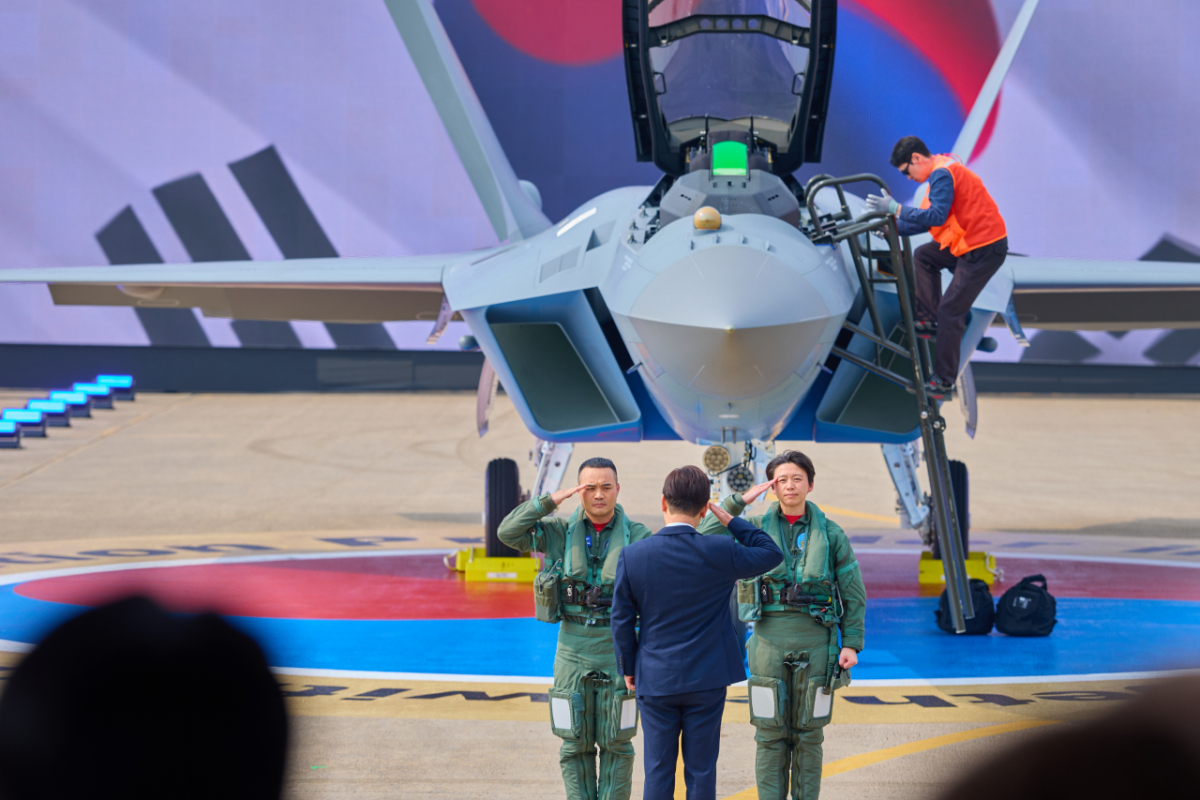
KAI’s next focus is on the KF-21, a domestic supersonic fighter. Development began in 2015 and has continued for over a decade, with delivery to the Air Force expected this month. KAI believes the KF-21 also holds a price competitiveness advantage over competing models. It is also described as incorporating full digital technology as a modern fighter, offering superior maneuverability and advanced software.
Scalability is another strength. KAI is simultaneously preparing to gradually enhance the KF-21’s performance through internal weapon bay design improvements, stealth capability upgrades, development of an artificial intelligence (AI) pilot capable of commanding manned-unmanned hybrid systems, and avionics performance enhancements.
It has been reported that countries that have already adopted the FA-50 and nations in the Middle East show significant interest in the KF-21. A KAI official said, "For countries with high-performance fighter requirements, the cost-effective KF-21 is expected to be an attractive and rational choice."

 in INDUSTRY


