

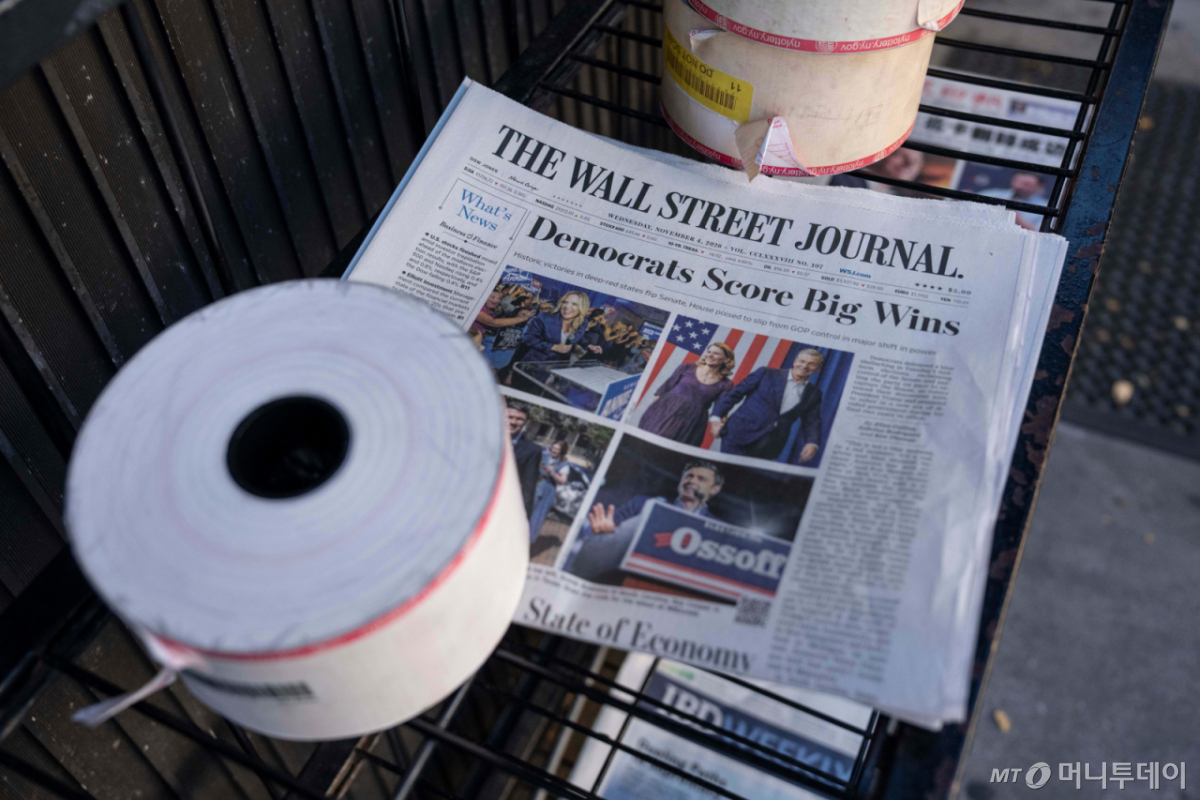
The Korean business community forecast that although the Democratic Party has taken control of Congress following the U.S. midterm elections, the trade policy direction aimed at inducing production and investment within the United States will continue unchanged.
According to a report titled "Outlook for Trade Policy After the U.S. Midterm Elections" by the Korea Chamber of Commerce and Industry (KCCI) on the 10th, tariffs, investment, and legislation are three interlinked variables, and the government and businesses need to revise their trade strategy toward the U.S. in response. It specifically advised preparing simultaneously for the administration's demand for early execution of investments in the U.S. and the new Congress's strengthened verification of investment conditions and outcomes, while recommending minimizing additional burdens through tariff negotiations and reviewing priorities for each investment project.
First, regarding U.S. tariff policy, it called for a step-by-step, practical-benefit-focused approach that maintains existing Korea-U.S. agreements while minimizing additional burdens. The KCCI explained that South Korea's response must vary depending on the investigation, negotiation, and implementation stages. It stated that at the investigation stage, opinions should be presented based on the contribution of Korean-made intermediate goods and equipment to U.S. manufacturing, and at the negotiation stage, conditions linking exceptions, exemptions, and local investment should be specified. At the implementation stage, actual customs guidelines must be carefully verified, including product classification, origin, effective dates, and whether existing tariffs are being double-imposed.
The same applies under Section 232 of the Trade Expansion Act (a bill allowing the president to impose high tariffs or import restrictions after a Department of Commerce investigation if imports of specific items are deemed to threaten U.S. national security), which focuses on tariff rates and their impact from a national security perspective. Rather than focusing solely on tariff rates, a strategy is required to determine negotiation priorities by item based on export shares and investment plans for the U.S., and to secure exception conditions linked to investment.
Second, regarding investment in the U.S., it diagnosed that preparations must be made for the double burden of the administration's pressure for "early execution" and Congress's "performance verification." This is because, unlike the administration which is rushing to fulfill promises of investment in the U.S., the new Congress led by the Democratic Party is expected to significantly strengthen verification of outcomes such as local employment and supply chain contributions from investment projects.
The KCCI emphasized that companies should re-examine the priorities of strategic investments and proactively propose advantageous projects considering factors such as the project selection process, recovery structures, and operational opportunities for Korean companies. It also stated that they should continuously raise the need to secure stability in investment incentives and improve professional talent visa systems, while utilizing the priority clause for Korean suppliers in the Korea-U.S. Strategic Investment Memorandum of Understanding (MOU) to expand opportunities for joint participation by domestic small and medium-sized partner companies.
On the legislative front, it highlighted the importance of monitoring U.S. Congressional legislative trends that drive substantive industry-specific regulatory changes and expanding communication channels. First, the KCCI predicted that the enactment of bills to check tariffs would be difficult, noting that while the current U.S. Democratic Party is discussing measures to strengthen congressional control over tariff imposition, ending Senate debate on general legislation typically requires 60 votes, and overturning a presidential veto requires approval from at least two-thirds of the members present and voting in each chamber.
It pointed out that industry-specific regulations mentioned during year-end National Defense Authorization Act (NDAA) negotiations could have a more direct impact on our companies, necessitating a response. For example, issues such as exceptions to shipbuilding construction restrictions, export controls on advanced semiconductors and manufacturing equipment, and changes in procurement standards related to critical minerals, robotics, and solar power can instantly shake U.S. order opportunities for our key industries.
It also emphasized that the business community's communication channels with the U.S. must expand from being centered on the administration to include major congressional committees and state governments and local communities in investment regions. With the Democratic Party securing governorships in five or more states, including Georgia, Texas, and Ohio, taking a majority for the first time in 16 years and significantly reshaping regional leadership, it analyzed that building close consultation channels with state governments holding core authorities such as permits for data centers and production facilities is essential.
Lee Si-wook, Head of Economic Research at the KCCI, said, "Post-midterm election trade response should focus not on vaguely 'waiting for a policy shift,' but on 'negotiations to protect practical benefits, strategic investment, and expanded cooperation channels.'" He added, "We must specify in which projects Korean companies will participate under what conditions and how investment outcomes will be recovered, linking U.S. investment to substantive opportunities for domestic industries and partner companies."

 in INDUSTRY

