

Before the leaks and dampness left by the rainy season could be repaired, a scorching heatwave approaching 40 degrees Celsius in perceived temperature was forecast. As more consumers attempt to repair damaged areas of their homes themselves due to damage from both the rainy season and extreme heat, the market for summer DIY (Do It Yourself) building materials featuring heat-insulation functions that lower indoor temperatures is expanding, following trends in waterproofing and crack repair.
According to industry sources on the 28th, sales of waterproofing-related DIY products from a certain building materials company A increased by 17% year-on-year in the first half of this year. This continues an upward trend after a 34% increase last year. Sales were concentrated in June and July, leading to analysis that demand has risen for consumers directly repairing spaces damaged by leaks and dampness before and after heavy downpours.
Midsummer is a period when buildings repeatedly absorb moisture during the rainy season and then dry out rapidly due to extreme heat, causing existing micro-cracks to widen or hidden cracks to become visible. Due to high humidity, moisture penetrates through damaged areas of the waterproofing layer, often leading to additional damage such as paint peeling or mold growth.
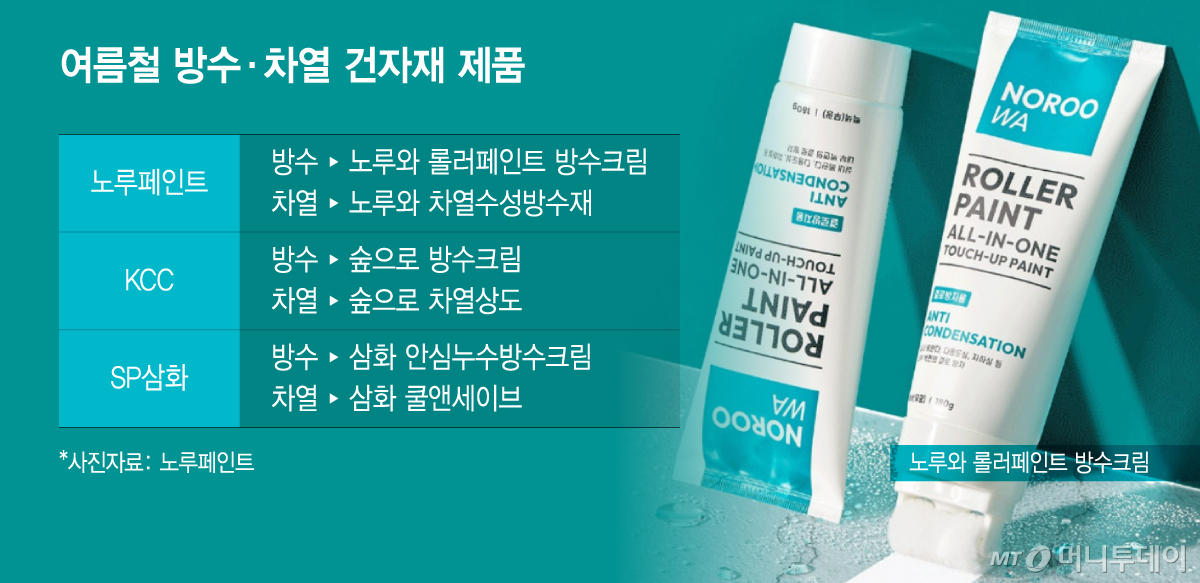
Because of these characteristics, more consumers are increasingly choosing to clean up their homes themselves rather than hiring professional construction companies for quick measures. Products like waterproofing agents, crack repair compounds, and waterproof paints are now released in tube or roller forms, spreading the culture of self-managing vulnerable areas such as verandas and exterior walls. Representative examples include Nuru Paint's "Nuru Roller Paint Waterproof Cream," which can be applied to cracked walls like cream.
With forecasts indicating that the rainy season will end and a full-scale heatwave will arrive soon, interest in the functional building materials market is shifting toward heat-insulation products. Heat-reflective coatings are functional paints that reflect solar infrared rays, lowering the surface temperature of buildings and reducing indoor heat influx by approximately 10–15%, thereby improving cooling efficiency.
As heatwaves intensify each year, KCC is expanding its application areas by leading with architectural "Forest Cool Topcoat" and road-specific "Spore Road Cool." SP Samwha has strengthened its functional product LINE-up centered on "Cool & Save" and "Byroad Cool." The market for heat-insulation coatings, previously focused on industrial facilities and public infrastructure, is now expanding to include ordinary households.
Nuru Paint recently launched an online-exclusive DIY product called "Heat-Insulating Water-Based Waterproofing Material," which combines both waterproofing and heat-insulation functions, venturing into the general consumer (B2C) market. The product incorporates both waterproofing and heat-insulation functions in a single item without requiring multiple processes such as primer, intermediate, or top coats, and is designed to be installed using only a roller and brush.
Industry analysts note that the repair construction market, once centered on professionals, is growing toward general consumers. In the past, hiring professional companies for waterproofing or heat-insulation work often resulted in scheduling delays, requiring waits of several days; however, with the increasing variety of products available for self-installation, such inconveniences have been alleviated.
An industry official stated, "As climate change leads to repeated heavy rains and extreme heatwaves, consumers seeking functional building materials that can be installed quickly are steadily increasing. While the market was once dominated by professionals, the growing diversity of DIY products that even beginners can easily use is expected to continue expanding the market's base."

 in LIVING
