

![[Seoul=NEWSIS] Reporter Kwon Chang-hoe = On the 15th, citizens were seen moving around a Pizza Hut store in Seoul. The Supreme Court ruled that Pizza Hut Korea's headquarters must return hundreds of billions of won in differential franchise fees collected from franchisees. Under the final judgment, Pizza Hut Korea's headquarters is required to refund 21.5 billion won in differential franchise fees received from franchisees between 2016 and 2022. January 15, 2025. kch0523@newsis.com /Photo=](https://thumb.mt.co.kr/cdn-cgi/image/f=avif/21/2026/07/2026073013222865982_1.jpg)
Amid growing conflict over differential franchise fees between franchise headquarters and franchisees, the SME (small and medium-sized enterprise) Central Association has proposed institutional reforms to shift from a structure centered on differential franchise fees to one based on royalties. The association argues that clear legal standards for mandatory purchase items must be established, and institutional mechanisms should be created to reduce disputes between franchise headquarters and franchisees.
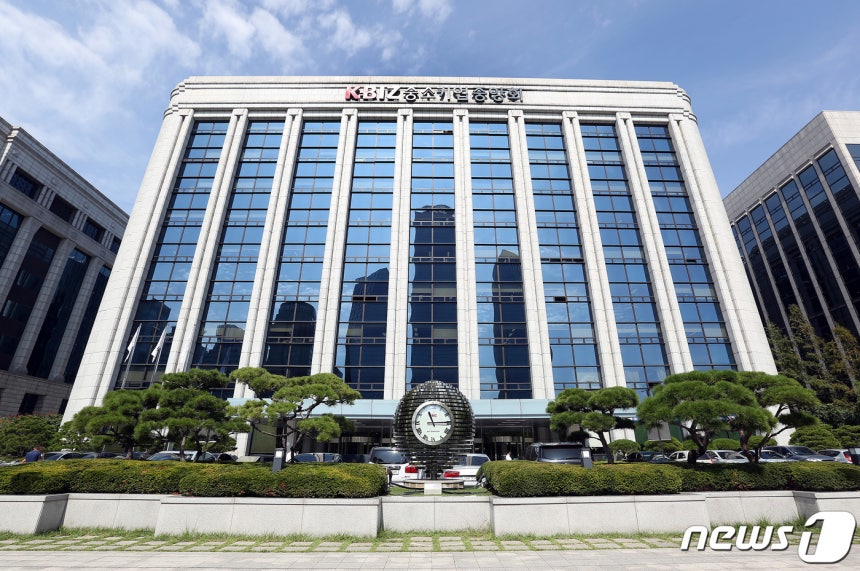
On the 30th, the SME Central Association released an issue report titled "Legal Frameworks and Institutional Reform Proposals Regarding Mandatory Items in Franchise Transactions." Following the Supreme Court's ruling on Pizza Hut's differential franchise fee refund, related lawsuits are spreading across the entire franchise industry, prompting calls to examine current conflict factors and implement institutional improvements.
Currently, lawsuits related to differential franchise fees are underway or expected to be filed at over 20 brands, including chicken chains such as BBQ, bhc, and Kyochon Chicken, as well as Burger King and Toms Place.
First, the association identified that many franchise headquarters rely on differential franchise fees as a major revenue source as the root cause of disputes. While major advanced countries like the United States operate primarily on royalty models, Korea's reliance on differential franchise fees creates incentives to excessively designate mandatory items. According to Fair Trade Commission surveys, among franchise headquarters receiving continuous fees, only 29.5% receive royalties alone, while 47.0% receive both differential franchise fees and royalties or only differential franchise fees.
Additionally, the association pointed out that the vague definition of "mandatory purchase items" under the Franchise Business Act and the structure allowing franchise headquarters to arbitrarily designate mandatory items through disclosure documents are key factors fueling conflicts. This includes practices that force franchisees to purchase kitchen equipment and consumables exclusively from headquarters, which excessively restricts franchisees' choice rights.
As improvement measures, the SME Central Association proposed encouraging a shift to royalty models through on-site investigations by the Korea Fair Trade Commission and codifying the definition of mandatory purchase items under the Franchise Business Act. The association also suggested that general industrial products easily available in the market should be excluded from mandatory items as a principle, and a simplified dispute resolution procedure should be established to quickly determine the legality of mandatory item designations.
However, the association also acknowledged the franchise industry's position that many small-scale franchise headquarters exist domestically, and differential franchise fee practices have become entrenched due to concerns about revenue omission. It emphasized that realistic conditions faced by franchise headquarters must be considered alongside institutional reforms.
Kim Hee-jung of the SME Central Association Gyeong Je-jeong-chaek (Head) stated, "The more mandatory purchase items are designated, the higher the differential franchise fees become, creating a structure where franchise headquarters' profits increase while franchisees are forced to purchase goods at prices higher than market rates—the root cause of disputes." He added, "Franchise headquarters should shift their primary revenue source to a royalty model linked to sales, and the Franchise Business Act must clearly define mandatory purchase items."
He further remarked, "Under the recognition that franchise headquarters and franchisees share a symbiotic relationship, institutional foundations must be established to enable reasonable designation of mandatory purchase items through negotiations."

 in LIVING

