

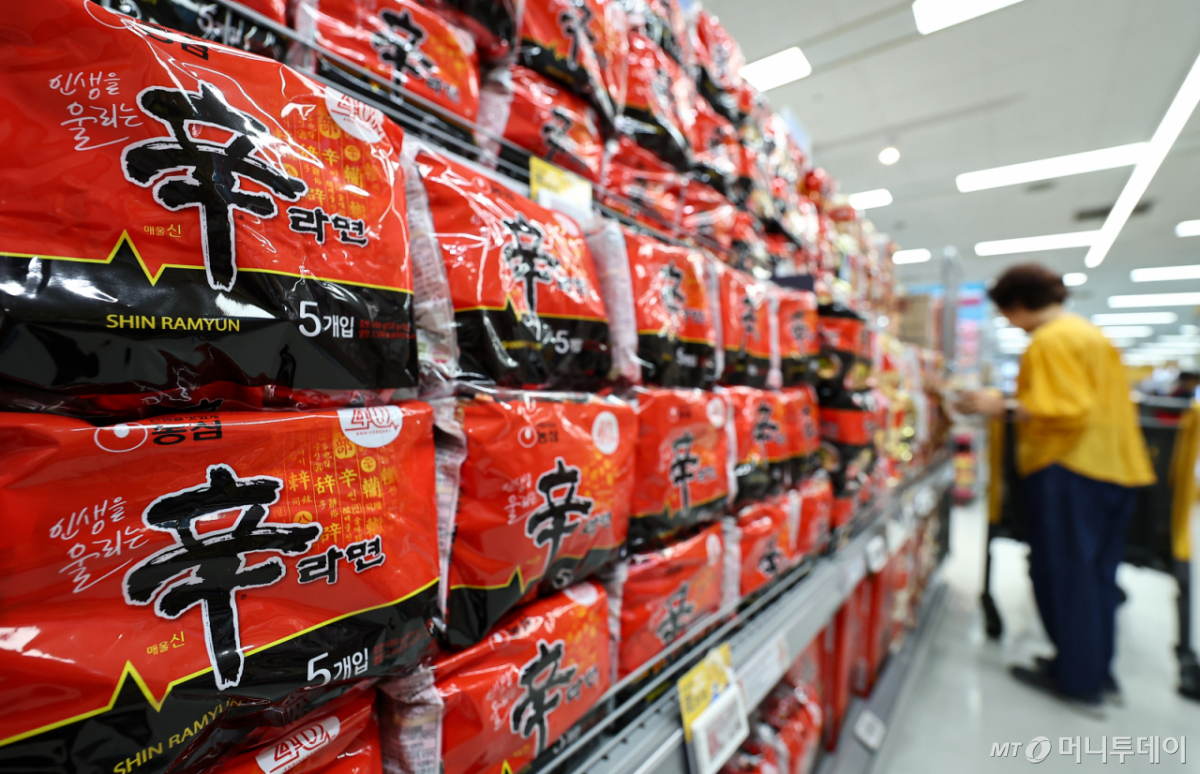
Amid the "triple burden" of high inflation, domestic slowdown, and high exchange rates, Q2 performance results for Korean food companies showed mixed outcomes. While companies struggled in the domestic market due to reduced consumer spending and rising costs, those that capitalized on the global K-food boom managed to offset their weak domestic performance with strong overseas results.
According to the food industry on the 11th, CJ CheilJedang, which released its results on that day, reported Q2 sales of 4.195 trillion won and an operating profit of 161.9 billion won. While sales increased by 10.2% compared to the same period last year, operating profit fell by 18.4%. Although overseas food divisions in North America and Europe continued to post strong results, sluggish processed food sales due to weak domestic consumption and a slowdown in the bio division's performance contributed to an overall decline in profitability.
Lotte Wellfood delivered the most notable results, buoyed by the positive response to K-food. Lotte Wellfood's Q2 operating profit rose 89% year-on-year to 64.7 billion won. In particular, operating profits from overseas subsidiaries surged by as much as 133% to 29.6 billion won, driving overall performance growth. This was the result of strong demand for products like Choco Pie in emerging markets such as India and Kazakhstan.
Ramen manufacturers are also expected to continue their high-speed ascent in global markets thanks to the popularity of "K-ramen." Nongshim, which is set to announce its results on the 14th, is projected to record a Q2 operating profit of 51.3 billion won, up 27.74% from the same period last year. The securities industry also expects Samyang Foods to post an operating profit of 177.3 billion won (a 47.6% increase), driven by the global popularity of its Buldak spicy chicken ramen.
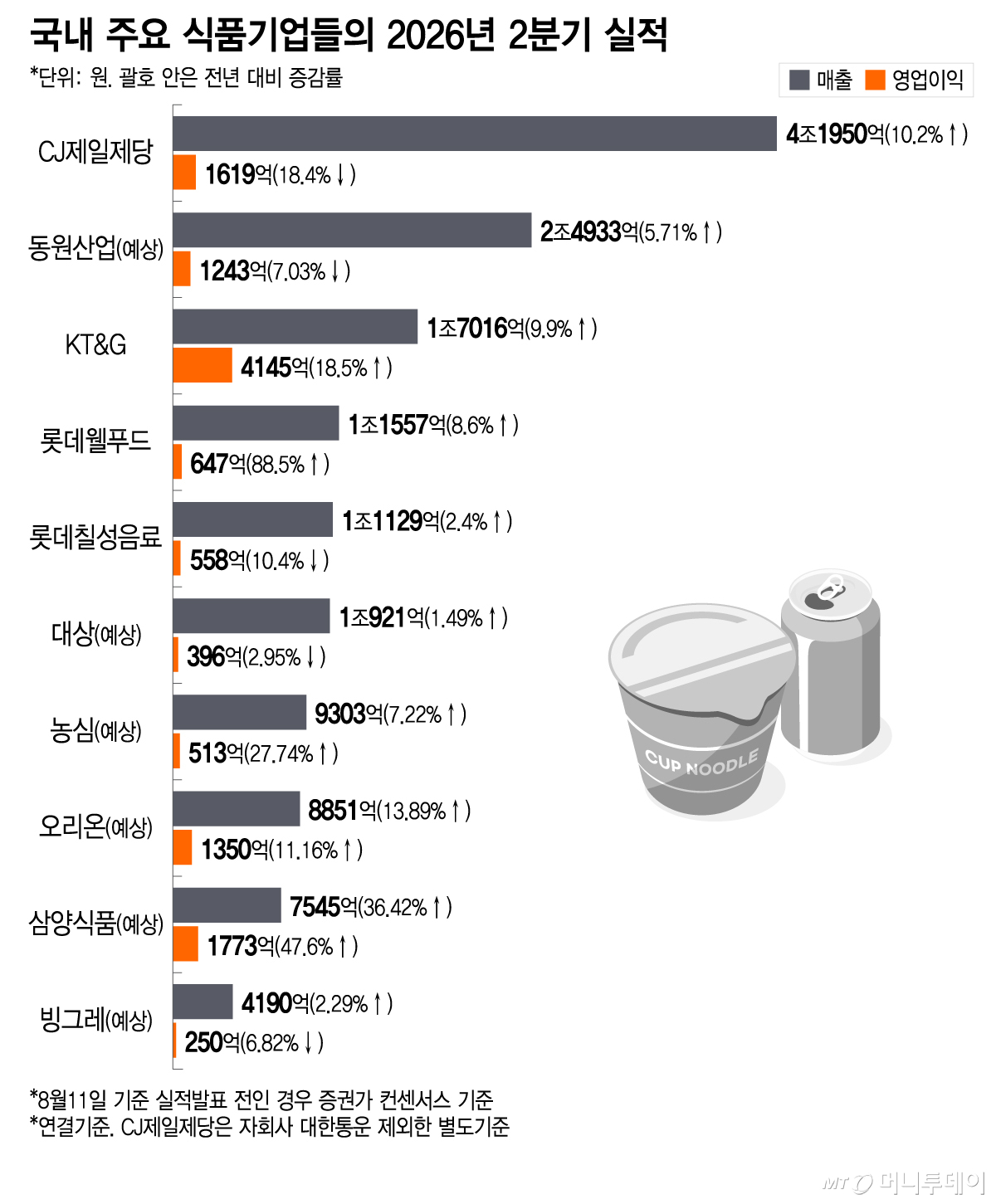
Orion, another pillar of "K-sweets," and KT&G, which benefited from strong overseas cigarette sales, both demonstrated stable growth trends. Orion's Q2 operating profit for this year is expected to reach 135 billion won, an increase of 11.16% compared to the same period last year, ahead of its earnings announcement. KT&G recorded a Q2 operating profit of 414.5 billion won, marking a strong performance with an 18.5% year-on-year increase.
On the other hand, Lotte Chilsung Beverage (operating profit 55.8 billion won, -10.4%), Daesang (forecast operating profit 39.6 billion won, -2.95%), Dongwon Industries (forecast 124.3 billion won, -7.03%), and Binggrae (forecast 25 billion won, -6.82%) showed declining trends. This is attributed to the full burden of cost pressures resulting from price hikes in packaging materials such as naphtha and increased costs for imported raw materials.
These burdens are expected to continue into the second half of the year. According to the Ministry of Trade, Industry and Energy's Raw Material Price Information, as of the 7th, the spot price of naphtha stood at $726 per ton, which is 35.2% higher than the beginning of the year. Naphtha prices, used for major food packaging materials, immediately affect the prices of key processed foods.
Additionally, variables such as international oil prices and shipping rates remain. A survey conducted by the Korea Chamber of Commerce and Industry on the 26th among 219 export-oriented manufacturing companies found that 83.1% cited rising freight rates as their top logistics concern for the first half of the year. The chamber also forecasted that the impact of rising oil prices in the first half would extend into the third quarter.
Ultimately, analysts suggest that the performance of the food industry in the second half will depend on how much overseas markets can offset the weakness in the domestic market. A food industry official stated, "The domestic market faces limits in improving profitability due to rising imported raw material costs and other expenses," adding, "How well companies can defend against declining domestic market profitability through overseas operations will be the key to second-half performance."

 in LIVING

