

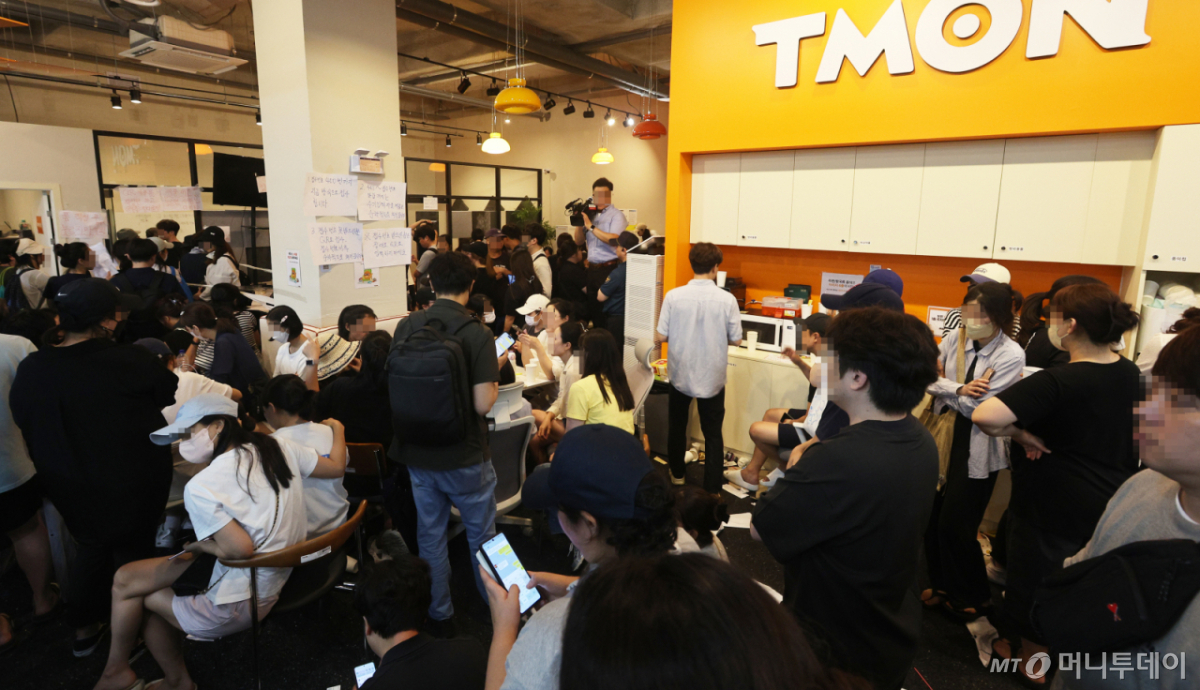
Concerns are growing within the industry as lawmakers push to significantly shorten the payment deadline for direct purchases by distribution companies. While the intent of the bill is to allow small and medium-sized suppliers to receive payments promptly, critics warn that worsening cash flow for distributors will lead to reduced purchasing volumes and increased returns, ultimately harming SME (small and medium-sized enterprise) sales channels in the long term.
According to relevant industry sources on the 2nd, yesterday's National Assembly Political Affairs Committee bill review subcommittee passed a major retail law amendment that shortens the direct purchase payment deadline for distribution companies from a maximum of 60 days after goods receipt to 35 days.
The revised bill applies to distribution companies with annual sales of 100 billion won or more. In addition to Coupang and Curly, which are currently known to have settlement periods of 35 days or longer, many other retailers including Daiso, Homeplus Express, and Electronic Land, as well as TV home shopping companies, are expected to be included.
Currently, large distribution companies focused on direct purchases make bulk purchases in advance before goods are sold and pay suppliers regardless of whether the items sell. If the settlement cycle is shortened, distributors will need to purchase goods that may take as little as 3–6 months or up to a year to sell, then pay suppliers within one month.
However, concerns arise that this law, contrary to its intent, will make it difficult for distributors to manage their funds and ultimately harm small and medium-sized suppliers.
An industry representative stated, "If the payment settlement period is reduced from 60 days to half, distributors will have to tie up twice as much cash even when goods remain unsold." They added, "Only large corporate brands with high turnover that sell and place orders on a weekly basis will survive. Products with slow turnover such as seasonal items, SME (small and medium-sized enterprise) products, and those from new companies will be eliminated due to insufficient purchasing budgets."
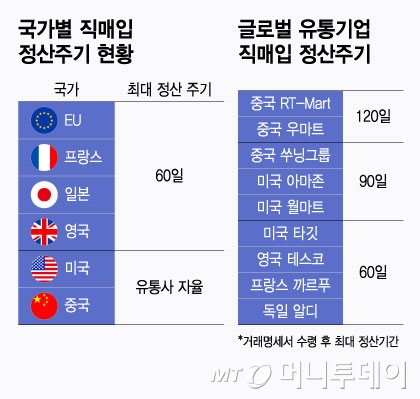
There are also opinions that this legislative change does not align with global standards. In fact, the European Union (EU) proposed reducing the settlement period from 60 days to 30 days in 2023, but withdrew the measure after backlash from France, Italy, Belgium, and other countries arguing it would "kill SMEs and lead to side effects such as only trading with large corporations." At that time, survey results also indicated that European distributors would need an additional 10 billion to 15 billion euros annually to cover cash shortages caused by shortening the settlement period.
Currently, the EU allows exceptions under its Late Payment regulations: when agreed upon with suppliers, the settlement cycle can be extended to 60 days, or up to 120 days for seasonal goods that remain in inventory beyond 60 days or have high turnover rates.
Furthermore, advanced-country retailers such as Amazon and Walmart (up to 90 days), Costco and Best Buy (up to 60 days), China's largest distributors Duanfa and Wumart (90–120 days), and Japan's AEON Group and Seven & i (up to 60 days) do not uniformly shorten their settlement cycles. This is because they adjust the settlement cycle flexibly based on actual sales timing to secure cash liquidity for promised payments to suppliers.
Academic analysis also predominantly suggests that strengthening the settlement cycle will intensify the concentration of distribution companies toward large corporations, increasing the likelihood that SME (small and medium-sized enterprise) firms will be forced out.
According to a 2023 study by Yoo Byung-jun of Seoul National University Gyeong Yeong-hak-gwa (Prof.), reducing the e-commerce settlement cycle from 60 days to 20 days would result in economic losses of 47.7 trillion won for participating companies, consumers, and direct purchase platforms. One year after shortening the settlement cycle, the proportion of participating companies maintaining transactions with distributors is projected to drop to 74%, with estimated annual market damage to small and medium-sized companies reaching up to 21 trillion won.
Additionally, concerns have been raised that companies may return unsold goods to avoid regulations, or shift toward "special purchase" or "entrusted sales" contracts where distributors receive payment only for actually sold items instead of direct purchases with high risk. Critics argue that more detailed legislative review is necessary considering these side effects.
Small and medium-sized supplier associations also express concern over the bill. The Korea Platform Store Operators Association, which has approximately 1,500 small and medium member companies, issued a statement today saying, "Mandating shortened payment deadlines will directly lead to reduced ordering volumes by distributors, causing sharp declines in supplier sales." They called for an immediate halt to regulatory enforcement without sufficient communication with on-site suppliers.

 in LIVING

