

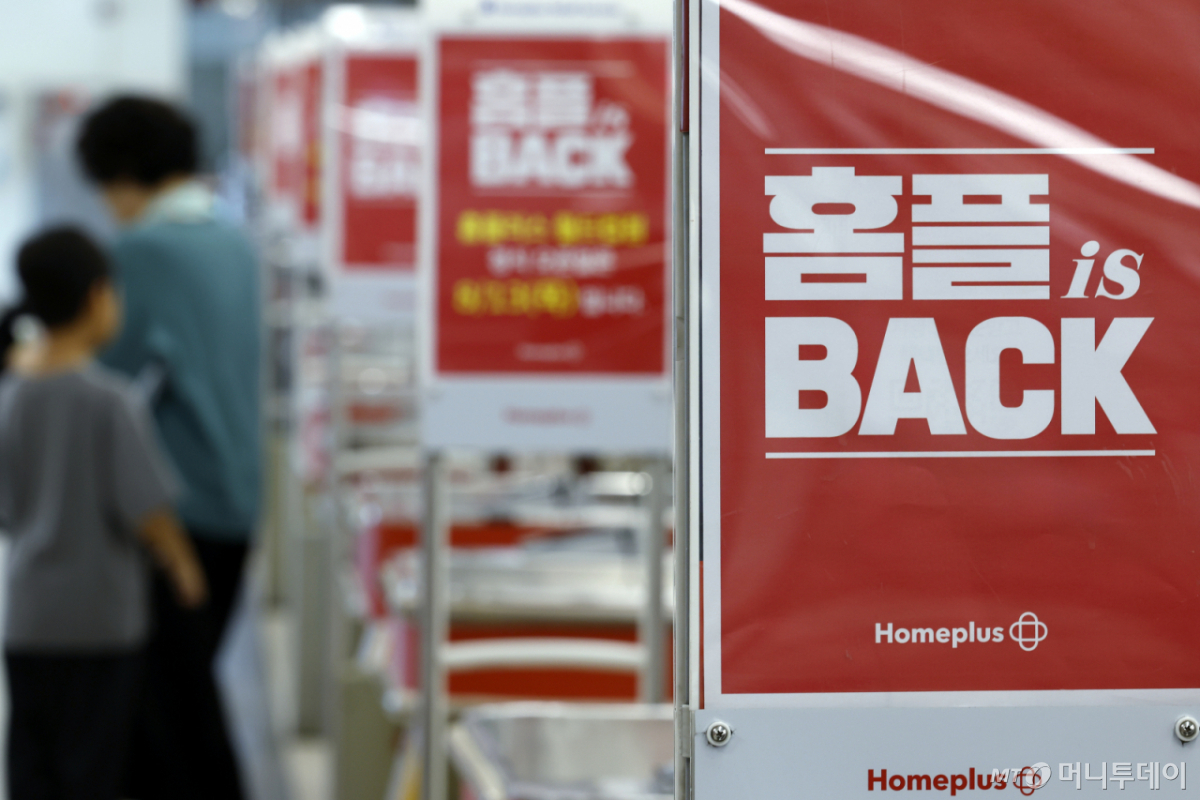
As a creditors' meeting to decide the fate of Homeplus's rehabilitation plan is held today, the issue of repaying more than 500 billion won in delivery payments has emerged as the biggest variable. To increase the feasibility of executing its rehabilitation plan, Homeplus has obtained consent for installment repayment from public interest creditors, but creditors are still showing a lukewarm response.
According to the retail industry and legal circles on the 2nd, the Seoul Bankruptcy Court will hold a creditors' meeting this afternoon at 3 p.m. to vote on Homeplus's rehabilitation plan. A creditors' meeting is a session in corporate rehabilitation proceedings where creditors, secured creditors, shareholders, and other stakeholders deliberate on the rehabilitation plan and express their consent or non-consent. At the meeting, the Rehabilitation Secured Creditors Group (75% or more), the Rehabilitation Creditors Group (66.7% or more), and shareholders (50% or more) will vote within each group to meet the consent requirements.
The biggest variable in this rehabilitation plan is whether public interest creditors, including suppliers and employees, agree to installment repayment. Unpaid delivery payments (trade receivables) are public interest debts that Homeplus must repay first, regardless of the rehabilitation proceedings. Suppliers do not have voting rights on approval or rejection at this creditors' meeting.
However, public interest creditors must be repaid before other rehabilitation creditors. If suppliers refuse to agree to installment repayment and demand immediate payment, the feasibility of executing Homeplus's rehabilitation plan will drop significantly. This is why the Seoul Bankruptcy Court sought consent for installment repayment from public interest creditors. Currently, the amount of unpaid delivery payments owed by Homeplus stands at 503.2 billion won.
As of last month's 31st, the overall consent rate among public interest creditors was around 59%. Among them, the consent rate for product suppliers stood at just 64.4%, while the consent rate for employees was 87.9%.
Homeplus proposed to repay 100% of public interest debts within three years to public interest creditors. However, suppliers are raising issues of fairness regarding priority repayment of Meritz-related company collateral trust bonds. In addition, they worry that with only 0.5% of payments prioritized for repayment until February 2028, Homeplus's consideration may lead them into their own liquidity crisis.
Homeplus's ability to generate revenue is also expected to have a direct and indirect impact on the creditors' voting sentiment. Since its reopening last month on the 13th, Homeplus recorded sales of 116.4 billion won through the 30th, a 57% increase compared to July before operations were suspended.
However, whether this trend of sales recovery will continue remains uncertain. There are still many cooperating companies that have not resumed deliveries, resulting in an insufficient product lineup compared to competitors E-Mart and Lotte Mart. Deterioration of the shopping environment due to confusion in store management caused by workforce reductions is also a hurdle.
Nevertheless, the industry leans toward the approval of the rehabilitation plan, considering the securing of 200 billion won in emergency operating funds (DIP) and the guarantee provided by Kim Byung-ju, chairman of MBK Partners. If the rehabilitation plan clears the creditors' meeting threshold, it is highly likely that the court will also approve it. The final deadline for the court's approval of the rehabilitation plan is set for the 4th.
A Homeplus official stated, "The success of rehabilitation depends on the consent of public interest creditors," adding, "Currently, we are prioritizing deliveries within the limits possible from operating funds, and once the rehabilitation plan is approved, operations will gradually normalize."

 in LIVING
