

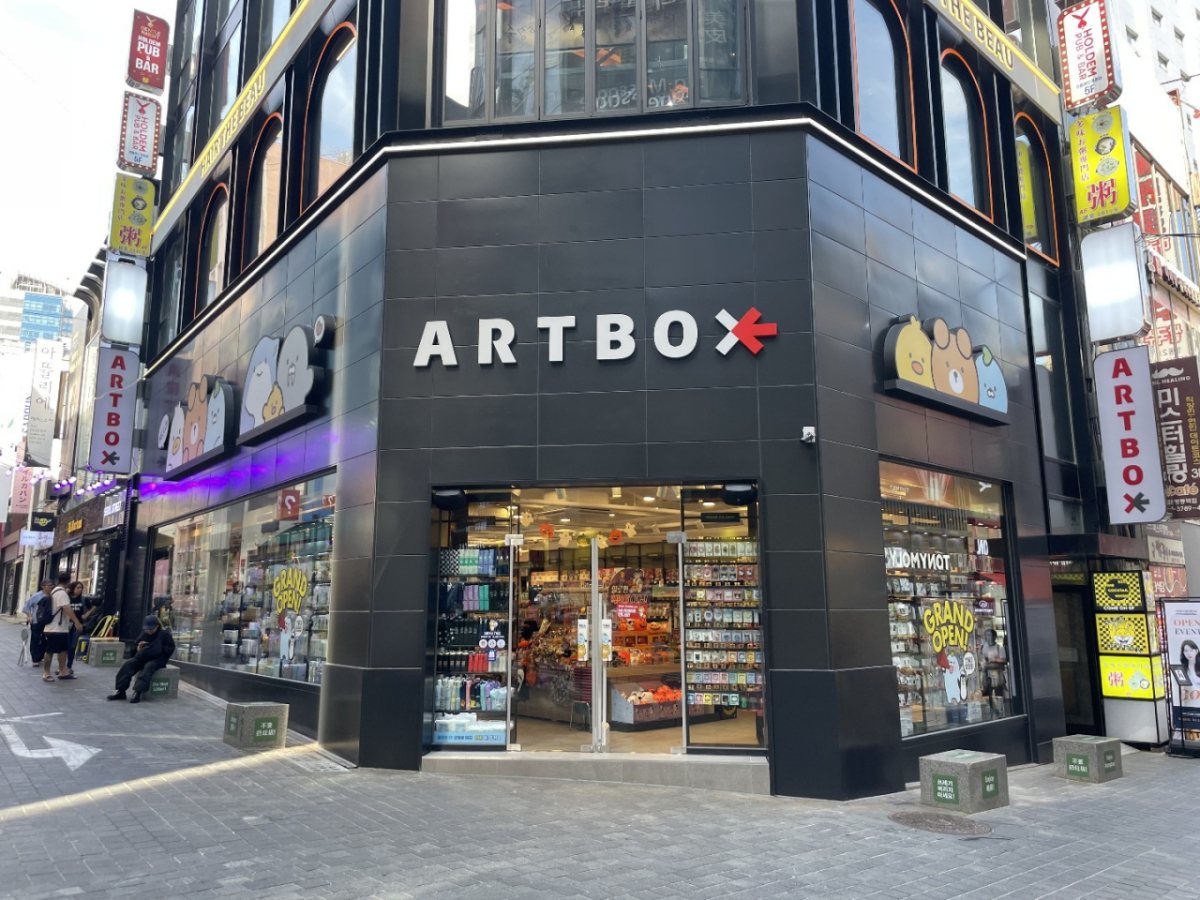
The K-brand boom has spread beyond Olive Young, Daiso, and Musinsa to reach Artbox, a stationery concept store with 40 years of history. Once on the brink of financial crisis — posting losses five years ago due to the slump in the domestic stationery market — the company has recently transformed into a go-to destination for K-item gift shopping among foreign tourists, driving a turnaround in its performance.
According to the Financial Supervisory Service's electronic disclosure system, Artbox reported sales of 269.7 billion won and an operating profit of 23 billion won last year. In 2020, the company recorded sales of 110.5 billion won and a loss of 2.4 billion won. Over five years, sales have more than doubled, and the operating profit has turned positive. The operating margin also stands in the 8th% range, significantly exceeding the industry average for retail companies, which is typically in the 2nd–3% range.
Artbox's improved performance stems from a business restructuring centered on character merchandise, combined with the K-culture boom. The company has expanded its retail scope beyond its traditional stationery-focused sales structure — which relied mainly on paper and writing instruments — to include fancy goods, toys, living and interior items, fashion and miscellaneous goods, digital products, beauty, leisure, and food. It currently operates approximately 20,000 stock-keeping units (SKUs) per store and introduces more than 1,000 new products each month to keep pace with rapidly shifting consumer trends.
In particular, the strategy of extending design capabilities accumulated in stationery and fancy goods into gifts and daily necessities has proven effective. Currently, character intellectual property (IP) products developed in-house by Artbox account for 60% of its total SKUs. Artbox's character IPs are primarily animal-themed, with the company currently holding 18 such characters, including Gaeknuri, Byeol-i, Bibichon, and Unggeumi. Through its official brand mall and POOM, a design-focused online shopping platform launched in 2011, Artbox sells approximately 3,000 design-brand products. Industry observers note that while Daiso has established a dominant presence in the ultra-low-price market of items under 5,000 won, Artbox is growing its influence in the mid-to-low price range of 10,000 to 20,000 won.
As of the end of August this year, Artbox operates 221 stores domestically. With the exception of three franchise locations, the vast majority are company-operated stores. The company surpassed its 100th store in 2019 and opened its 200th store last year — a milestone reached after six years — while continuing to expand its store count. It has broadened its location strategy beyond central Seoul commercial districts such as Myeong-dong and Hongdae to include complex shopping malls, department stores, outlets, and tourist areas.
Artbox has established itself as a K-gift shopping destination for foreign tourists. Stores in key hub commercial districts — including Myeong-dong, Hongdae, Sinchon, and COEX — are known to derive approximately 80% of their sales from foreign customers. This is seen as the result of growing recognition that Artbox's intricate character IP products are "items available only in Korea."
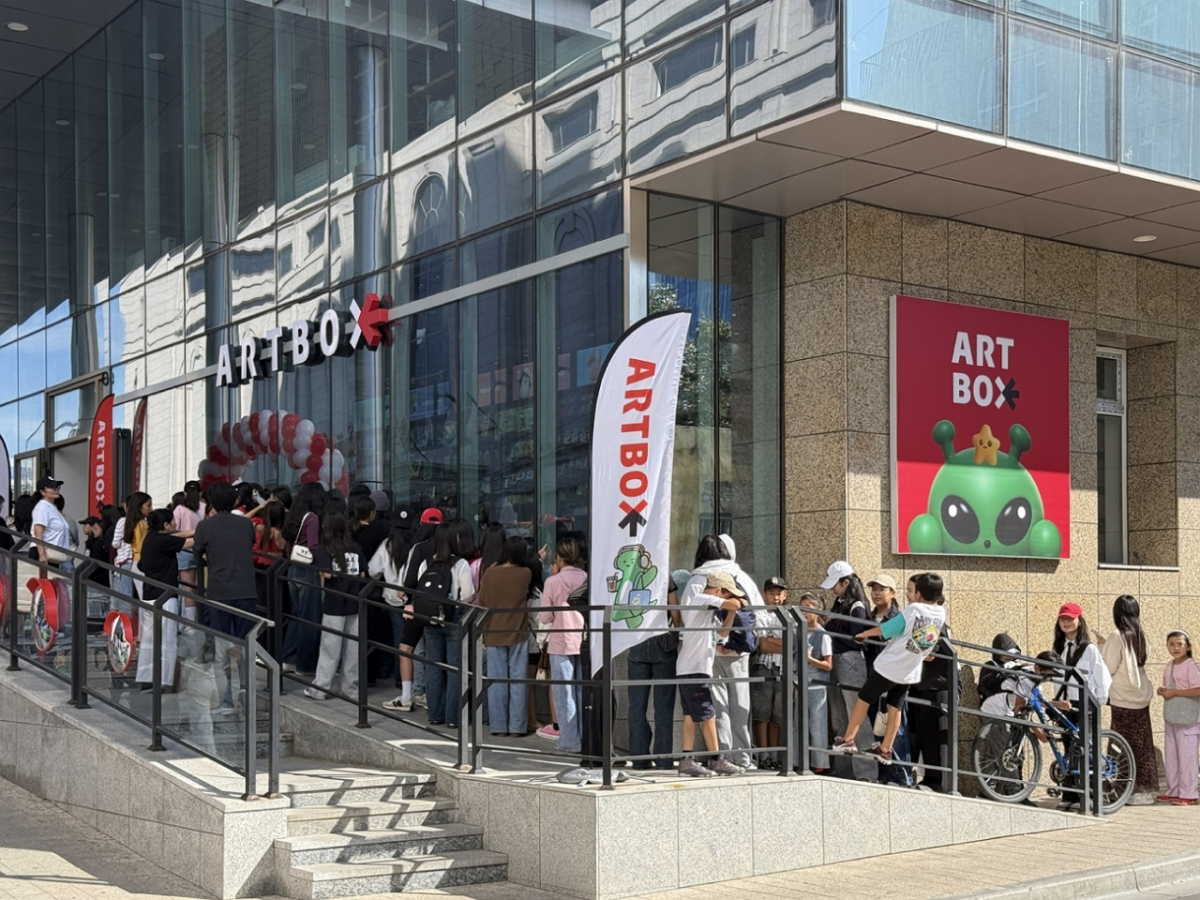
Riding the K-culture wave, Artbox has launched a full-scale push into overseas markets. The company currently operates 57 stores across seven countries — including the United States, Canada, Australia, Japan, Mongolia, Kazakhstan, and Ecuador — with the store count expected to grow to approximately 70 by year-end. New overseas stores opened this year have also been well received. The CEN store in Ulaanbaatar, Mongolia, which opened on August 22, recorded the highest sales among all domestic and international Artbox stores for two consecutive days — its opening day and the following day.
Separately, Artbox began as a business division within Samsung Publishing in 1984 and was established as an independent affiliate company in 1986. It had been operated as a subsidiary of Samsung Publishing until August 2022, when Samsung Publishing sold part of its stake, reducing its ownership ratio to become the second-largest shareholder, thereby removing Artbox from its consolidated subsidiaries. Currently, Artbox is led by Director Jo Seok-hyeon (CEO), who is the brother-in-law of Kim Jin-yong, chairman of Samsung Publishing. As of the end of 2025, Jo (CEO) is the largest shareholder, holding a 39.2% stake in Artbox.

 in LIVING

