

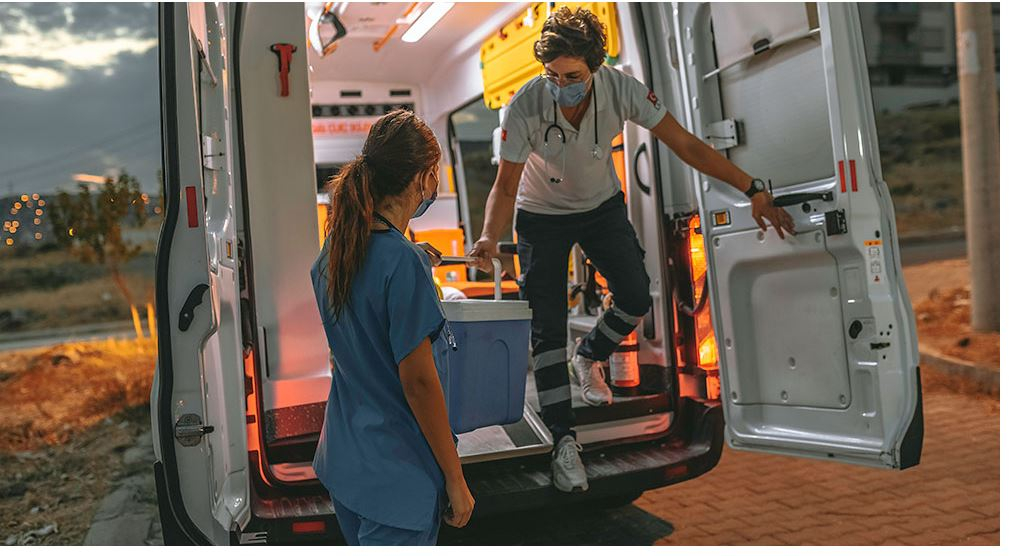
The process of moving organs for donation and transplantation to a hospital is extremely urgent. Not only ambulances but also helicopters are deployed to shorten travel time, and medical teams on both sides remain in a state of high tension. In some cases, a project team composed of multiple medical professionals is assembled on the recipient's side for a single transplant surgery. However, the success rate of organ transplantation is lower than expected. The donor's organs may be in worse condition than anticipated, and significant rejection reactions can occur even after transplantation.
A bigger problem is that many organs are discarded entirely due to poor transport conditions. Generally, the golden time for a heart is 4 to 6 hours, lungs 6 to 8 hours, liver 12 hours, and kidneys 24 hours. Time alone is not the only concern. Organ transport relies on sterile ice boxes filled with ice, but as organs are moved from the donor to the ice box and then to the recipient, the organ tissues undergo rapid temperature changes that can cause damage, making transplantation impossible in many cases. Medical professionals report that a significant number of organs are discarded during the donation process.
The irony is that the icebox refrigerated transport method, introduced in the 1960s, remains the dominant approach today. Typically, 80 out of every 100 donated lungs are discarded. According to data from the United States Organ Procurement and Transplantation Network (OPTN), there were 17,004 brain-dead donors in the United States in 2024. Of these, only 20% of donated lungs, 27% of hearts, 64% of livers, and 63% of kidneys actually resulted in transplants. This means that 80 out of every 100 donated lungs went unused.
Not everyone blames the icebox. The donor's health condition or a mismatch of conditions with the recipient can also be causes. However, if the transportable distance is limited to three or four hours, organs that were initially candidates are removed from consideration. Since organs in questionable condition cannot be transplanted, medical teams ultimately have no choice but to give up after much deliberation. Medical staff explain that transplanting damaged organs could threaten a patient's life.
To address such issues, the medical community has recently adopted various methods for organ transport. TransMedics (TMDX), a NASDAQ-listed company, is one of the representative firms in this field. TransMedics manufactures equipment that enables organs to be transported under conditions as similar as possible to those within the human body, rather than through refrigerated transport.
It is well known for its Organ Care System (OCS), a device that supplies warm oxygenated blood to organs. Instead of cooling organs to slow their metabolism, the system continuously circulates blood to transport organs in a living state. Unlike organs stored in iceboxes, these organs actually beat, breathe, and carry out metabolic activities just as they do in the donor's body.
The founder is Walid Ha Sa-ne-in (Dr.) (born in 1969, CEO). Raised in the suburbs of Cairo, Egypt, he dreamed of becoming a pilot in his youth but ultimately chose the path of a physician. He began his medical studies at Cairo University before transferring to Georgetown University in the United States, where he earned a Doctor of Medicine (M.D.) degree. Subsequently, he completed two years of general surgery residency at Georgetown University Medical Center and spent three years as a research fellow in cardiac surgery at West Roxbury Veterans Affairs Hospital and Brigham and Women's Hospital.
At that time, he revealed that he was often shocked by the scenes in operating rooms. There were many cases where a brain-dead donor emerged, prompting an emergency charter flight at dawn to retrieve organs, pack them into ice boxes, and rush back under tight deadlines to begin transplant surgery. However, due to uncertainty about the condition of the organs, surgeons frequently had to abandon the procedures and discard the donated organs. This was an extremely heartbreaking experience not only for patients but also for the medical staff on the front lines.
While researching improvements, he presented a paper at the 78th annual meeting of the American Association for Thoracic Surgery (AATS) held in Boston in May 1998. The paper argued that using perfusion instead of cold storage during heart transplantation would increase the likelihood of success. Perfusion is a method that pushes fluid into an organ's blood vessels, ensuring it reaches every corner of the tissue. Ha Sa-ne-in (Dr.) validated the effectiveness with animal experiment data, and his publication in the Journal of Thoracic and Cardiovascular Surgery (JTCVS) was confirmed in July of that year.
One month later, he founded the company and began actively developing institutional investment systems by utilizing initial operating funds from the Veterans' Medical Research Fund and the Richard Warren Surgical Research and Education Fund.
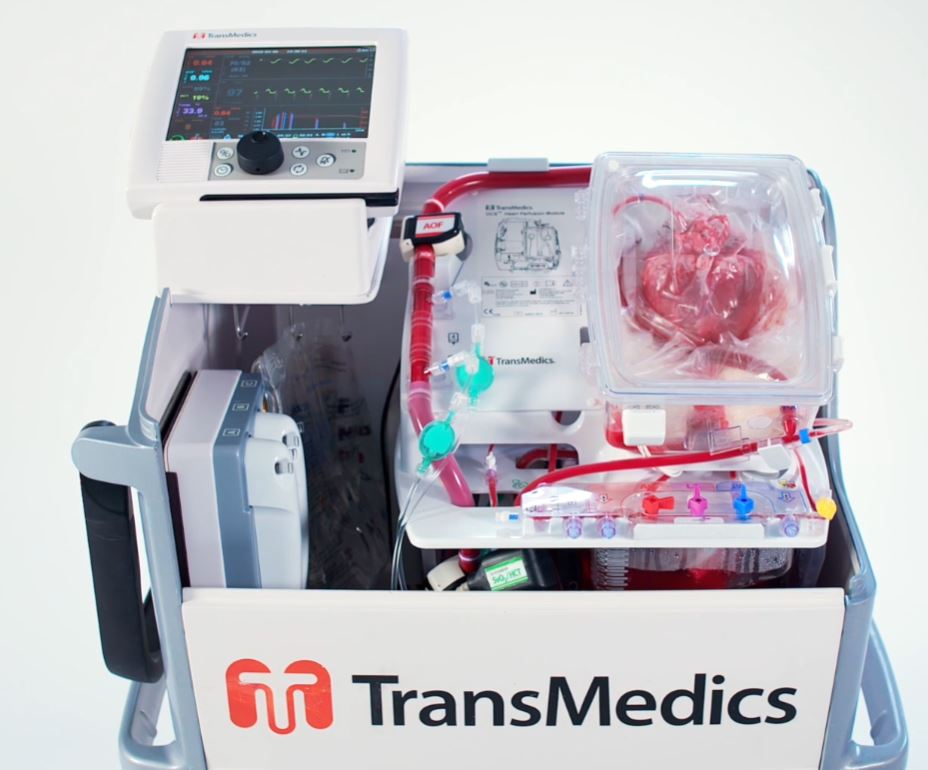
OCS consists of three main components. First, the main unit includes a Park Dong-hyung pump, gas exchanger, blood warmer, battery, wireless monitor, and various sensors. Second, there is a sterile chamber for holding organs, and finally, there are dedicated solutions. While the console can be used for a long time once installed, perfusion sets and solutions are sold in proportion to the number of surgeries performed.
To operate the OCS, blood is drawn from a donor. For the heart, at least 1,100 milliliters (mL) are required. This blood flows into the circuit reservoir after passing through a leukocyte reduction filter. This device is designed to reduce inflammatory responses after transplantation. Priming solution is then mixed in to fill and warm the circuit. Once the organ is explanted, it is immediately connected via cannula. According to the company's clinical documentation, the goal is to initiate perfusion within 15 minutes from the administration of cardioplegia.
Thereafter, the Park Dong-hyung pump sends blood to a gas exchanger to load oxygen, then pushes it through a heater into the organs. This circulation does not stop until arrival. The system records all indicators at two-minute intervals.
The heart is transported while maintained at 34 degrees Celsius. The heart moved via OCS can be seen contracting and expanding vigorously, beating as it normally does. For the lungs in the OCS, a mechanical ventilation device is additionally attached; this involves mixing concentrated red blood cells with hyperosmotic perfusate and flowing it through the blood vessels while simultaneously inflating and deflating the lungs with oxygen gas, which is Ha Sa-ne-in (Dr.)'s method. This is done to enable the lungs to actually breathe. For the liver, catheters are inserted into both the hepatic artery and the portal vein to inject warm blood; this allows the liver to function actively, producing bile, regulating blood sugar levels, and even processing lactic acid.
Early graft dysfunction was 18% in patients using OCS, compared to 31% in the control group. At one year post-transplant, ischemic biliary complications were 2.6% versus 9.9%. Biliary complications are a major cause of graft failure. Notably, the utilization rate of hearts from donation after circulatory death (DCD) donors reached 51%, double the 26th% in the control group. This means organs that would have been discarded in the past were saved and used at nearly half the previous rate. The lungs received FDA premarket approval (PMA) in March 2018, and the liver in September 2021. Heart approval has also been finalized. Few companies possess approved perfusion technology for all three organs.
While currently recognized by the medical community, Ha Sa-ne-in (Dr.) faced long-term difficulties since its establishment. Although TransMedic's technology approach was fully acknowledged, the time and money required to achieve actual clinical success were beyond imagination. The company was established in 1998, but it took nearly a decade for the first human data to emerge.
The first results came from Europe. In the PROTECT I clinical trial conducted between 2006 and the following year at four centers in the United Kingdom and Germany, 20 out of 25 hearts mounted on OCS were successfully transplanted. The hearts were maintained in a beating state with perfusion for an average of 3.7 hours. Following this, the device received CE certification in Europe and expanded to Australia and Canada.
The situation in the United States was far more difficult. PROCEED II, the first clinical trial of an ex vivo biologic organ perfusion system in the U.S., was designed in 2006, but FDA approval for the heart device did not come until 2021. It took 15 years. While PROCEED II met its primary objective of demonstrating non-inferiority compared to cold storage preservation, a post-hoc analysis showed that long-term survival rates in the OCS group were lower than in the control group. This point was raised by the FDA advisory committee. The trial failed to prove superiority over cold storage and merely demonstrated non-inferiority, leaving an unsatisfactory outcome.
In response, TransMedics pivoted its approach. Instead of using hearts deemed to be in normal condition by donors, the company began utilizing hearts classified as marginal donor organs (based on the company's own evaluation) for clinical trials, as their condition was difficult to guarantee and transplantation was considered challenging. In the United States, when a donor organ becomes available, the allocation system proposes it to hospitals one by one in sequence. If a hospital does not meet the criteria, it declines, and the offer moves to the next hospital. Typically, after passing through one or two hospitals, a facility willing to accept the organ is found.
The hearts used in the clinical trial on deceased donors conducted by TransMedics since 2016 had been rejected by an average of 29 hospitals. These were hearts from older donors or those with borderline cardiac function values, deemed difficult to transplant. In 2014, St. Vincent's Hospital in Sydney, Australia, successfully transplanted the stopped heart of a donor after circulatory death (DCD) into an adult using OCS hearts.
In March of the following year, Papworth Hospital in the United Kingdom successfully performed the same surgery in Europe. It was a heart that had never even been considered as a transplant candidate during the era of ice buckets. They created a donor pool that did not previously exist. This achievement came 16 years after the company's founding. Hasanein was named a finalist for the European Inventor Award by the European Patent Office in 2017.
The path to clinical trials was also arduous. The company raised approximately 0.4 billion won (2640 million dollars) in 16 rounds from its establishment until just before going public. It survived for 20 years with virtually no revenue. In March 2006, it secured $29.75 million led by the UK-based 3i Group, and in March 2011, it raised $36 million led by Foundation Capital and Kleiner Perkins. Despite attracting top-tier investment firms from Silicon Valley, its NASDAQ listing was not achieved until 2019.
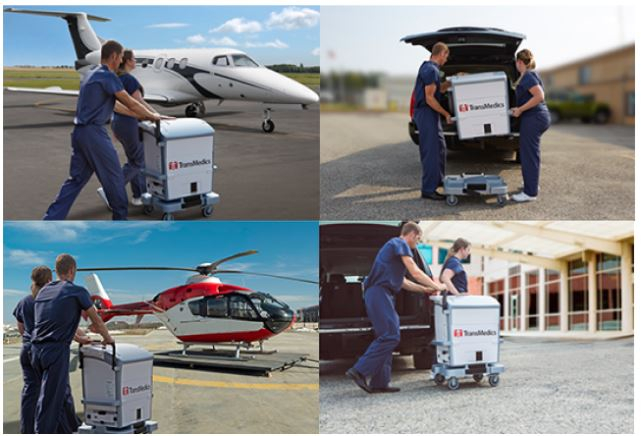
TransMedics is a company that has revolutionized not only OCS equipment but also the transportation infrastructure. Instead of selling equipment alone, it introduced a nationwide OCS program (NOP) in which the company takes full responsibility for long-term recovery teams, transportation, and perfusion. This structure allows the company to handle tasks that hospitals previously had to manage directly, such as chartering aircraft and recruiting personnel.
According to company data, the firm currently operates 19 clinical hubs in the United States, employs more than 50 dedicated retrieval surgeons, and has over 200 clinical coordinators and support staff. It has purchased its own long-haul transport aircraft, bringing its fleet to 22 planes, with more than 140 regular pilots on board. In the first quarter of this year, the company handled 82% of its NOP flights using its own aircraft. The medical device company is effectively running an airline as well.
Previously, the company had only technical capabilities but no track record; however, by offering an all-in-one service that includes transportation systems, its performance improved dramatically. According to U.S. Securities and Exchange Commission (SEC) filing standards, revenue grew from 45.5 billion won ($30.3 million) in 2021, to 140.3 billion won ($93.5 million) in 2022, to 362.4 billion won ($241.6 million) in 2023, to 662.3 billion won ($441.5 million) in 2024, and to 908.3 billion won ($605 million) in 2025. This represents a twentyfold increase over four years.
As sales increased, the company achieved profitability for the first time in its 26-year history since establishment. Operating profit and loss turned from a $28.7 million deficit in 2023 to a $37.5 million surplus in 2024, and further to a 162.9 billion won ($186 million) surplus in 2025. Its position in the organ transplant market has also risen sharply. According to company data, the proportion of heart, lung, and liver transplants in the United States using OCS rose from 6% in 2022 to 26% in 2025. The ability to utilize organs that were previously discarded by employing OCS has led to a sharp increase in overall successful surgical cases, which is the primary reason the medical community holds TransMedics in such high regard.
TransMedics Group's stock price has fallen significantly this year. Although it surpassed $177 in August 2024, it traded around $140 at the beginning of the year and is currently recording around $75. Its current market capitalization stands at 3.96 trillion won ($2.64 billion).
The reason lies in profitability. The adjusted operating profit margin peaked at 23.2% in the second quarter of last year, up from 20.7% in the first quarter, before falling for four consecutive quarters: to 16.4% in the third quarter, 13.9% in the fourth quarter, and 10.4% in the first quarter of this year. The GAAP operating profit margin declined over the same period from 19.1% to 7.6%. Adjusted earnings per share (EPS) dropped by 59%, falling from $0.74 to $0.30 within a year.
Sales increased, but profits did not keep pace. This is the background behind the stock price plummeting by nearly 25% immediately after the first-quarter earnings announcement on May 5. Research and development expenses and selling, general, and administrative expenses rose by 45% and 41%, respectively, compared to the same period last year. Costs surged sharply as funds were poured into aircraft operations related to long-distance transport, expansion into Europe, and next-generation clinical trials.
The growth rate itself is also slowing down. The sales growth rate, which was 38 percent in the second quarter of last year, fell to 32 percent in the third quarter, remained at 32 percent in the fourth quarter, and dropped to 21 percent in the first quarter of this year. While sales for transport systems for liver transplants are rising sharply, sales for heart and lung transplant transport systems have stagnated or declined. In the first quarter of this year, sales related to liver transport reached 208.5 billion won (139 million dollars), a 27.7 percent increase. On the other hand, heart transport sales rose only 3.5 percent to 46.3 billion won (30.9 million dollars), while lung transport sales fell by 29.6 percent to 4.2 billion won (2640 million dollars).
The competitive landscape is no longer what it used to be. Last October, Japan's Terumo acquired the UK-based OrganOx for 225 billion won (150 million dollars), and Paragonix, a leader in cryopreservation, was acquired by Sweden's Getinge. The battle among medical startups has turned into a proxy war between global medical device giants. The company is currently conducting cardiac clinical trials (ENHANCE) and pulmonary clinical trials (DENOVO), with plans to initiate renal clinical trials in 2027 and aim for renal approval after 2029. In the United States, annual kidney transplants exceed 20,000 cases, surpassing the combined total of heart, lung, and liver transplants.
TransMedics unveiled its low-temperature preservation device, CHOPS, last May. This decision was based on the judgment that conventional refrigerated transport is not a poor option for short-distance long-term transfers where OCS equipment is not required.
Wall Street's view is divided. While buy and hold opinions dominate, sell recommendations have recently emerged. The average target price suggested by analysts stands at $112, roughly 48% higher than the current stock price; however, target prices have been repeatedly downgraded over the past few months. This reflects concerns that weak performance in May may last longer than expected.
The company is maintaining its revenue guidance for this year at 1.09 trillion to 1.1355 trillion won ($727 million to $757 million), representing growth of 20% to 25%. As of the end of March, cash reserves stood at 692.6 billion won ($461.7 million), providing ample firepower. The key issue is when TransMedics' capital expenditures will decline and revenue expansion becomes evident; while the company has pointed to the end of this year as the target, the market largely expects the timing to be pushed into next year.


 in STOCK


