

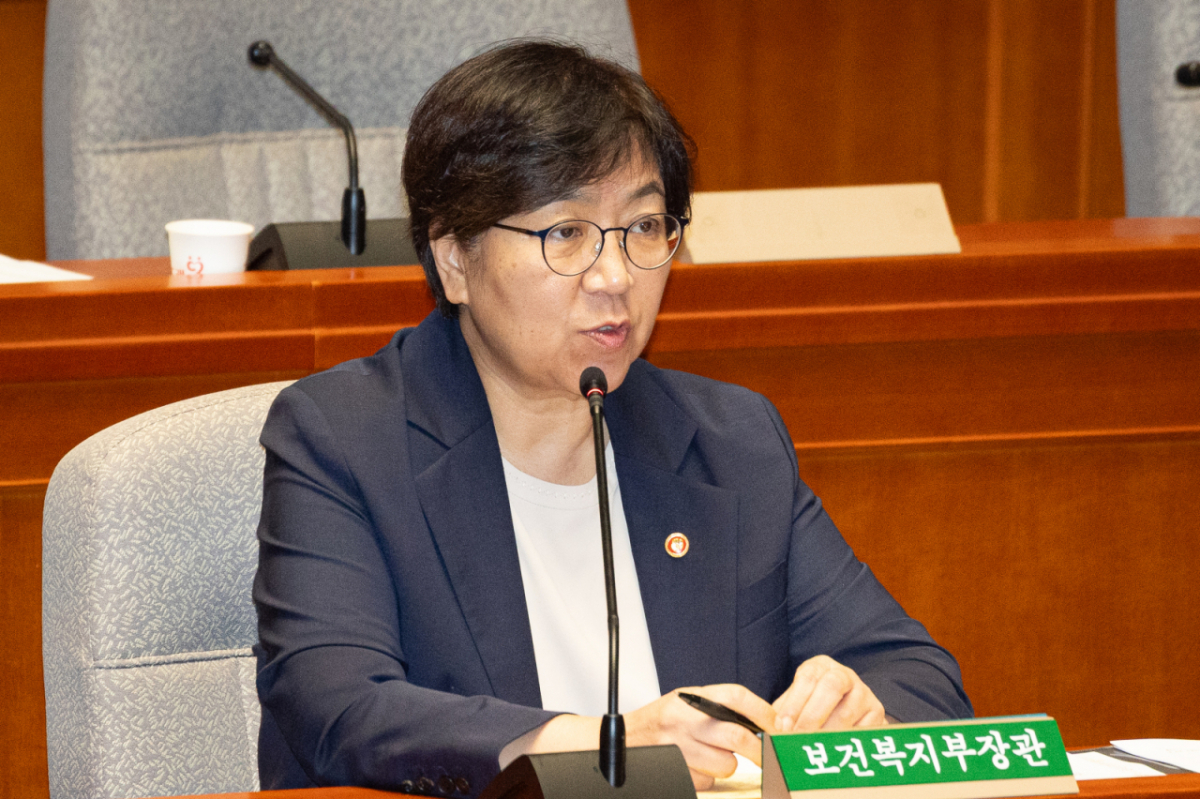
It was confirmed on the 2nd that the Ministry of Health and Welfare conveyed to the National Assembly its intention to find areas for improvement in managing geopolitical risks (risks) exposed by the National Pension Service's investment in Chinese military companies (CMC) IPOs (initial public offerings). Following a MoneyToday report (☞[Exclusive] National Pension Service Invests in IPO of Chinese AI Equipment Company on 'US Defense Department Blacklist' Reference), the National Assembly Pension Reform Special Committee demanded that geopolitical risk assessments be formally reviewed as part of the National Pension Service's investment deliberation procedures, and Minister Jeong Eun-kyung stated she would proceed with reviewing investment principles.
Controversy Over National Pension Service Investment 42 Days After CMC Designation… Demand for Geopolitical Risk Screening at National Assembly

According to the National Assembly on the 2nd, the Ministry of Health and Welfare is reviewing measures such as introducing pre-screening criteria related to geopolitical and economic security at the investment deliberation stage of the National Pension Service, following a request from Kim Yong-tae, a People Power Party member (representing Pocheon-si Gyeonggi-do Pyeongtaek-gun) who serves on the Pension Reform Special Committee. Political circles have observed that it may be possible for the National Pension Service to consider screening for geopolitical risks by revising guidelines related to investment management.
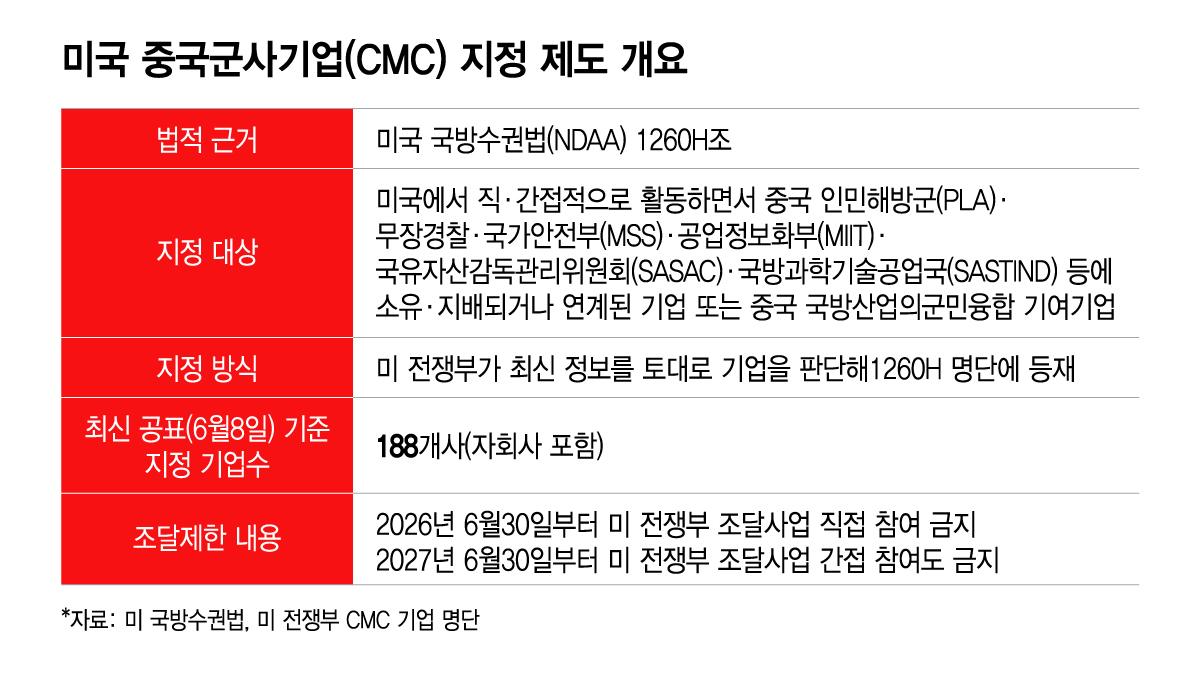
The National Pension Service participated in the Hong Kong stock market IPO of Zhongji Innolight on July 20 last year through a cornerstone investment (an investment method where pre-IPO shares are allocated in advance) totaling $250 million (341.725 billion won), along with funds under BlackRock and others. Zhongji Innolight is a Chinese optical communication equipment manufacturer that produces optical transceivers used in AI data centers, devices that convert electrical signals to optical signals and vice versa. This occurred after the U.S. Department of Defense added 65 companies, including Zhongji Innolight, to the CMC list in June, increasing the total number of designated entities to 188. It marks the first confirmed case of the National Pension Service making a new investment in an IPO of a company designated as a CMC. As of June 30, U.S. law prohibits CMC-designated companies from participating in Department of Defense procurement contracts, and indirect participation will also be prohibited starting in June 2027.
Kim (Rep.) stated in a written interview with MoneyToday that "investing in Chinese military companies listed on the U.S. security blacklist is a dangerous act that could lead to asset freezes and massive principal losses for the National Pension Service through secondary sanctions (secondary boycotts)," adding, "The pursuit of returns by the National Pension Service must be premised on risk management."
Concerns Over Secondary Sanctions Resurface Amid U.S. Pressure on Iran
Secondary sanctions refer to sanctions imposed not only on the targeted entity but also on companies and financial institutional investors in third countries that conduct transactions with them. Secondary sanctions can lead to being cut off from the U.S. financial system or asset freezes. Last month, the United States announced it would impose new secondary sanctions on other countries trading certain goods with Iran as part of its pressure campaign against Iran.
However, at this point, CMC designation primarily functions as an effective regulation prohibiting participation in Department of Defense procurement contracts and does not involve financial sanctions or asset freezes for third-country investors. Kim (Rep.)'s criticism is interpreted as pointing to the possibility of additional sanctions amid intensifying U.S.-China competition. Additionally, recent reports indicate that the U.S. Federal Communications Commission (FCC) is considering restrictions on imports of Chinese-made optical transceivers, highlighting regulatory risks arising from U.S.-China tensions. Zhongji Innolight was listed on the Hong Kong stock exchange on July 30, and the shares invested in by the National Pension Service are subject to lock-up periods during which they cannot be traded until January 29, 2027, following the IPO. However, the specific investment amount by the National Pension Service remains undisclosed.
Previously, Jeong Eun-gyeong (Minister) appeared before the Pension Reform Special Committee at the National Assembly last month and responded to questions from Kim (Rep.) regarding the National Pension Service's investment in Zhongji Innolight by stating, "We decide on investment companies based on ESG (environmental, social, and governance) perspectives and several criteria. The points you raised will be reviewed internally to identify any issues and areas for improvement." This statement is interpreted as an admission of the geopolitical risks associated with the National Pension Service's IPO investment in Hong Kong.
Jeong Eun-kyung on Controversy Over New CMC Investment: "We Are Aware; Not Subject to Financial Investment Restrictions… Will Identify Areas for Improvement"
![[Beijing=AP/NEWSIS] U.S. President Donald Trump (left) walks toward his private vehicle after concluding his schedule at Zhongnanhai in Beijing, China, on the 15th (local time), receiving a farewell from Chinese President Xi Jinping. May 15, 2026. /Photo=Min Kyung-chan](https://thumb.mt.co.kr/cdn-cgi/image/f=avif/21/2026/09/2026090214271437413_4.jpg)
The National Pension Service participated in the IPO of Zhongji Innolight 42 days after its CMC designation, marking the first confirmed case of a new investment in an IPO following CMC designation. Regarding this matter, Jeong (Minister) stated that they are aware of the issue and remarked, "The National Pension Service did not invest directly but through asset management companies, and these are not companies whose financial investments have been restricted or prohibited by the United States."
In response, Kim (Rep.) questioned, "Even if the investment was made through an asset management company, when the National Pension Service invests, our government, particularly the National Pension Service, ends up on the hanbok of geopolitical risks amid U.S.-China hegemony (competition). If returns are good, should we invest in any company?" He further stated, "A formal evaluation of such geopolitical risks—such as the possibility of stock prices plummeting due to a chain of U.S. sanctions or exposure to secondary sanctions like restrictions on financial transactions within the United States—should be officially addressed by the Investment Deliberation Committee."
Regarding this matter, Jeong (Minister) said, "Managing risk factors is necessary. I will review the opinions you provided and examine our internal Fund Management Office's investment principles."
However, the Ministry of Health and Welfare did not respond to questions regarding specific progress on reviewing areas for improvement after Jeong (Minister)'s remarks.
Meanwhile, some voices argue that while the National Pension Service should consider return and risk management across its entire portfolio, it should maintain distance from recent U.S. public pension withdrawals from Chinese capital markets. Considering the growth potential of the Chinese market, there is a view that investment in China remains necessary even if some losses or unrecoverable amounts occur.

 in STOCK


