

Cosmetic material specialist NF Corp is accelerating the commercialization of next-generation UV-blocking materials that solve the long-standing issue of whitening in sunscreens. By utilizing this technology, products can be developed that are as clear as water while more effectively blocking ultraviolet rays.
On the 3rd, NF Corp announced that it has developed a next-generation inorganic UV-blocking material that maintains high UV-blocking power while offering excellent transparency without whitening, and has begun commercialization testing. Patent applications and registrations for this technology have already been completed.
According to NF Corp's Materials Research Institute, the material is hollow-type silica in the form of glass beads with an empty interior. The company explains that this is a groundbreaking technology that simultaneously overcomes the drawbacks of currently mainstream organic and inorganic UV-blocking materials, with no precedents found globally.
UV stop...micro-colloidosome technology using transparent balloon structure
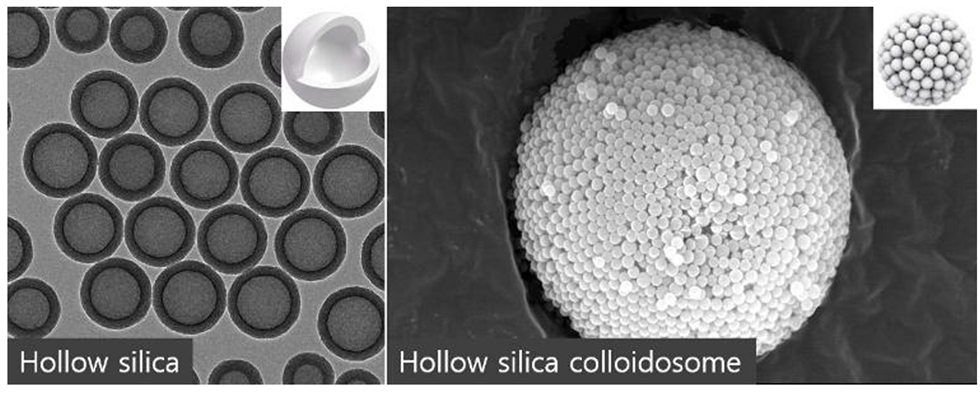
The core of the developed material lies in its hollow () structure with an empty interior. After years of research, NF Corp's Materials Research Institute has secured technologies for synthesizing hollow silica particles using environmentally friendly raw materials and for inducing self-assembly of these particles to form regular three-dimensional structures via micro-colloidosome synthesis technology.
This technology allows precise control of hollow size, particle size, and colloidosome structure at the nanometer level. By selectively scattering only light in the UV range while blocking it, and by adjusting refractive index to ensure high transparency, the material achieves its effects. It utilizes the principle of photonic crystals, which selectively reflect or scatter light of specific wavelengths through structural arrangement of matter—similar to how morpho butterfly wings or opal gemstones produce brilliant colors without pigments, relying solely on structure.
Safety design is also noteworthy. The existing industry has traditionally reduced whitening in inorganic blockers by grinding particles into nano sizes. However, this approach triggered regulatory requirements for labeling nanomaterials and consumer concerns across various countries. NF Corp's material avoids safety concerns related to nanoparticles entirely by implementing a colloidosome structure at the micro scale rather than using nanoparticles.
The UV-blocking material market has remained in a binary choice structure for decades. Widely used inorganic materials like titanium dioxide and zinc oxide cause whitening due to their high refractive index, resulting in white skin appearance and rough texture when applied in cosmetics. In contrast, organic materials offer transparency but are criticized for environmental hazards and low photostability. This has driven growing demand for new material technologies that simultaneously address the limitations of both camps.
In fact, whitening has become a core consumer complaint to such an extent that global raw material industries are discussing standardization for quantitatively measuring it. Entry barriers for new materials are also high. The U.S. FDA approved only one new UV-blocking ingredient since 1999 this year—the first in 27 years—highlighting the strategic value of materials that enhance both blocking power and transparency when used alongside existing approved ingredients.
The developed material not only improves whitening and rough texture associated with conventional inorganic blockers but also holds potential to overcome the environmental hazards and low photostability limitations of organic materials. This is why it is expected as a next-generation material capable of comprehensively addressing the drawbacks of both existing organic and inorganic UV-blocking materials.
Targeting the 34th trillion won sun care market...confirmed improvements in SPF and PA
Market prospects are also bright. Ultraviolet rays are classified as Group 1 carcinogens by the WHO (World Health Organization), with persistent concerns about their harmful effects including skin cancer, skin aging, and pigmentation. As ozone layer destruction caused by environmental pollution increases total UV exposure, the growth trend of the sun care market is becoming increasingly steep.
Global research firm Exactitude Consultancy estimated the global sun care market size to reach approximately $24.7 billion (about 34.1 trillion won) by 2030. The growth potential of the UV-blocking material market is particularly high. According to multiple market research firms, the global sun care UV filter market size ranges from approximately $800 million to $1.4 billion, with projected annual growth rates of 6% to 8%. Given that K-beauty sunscreens continue to perform well in overseas markets such as the U.S., there are also predictions that once domestic next-generation blocking materials are commercialized, a trickle-down effect could spread across the entire K-sun care value chain.
Performance verification has also passed the first hurdle. NF Corp confirmed through UV measurement data (SPF, PA) of cosmetics applying this next-generation inorganic material that blocking power was enhanced while excellent transparency and smooth texture were achieved. The company plans to continue verifying the material's potential through future clinical skin tests and address any shortcomings.
Expandability is also drawing attention. NF Corp is researching applications of this material's unique optical properties in electronic materials used for displays and other fields. This signifies technology that can evolve beyond cosmetic raw materials into an optical material platform.
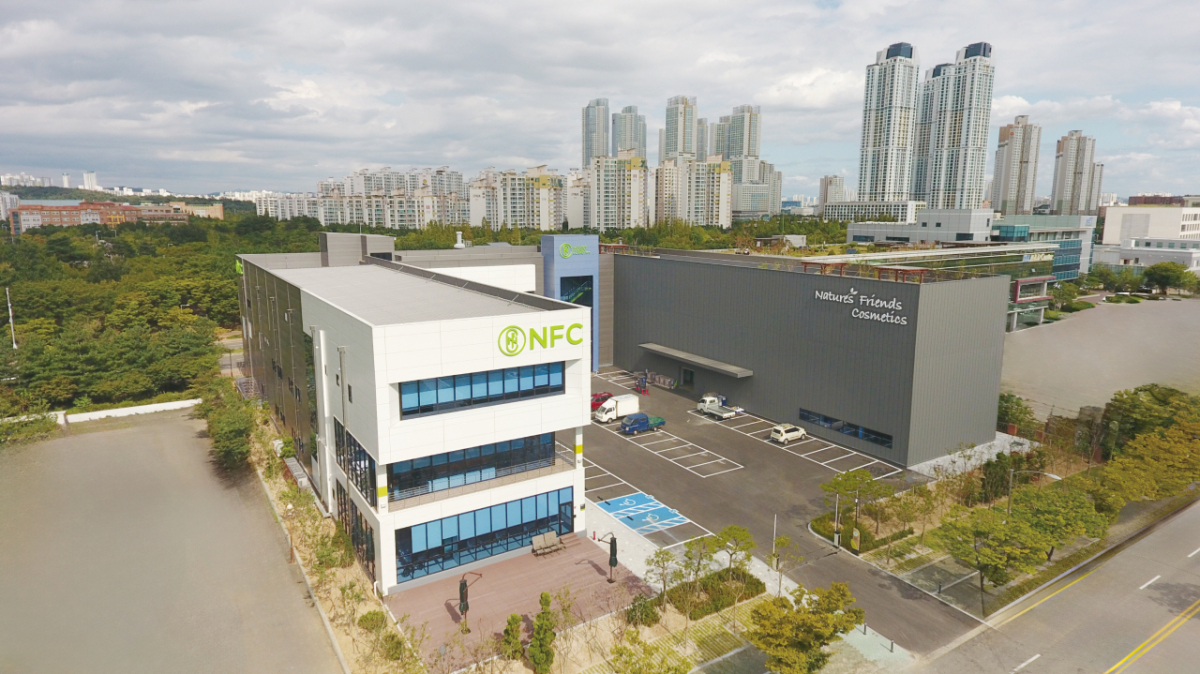
NF Corp is a cosmetics specialist company providing finished product ODM/OEM services based on raw materials and formulation technologies, covering skincare and cleansing products. By internalizing the entire process from materials to formulations to Yangsan, it simultaneously achieves rapid development speed, stable quality, and reasonable costs. Expanding its customer spectrum from global indie brands to major brands, NF Corp is establishing itself as a technology partner in the K-beauty supply chain.

 in STOCK

