

[For more diverse corporate information on the startups mentioned in this article, visit the Unicorn Factory big data platform 'Data Lab'.]
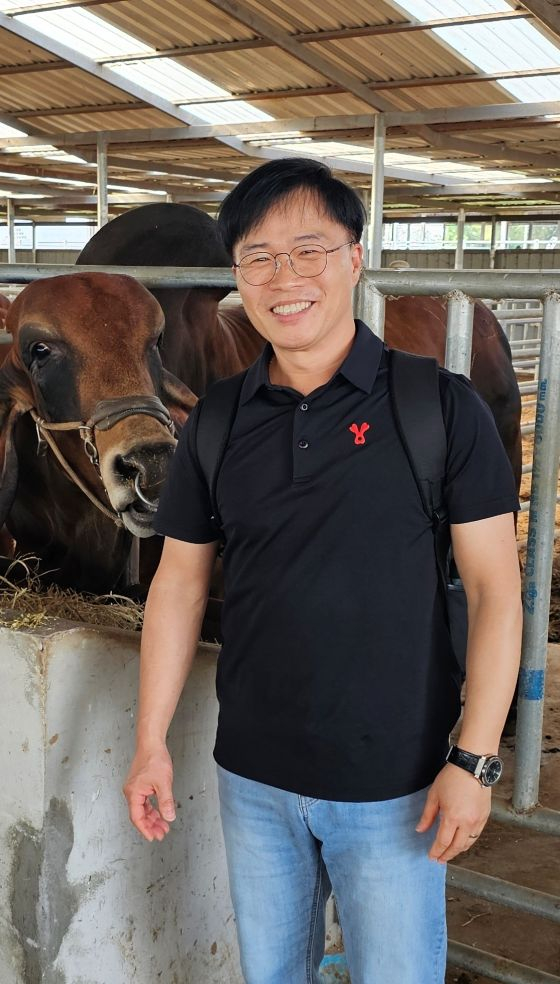
"After over 20 years of research at an infertility center, I became convinced that our accumulated technology could be fully applied to livestock farming."
Kim Ju-hwan, CEO of Modu Science, worked as a specialist researcher at an infertility center for more than two decades before founding the company to apply human reproductive technologies to the Hanwoo industry. By adapting embryo culture and cryopreservation systems, along with sterile culture environments used in human infertility treatments, to Hanwoo embryo production, the company is building a new livestock platform. Kim (CEO) stated, "Our greatest competitive advantage lies in understanding both the medical and livestock sectors." He added, "We are creating new markets by applying technologies proven for humans to the livestock industry."
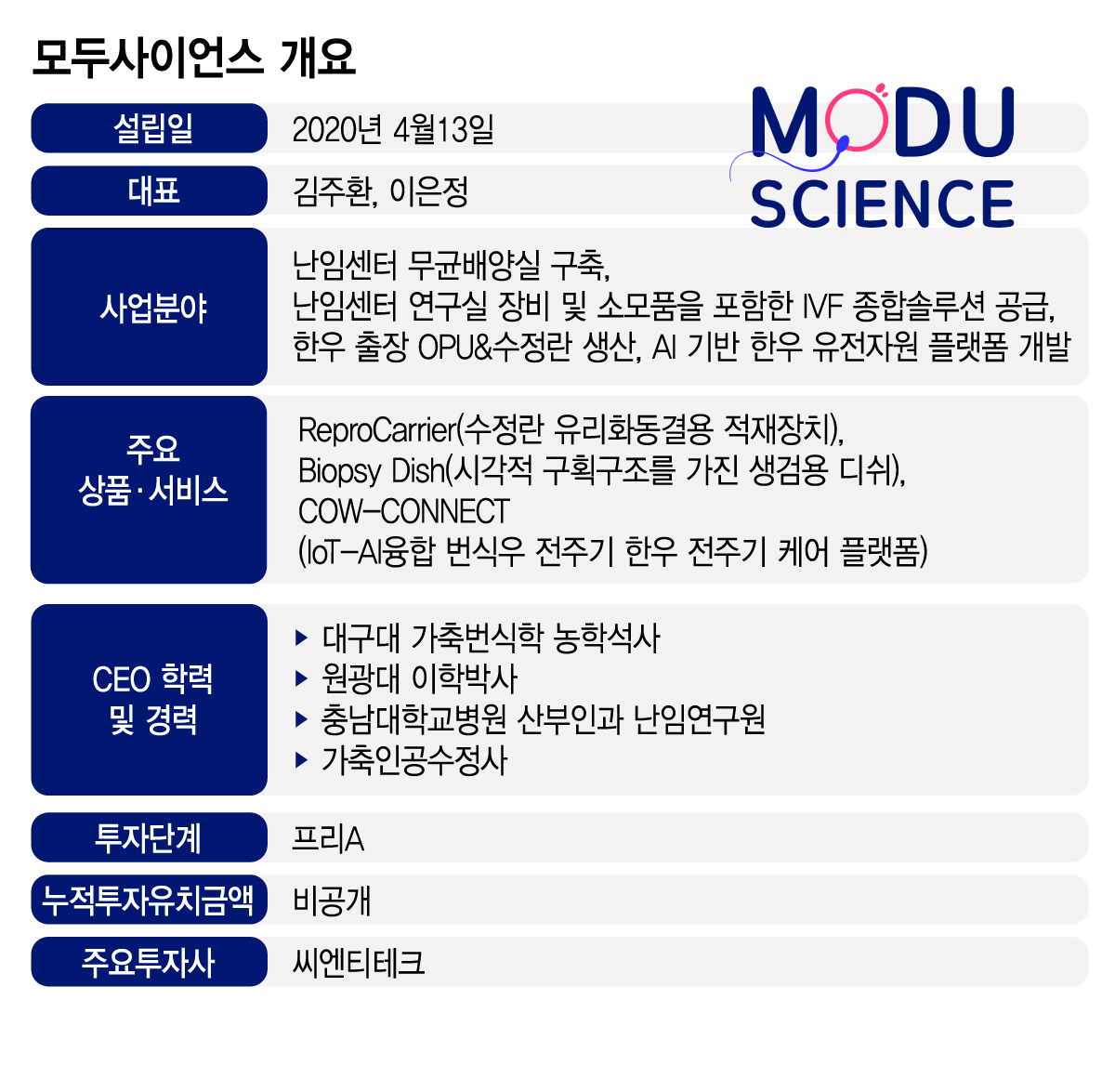
Hormone-Free Production, Mobile OPU, Sterile Culture Rooms: Creating Hanwoo Embryos with 'Hospital-Grade Technology'
Modu Science focuses primarily on 'Hanwoo embryo production.' While domestic Hanwoo improvement has largely relied on artificial insemination, this method alone faces limitations in rapidly spreading superior genetics. Kim (CEO) believes that embryo production technology can solve these challenges. He explained, "By collecting high-quality cow oocytes to create embryos and supplying them to multiple farms, we can achieve the effect of skipping several generations." He added, "This could shorten the Hanwoo improvement period by up to seven years."
Modu Science operates 'mobile OPU' (Ovum Pick-Up). Previously, farmers had to visit research institutions; with mobile OPU, a mobile laboratory travels directly to farms. Kim (CEO) stated, "We travel anywhere in the country, from Chuncheon in Gangwon Province to Pohang in Gyeongbuk Province, to collect high-quality oocytes from superior cows and transport them to our Iksan research facility." He added, "During transportation, we exert meticulous care, such as using specialized culture media, to minimize damage to the oocytes."
Modu Science has also established a sterile culture room, becoming the first private company in Korea to do so. This applies the same sterile systems used in infertility centers directly to livestock farming. Kim (CEO) remarked, "There is no environment superior to that used for handling human embryos." He noted, "Applying this system directly to livestock has yielded better results than before." Indeed, since establishing the sterile culture room, embryo development rates and post-cryopreservation pregnancy success rates have significantly improved.
Another core technology of Modu Science is an embryo production system based on OPU-IVP (in vivo oocyte collection and in vitro fertilization). The key difference from conventional methods is that it does not use hormones. Previously, multiple embryos were obtained by administering superovulation hormones to superior cows; however, after collection, farmers had to wait several months for ovarian recovery, limiting production frequency.
In contrast, OPU-IVP involves directly collecting oocytes from live cows and performing fertilization and culture in a laboratory. Since no hormones are used, the burden on the cow is reduced, and oocytes can be collected multiple times at regular intervals, enabling stable production of embryos with superior genetic traits. Kim (CEO) explained, "Because we do not use ovulation-inducing agents, there is no need to wait for ovarian function recovery." He added, "Considering cow health, we typically collect oocytes every two weeks, but technically, shorter intervals are possible."
From a superior donor cow (a cow providing oocytes), 30–40 oocytes can be secured at once. Modu Science has achieved fertilization rates of approximately 80% and blastocyst production rates of 65–70%. This means superior genetics can be mass-produced and rapidly supplied to farms nationwide. Kim (CEO) stated, "Good genetics are not just the asset of a single farm but can become the competitiveness of the entire industry." He added, "Enabling more farmers to utilize superior genetics is the greatest value of our embryo business."
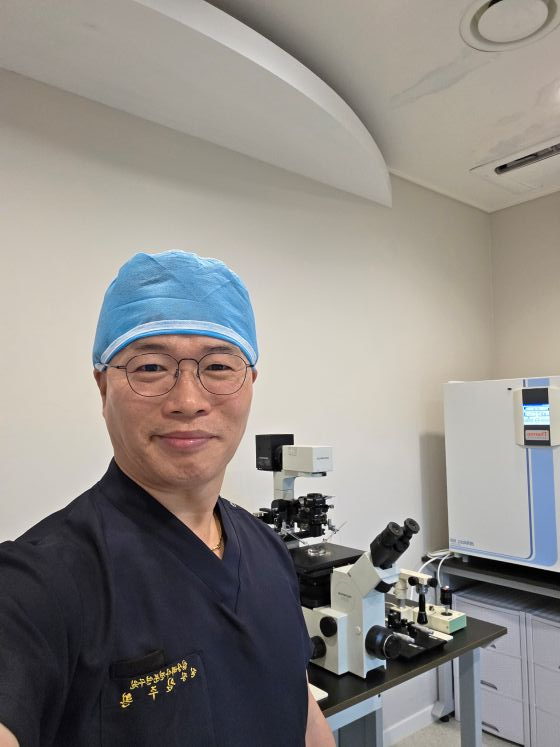
Applying the Infertility Treatment Standard 'Vitrification Cryopreservation'... Also Proposing Optimal Breeding Timing via AI
Another strength of Modu Science lies in embryo cryopreservation. For a long time, the livestock industry has predominantly used the 'slow freezing' method. While simple to operate, this approach had limitations in relatively low embryo survival rates and pregnancy success rates.
Kim (CEO) focused on 'vitrification cryopreservation,' a technology already established as the standard in human infertility treatment. This technique rapidly freezes embryos or oocytes to prevent ice crystal formation, preserving high survival rates and quality even after thawing. He emphasized, "More important than the technology itself is the precision of the operational process." He added, "High pregnancy success rates can be achieved only when sterile culture rooms and skilled technicians are combined."
Modu Science has taken an additional step by developing an AI platform. The 'AI-based Genetic Resource Management System' currently under development analyzes donor cow health, breeding cycles, feed intake, and calving records to propose optimal timing for oocyte collection and embryo transfer. Kim (CEO) stated, "Breeding management that previously relied on farmers' experience will now be driven by data and AI." He added, "We aim to help everyone achieve at least a certain level of breeding success."
He further noted, "Rather than seeking immediate large profits from this platform, creating an ecosystem where we grow together with farmers is more important." He concluded, "The company can only grow when farmers' competitiveness improves."
[MoneyToday Startup Media Platform Unicorn Factory]

 in TECH


