

[For more diverse company information on the startups mentioned in this article, visit Unicorn Factory's Big Data Platform Data Lab.]
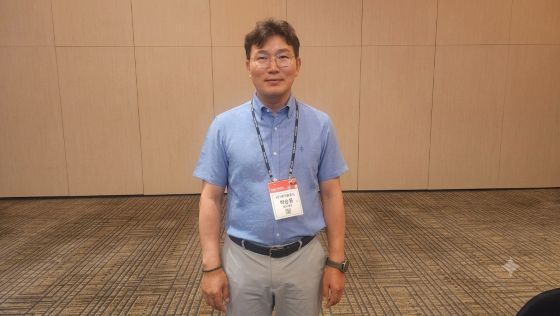
"The success or failure of medical technology commercialization depends not on the technology itself, but on how entrepreneurship is designed."
On the 10th, Park Sung-yong, CEO of IPON (IPON), emphasized this point while delivering a lecture titled "Why Planning Comes First in Medical Field Startups" at the '4th MediTech (MEDITEK) 2026' seminar on medical device and healthcare technology commercialization held at Jeju Maison Glad.
IPON was established in December 2012 as a specialized company for commercialization designated by the Ministry of Trade, Industry and Energy. Led by Park Sung-yong, a 20-year veteran Park (CEO), the company supports technology-holding firms in establishing commercialization strategies, managing patents and intellectual property rights (IP), and providing startup consulting. It also collaborates with accelerator Wide & Partners to assist early-stage startups in securing investments.
On this day, Park (CEO) outlined the stages that researcher-turned-entrepreneurs must go through during the commercialization process, including the characteristics of technology startups, market and environmental analysis, business model design, and investment strategies.
He first identified key factors determining the success of technology startups: △market fit of owned technologies △protection of intellectual property rights (IP) △team composition with both technical and business capabilities △ability to secure funding and utilize early government and private support △commercialization capabilities through technology validation (PoC).
As successful cases of professor and researcher startups in Korea, he presented △MangoBoost △OnePredict △SM Lab △RAINBOW Robotics △CryptoLab △Tomocube. He explained that these companies share common traits: starting from individual researcher entrepreneurship, forming teams, leveraging institutional frameworks such as research institute companies and technology holding companies, actively attracting venture capital (VC) investments, government support, and industry-academia collaboration. They also simultaneously advanced technological competitiveness while expanding into global markets. Park (CEO) stated, "Researchers must grow into entrepreneurs for the value of technology to be realized in the market," adding, "They need capabilities in commercialization, organization, and market orientation, along with execution power and market focus."
He also introduced the case of Tomocube's founder, Professor Park Yong-geun from KAIST's Department of Physics, who gained attention for his second-generation holography core technology. Through this example, Park (CEO) remarked, "A mindset that prioritizes 'why' over 'how' and moves toward human progress is closer to the essence of a technology entrepreneur."
Regarding the process of identifying startup ideas, he explained that one must find the intersection where an entrepreneur's experience, strengths, and awareness of societal problems converge. He particularly emphasized that only when three elements—entrepreneur/user value, market size—are interconnected can it lead to a viable business. He stated, "How we define a problem clarifies what can be done and what should be done," adding, "Problem definition itself is the starting point of a business model."
Especially in the medical field, he urged that customers must be defined more granularly. Due to the B2B (business-to-business) nature of the medical industry, end users, actual purchasers, and final beneficiaries are often different parties. For example, in the case of diagnostic imaging AI, if patients are the final beneficiaries, doctors and nurses may be users, while hospital directors or procurement teams could be decision-makers. Therefore, from the technology development stage, it is essential to clearly identify who each customer is and what value must be provided to them. Park (CEO) emphasized, "Research achievements do not succeed in the market solely based on technical excellence," stating, "'Why this technology?' must be convincing to investors, customers, and partners."
Regarding the recent investment market, he offered a sober assessment. He analyzed, "Recently, while the number of venture investments has decreased, the reduction in amounts is limited, and polarization is intensifying with funds concentrating around verified companies."
He also introduced excellent cases of commercialization based on public technology. AI-based digital healthcare medical device company 'SuroScope' started as a student and specialist (MD) planning-type startup model involving Ulsan National Institute of Science and Technology (UNIST) and Seoul National University Hospital. After completing domestic innovative medical device approvals, it is pursuing US clinical trials and European Medical Device Regulation (MDR) certification while securing follow-up investments totaling approximately 4 billion won.
New drug development company 'VSParmtech' based on radiopharmaceuticals is a case where it was founded as a management-institute planning-type startup after transferring public technologies from the Korea Institute of Radiological and Medical Sciences and the Korea Research Institute of Bioscience and Biotechnology. It has attracted cumulative investments of 12 billion won, been selected by Johnson & Johnson (J&J) Innovation, and achieved entry into global Phase 1 clinical trials.
Concluding his lecture, Park (CEO) repeatedly emphasized the importance of 'planning' in technology startups. He stated, "Technology startups require a series of 'planning' activities—accurately defining problems, analyzing market and policy environments, designing business models and investment stories—for laboratory achievements to translate into market success." He added, "The first question researchers should ask is not 'How excellent is this technology?' but 'Whose problem will this technology solve?'"
[MoneyToday Startup Media Platform Unicorn Factory]

 in TECH
