

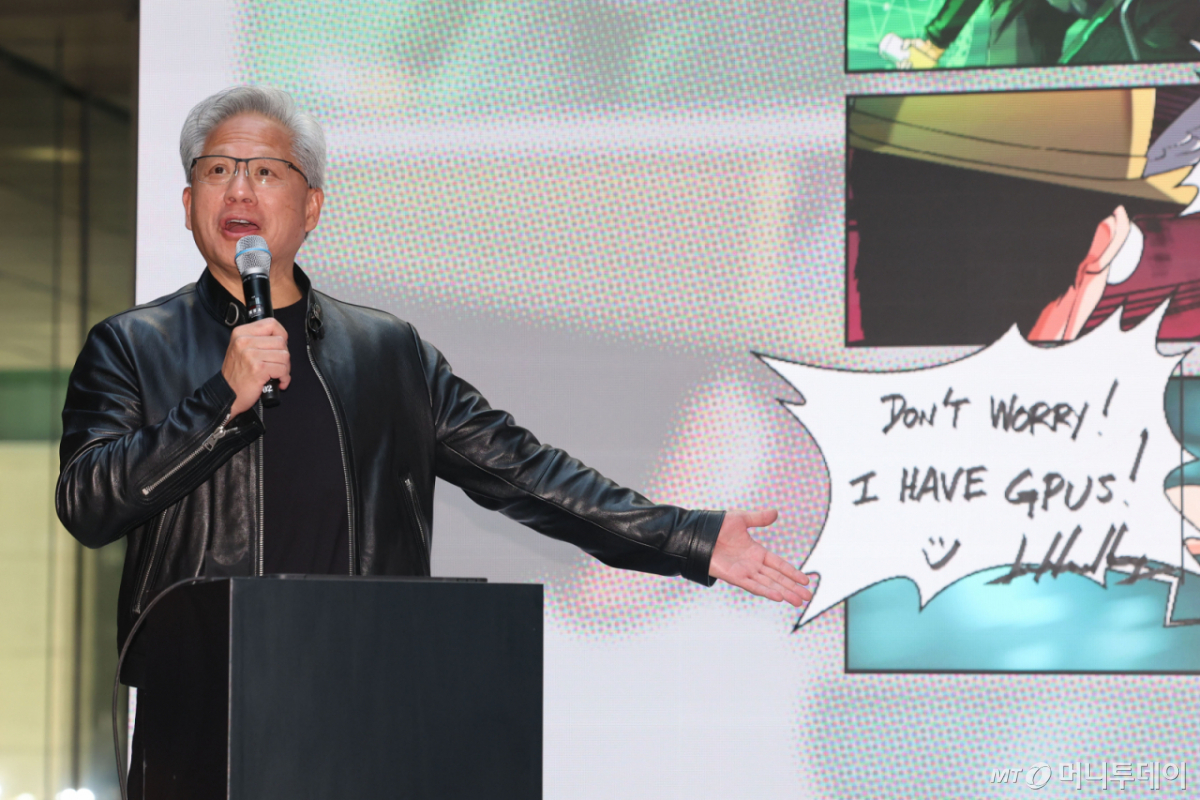
Domestic cybersecurity stocks rose for two consecutive trading days following a single remark by Jensen Huang, CEO of NVIDIA. Huang identified cybersecurity as the next major application area for AI. As expectations grew that AI would both escalate cyberattacks and serve as a defensive tool against them, buying pressure poured into domestic cybersecurity stocks in the stock market.
The initial reaction came on the 11th. On that day, Sands Lab closed at 5,510 won, up 29.80% from the previous trading day. XGate also hit its daily price limit at 16,060 won. Estw rose more than 26%, buoyed by news of joining OpenAI-led cybersecurity initiative "Daybreak Defense Network."
Buying pressure continued on the 14th. Sands Lab closed at 7,160 won, up 29.95% from the previous day, recording its second consecutive daily price limit. On the same day, Raon Secure, Pasu AI, Hansik, XGate, and Dream Security also maintained strong performance.
During the Goldman Sachs Technology Conference held in San Francisco on the 10th, Huang stated, "Cybersecurity is highly likely to become the next major use case for AI." The gist was that as AI models advance, programming automation accelerates, speeding up both the exploitation of security vulnerabilities and the patching process to counter them.
Market expectations are clear. As generative AI and agentic AI spread, attackers can find vulnerabilities faster and create more sophisticated phishing emails and malware. Conversely, defenders can leverage AI to accelerate vulnerability detection, threat analysis, and automation of security monitoring. This is why AI growth narratives have taken hold in the cybersecurity industry.
However, examining semi-annual reports from domestic cybersecurity companies reveals that current revenue structures are largely unrelated to AI. Although cybersecurity firms highlight AI security, zero trust, N2SF, and security SaaS as new growth pillars, the actual drivers of first-half performance remain traditional core businesses such as endpoint protection, network access control (NAC), endpoint detection and response (EDR), firewalls, unified authentication, mobile security, security operations monitoring, and maintenance services.
For Ahn Lab, consolidated revenue and operating profit for the first half increased by 9.1% and 62.3%, respectively, compared to the same period last year. This was driven by rising demand for endpoint and network security, integrated threat detection and response, and security operations efficiency improvements. Genieone's first-half revenue grew by 19.9%, while operating profit surged 294.3%. The performance was led by its core businesses: NAC and EDR.
For Raon Secure, the primary driver of first-half revenue was not AI security itself but rather authentication and digital identity services. A Raon Secure representative stated, "In the first half, zero trust-based unified authentication, mobile security, digital identity verification (DID), and white-hat hacker consulting services drove revenue growth."
However, there is a possibility that AI security demand will fully materialize from the second half onward. A Raon Secure representative noted, "With the recent spread of agentic AI, security demands related to AI identification, authorization, behavioral control, and data management are growing rapidly. We have been developing solutions to address this and are preparing for commercialization in the third quarter. Especially with rising interest from the public sector and financial industry, we expect revenue growth driven by expanding demand."
While AI and N2SF have not been entirely absent from earnings results, it is still considered too early to say they will transform the overall revenue structure of the entire industry.

 in TECH
