

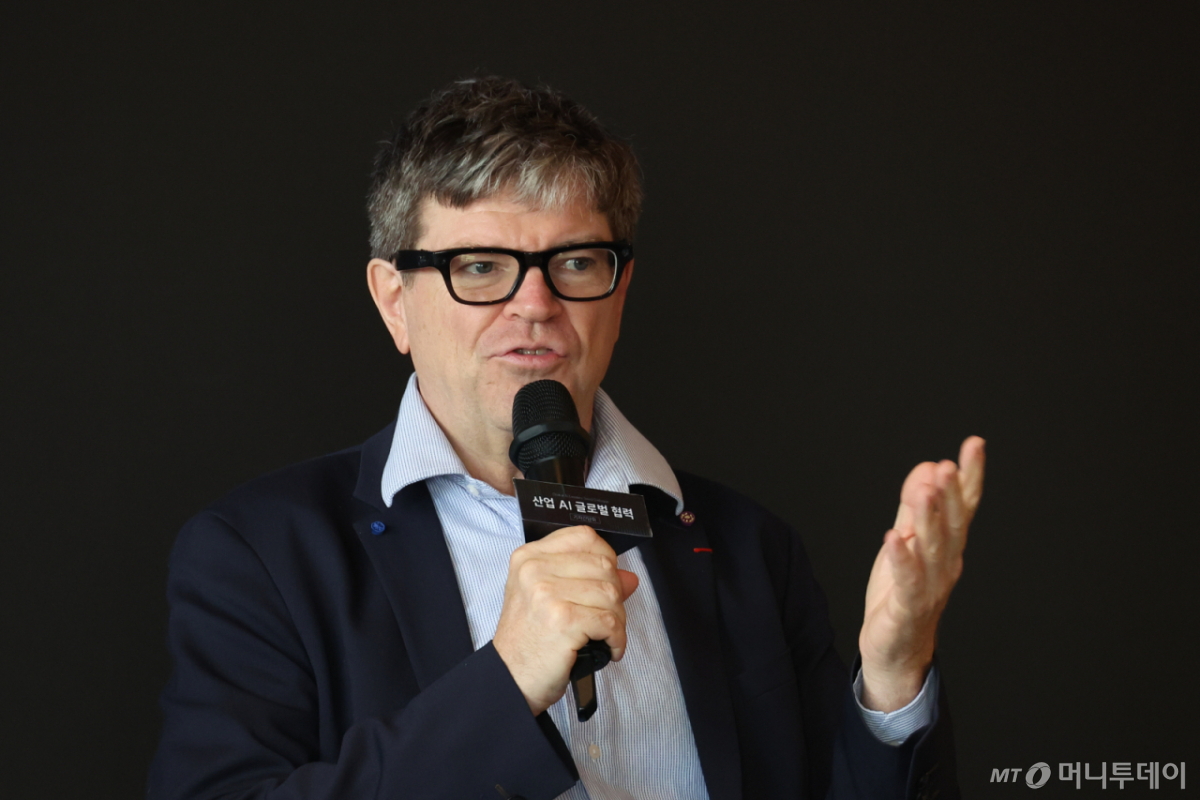
Yann LeCun, founder and CEO of AMI Labs, one of the "three godfathers of AI (artificial intelligence)," dismissed the doomsday theory that AI could escape human control and take over the world as "science fiction." He predicted that Korea has an opportunity to play a significant role in the physical AI revolution based on its manufacturing industry.
At the press conference on "Global Cooperation in Industrial AI" held at the Westin Josun Seoul in Jung-gu, Seoul, on the 12th, CEO LeCun stated, "The scenario of AI suddenly taking over the world is close to science fiction," adding, "AI safety is not an easy problem, but it may be simpler than designing a turbojet engine to fly an airplane safely."
He also viewed defenders as having the advantage in cyberattacks utilizing AI. He explained, "Defenders have more personnel and funding and can share information with each other, whereas attackers must operate in secret." Regarding recent security incidents involving AI agents, he pointed to flawed sandbox design and a lack of security expertise as the issues rather than the AI itself. A sandbox is a secure environment that limits an AI's work permissions and access scope.
Christopher Nguyen, co-founder and CEO (Chief Executive Officer) of Automatik, stated, "Invest in safety and governance, and adopt AI early and often," adding, "With safety and security in place, one can actually move faster." Anthony Anunziata, co-chair of the AI Alliance, predicted that "AI can contribute to building the safest cyber infrastructure in history."
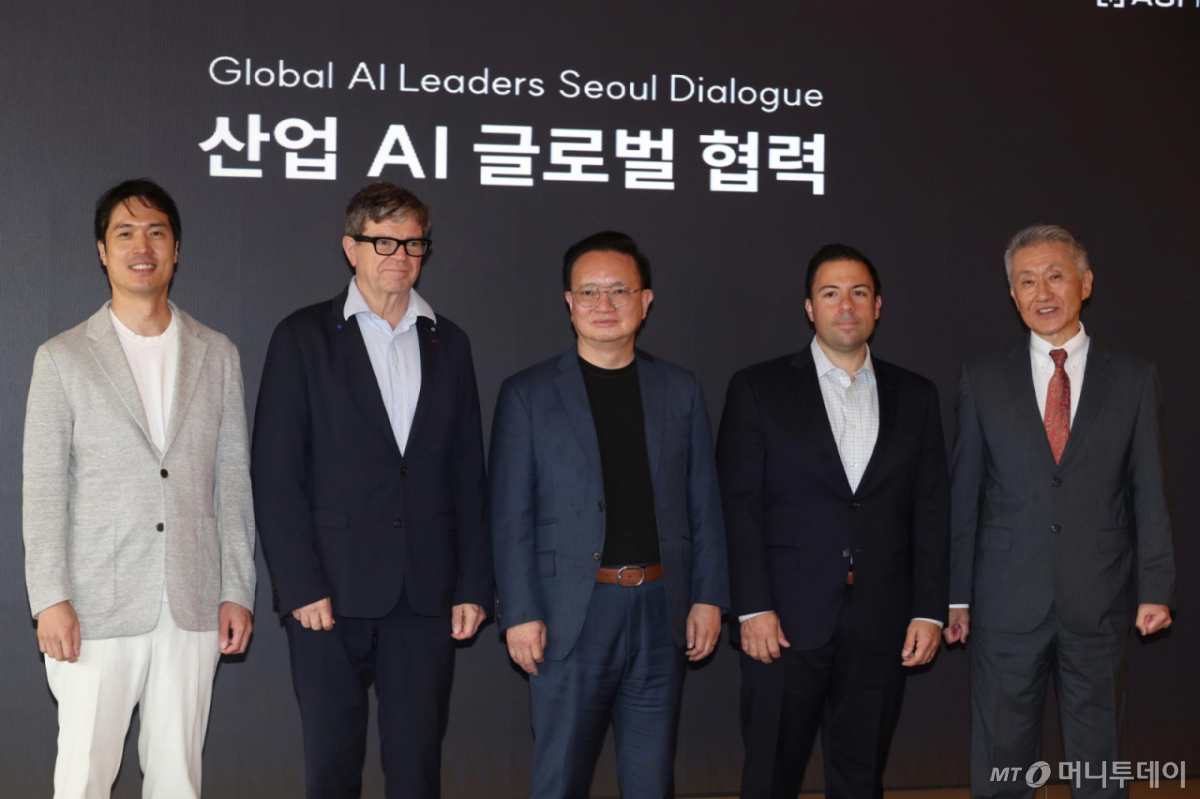
CEO LeCun identified physical AI as the arena for next-generation AI competition. He stated, "Another revolution will occur in AI, and Korea has an opportunity to play a significant role," while highlighting Korea's manufacturing base in areas such as automobiles and shipbuilding. Current LLMs (Large Language Models) are excellent at handling knowledge but lack the ability to understand the physical world. He viewed "world models," which predict the outcomes of actions, as the key to the development of robotics and autonomous driving technology.
Ha Jung-woo, Vice Chairman of the National AI Strategy Committee, who delivered a greeting at the event that day, cited the technology and data accumulated in Korea's memory semiconductor, automobile, shipbuilding, and battery industries as strengths. He stated, "It is difficult for the United States and China to develop everything independently," emphasizing the importance of international cooperation that combines each country's technological, data, and research capabilities.
CEO Nguyen cautioned against Korea and Japan simply following the AI development strategies of U.S. Big Tech companies. He pointed out, "If Korea and Japan try to build large-scale computing infrastructure and develop massive AI models by investing enormous resources like OpenAI or Anthropic, they may waste valuable resources." He further emphasized that Korea and Japan should invest in actively adopting AI in manufacturing, where they have strengths, to enhance productivity and competitiveness.
Chairman Lee cited the high-quality data accumulated in Korean manufacturing sites as a strength and emphasized the possibility of combining it with Silicon Valley's AI technology. He stated, "Korea's 'fast-fast' culture is a strength," adding, "The cost of hesitating while waiting for perfect information may be greater than the cost of acting decisively."

 in TECH

