

[For more diverse corporate information on the startups featured in this article, please visit the Unicorn Factory big data platform 'Data Lab'.]
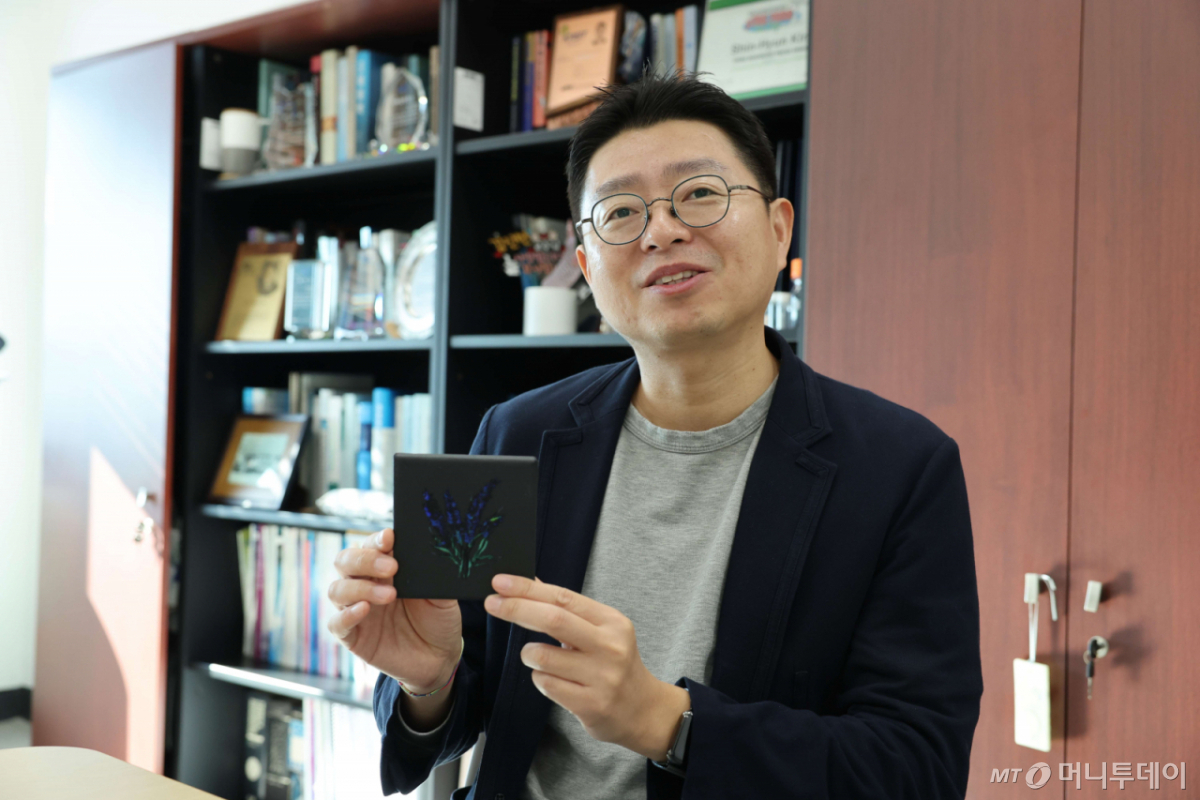
Pictures printed on paper and paint on building exteriors fade over time. This is because the chemical pigments that produce color undergo changes in their molecular structure after prolonged exposure to ultraviolet light.
Kim Shin-hyun, Professor of Biochemical Engineering at KAIST (Korea Advanced Institute of Science and Technology), solved this problem using "structure" rather than dyes. Simply put, he etches hemispherical microstructures at a scale one-tenth the thickness of a human hair onto transparent materials that are inherently colorless to produce color. Professor Kim stated, "As long as the structure is maintained, the color lasts permanently, eliminating concerns about fading," adding, "It also reduces environmental issues and potential harm to the human body associated with the synthesis process of dyes, making it significant from a sustainability perspective."
Not nano, but 'micro domes'… Easy process, precise colors
Structural color refers to colors that appear when regular structures within a substance interfere with light, such as on the wings of morpho butterflies or in opals. Even with the same material, changing only the structure can produce a variety of colors.
Professor Kim has focused exclusively on structural color research for over 20 years since his student days. Existing technology, which involves arranging particles of 100 nanometers (nm) in three dimensions, was developed in collaboration with the Korea Minting and Security Printing Corporation and has already been applied to products such as Gangwon Land casino chips. However, the process is demanding; while creating a single color pattern is easy, producing intricate graphics with mixed colors proved difficult.
The new technology changed the way color is created from the ground up. Professor Kim said, "Unlike existing methods that mimic nature, this utilizes principles not found in the natural world." The technology employs an inverted form of small hemispheres approximately 10 micrometers (µm) in diameter. When light enters the side of the hemisphere, it reflects off the curved surface and returns. As light traveling along different paths meets and interferes, a specific color appears. There is no need to use separate dyes or materials to change the color. By simply altering the size of the hemispheres, different colors can be created. Mixing and arranging hemispheres of various sizes allows for the realization of far more diverse colors, much like mixing paints.
The production process utilizes techniques used in semiconductor manufacturing. First, microscopic pillars are created using a polymer that reacts to ultraviolet light, which is then heated. As the polymer melts, the surface becomes rounded, forming a hemispherical shape. A key advantage is that the size and position of the hemispheres can be designed in advance, allowing the desired color to be realized at the desired location with a single process.
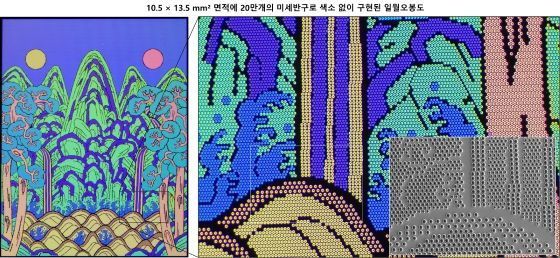
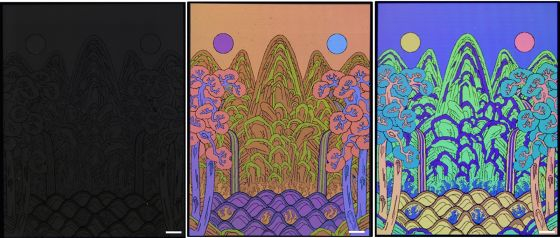
The research team used this technology to reproduce the Joseon Dynasty painting "Ilwolobongdo" (Sun, Moon, and Five Peaks) at fingernail size. The resolution is comparable to that of the latest LED displays, and it can also be projected onto large screens. It also possesses "Janus" characteristics, where color is visible from one direction while appearing transparent from the opposite side. Professor Kim explained, "The most significant feature is that high-resolution color graphics, which were difficult with existing technologies, can be created using structural color alone." This research, in which researcher Son Chae-rim participated as the first author, was published in the international academic journal "Advanced Materials" last February.
Anti-counterfeiting and premium packaging… "A new art genre is also possible"
Professor Kim stated that structural color should find its own unique market rather than directly replacing chemical dyes, as the principle of color generation differs, resulting in a fundamentally different color tone. While noting that the technology was not developed for specific uses, he cited several applications. For instance, because the color changes depending on the viewing angle and microscopic text invisible to the naked eye can be etched, it can be used as an anti-counterfeiting material for authenticity verification. Leveraging its ability to precisely control light paths, it can also be applied to optical components or sensors.
Professor Kim said, "It is not a scientific expression, but when you actually see it, it is truly beautiful," adding, "It suits premium packaging that requires a luxurious feel, as well as interior items, goods, and vehicle interior materials."
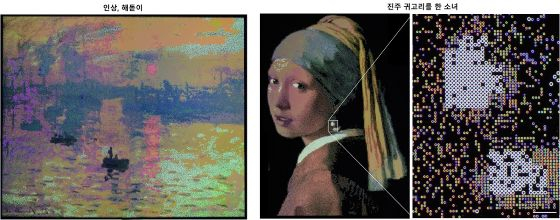
The technology transfer field that Professor Kim personally anticipates most is the art industry. This involves creating works of fingernail size using structural color instead of paint, and then viewing them by magnifying with a microscope or projecting them onto walls for exhibition. Professor Kim said, "It can become a new form of art genre that did not previously exist," adding, "We are also considering ways to collaborate with artists in the future." Since each work requires different micro-structure designs, it is expected to hold value as limited-edition art pieces differentiated from mass-produced products.
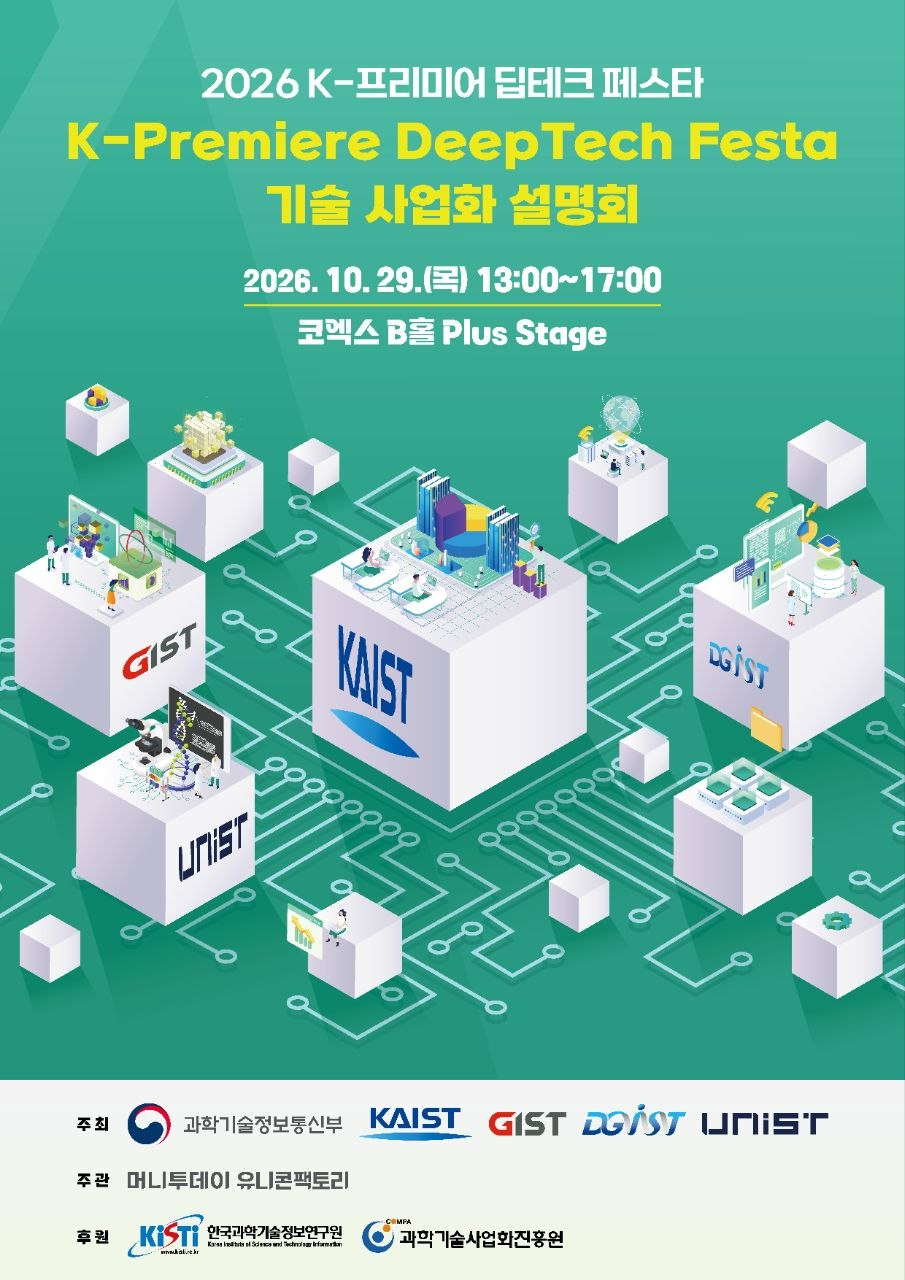
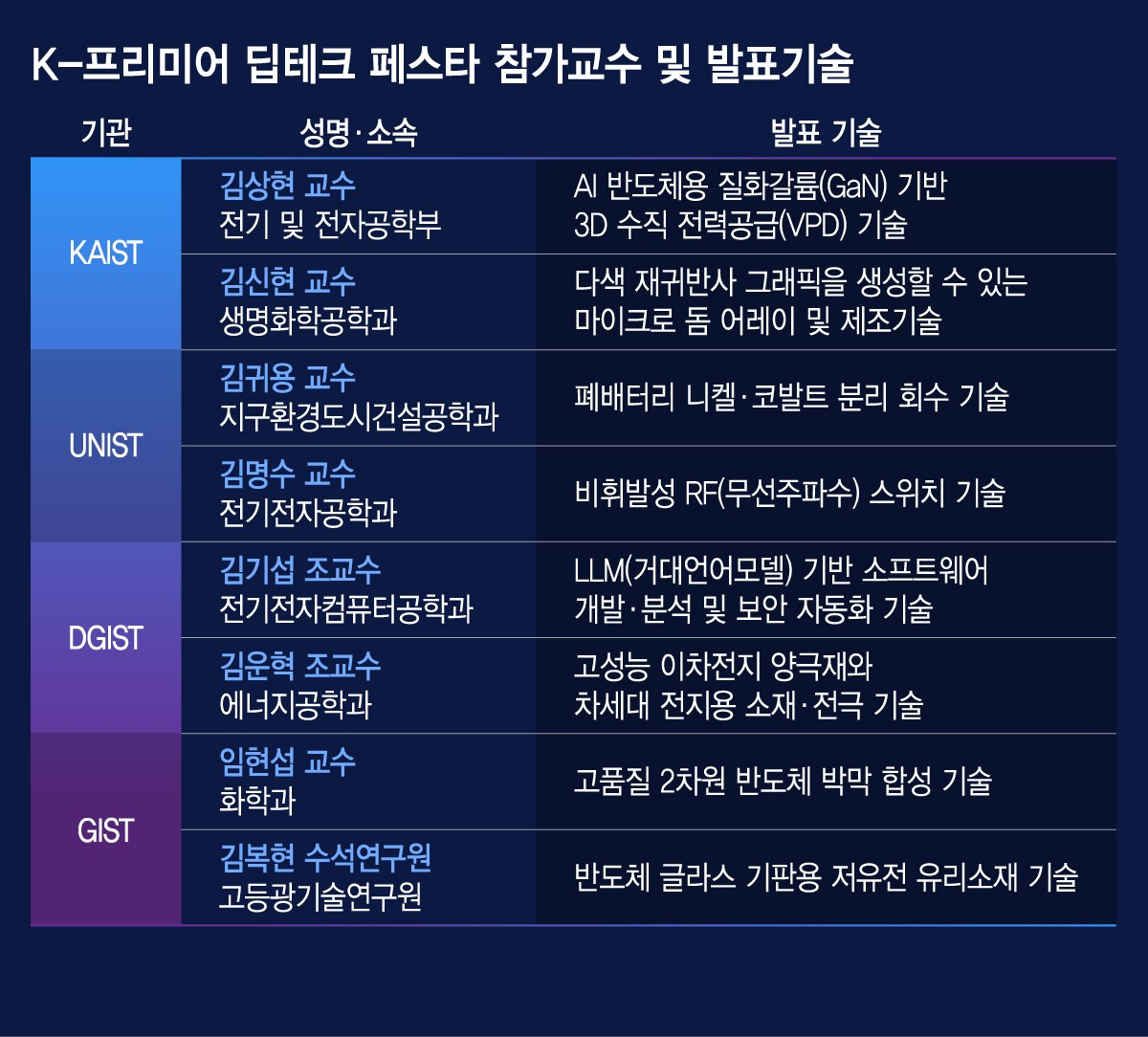
The remaining challenges are finding commercialization partners and establishing a Yangsan system. Unlike artworks, packaging and security materials require mass production as a key factor. Professor Kim stated, "It is difficult for the university alone; it is important to find companies that are genuinely interested in the technology and move forward together." Fortunately, he explained that the process is similar to micro-lens arrays, which are already mass-produced for display films, so the Yangsan barrier is relatively low. This technology is worth watching for security printing, display, cosmetics, luxury packaging companies, entertainment firms producing photocard goods, and smart car manufacturers. Professor Kim is scheduled to introduce this technology directly at the "K-Premier Deep Tech Festa" to be held on the 29th in Hall B Plus Stage of COEX in Seoul.
Application for participation in 'K-Premier Deep Tech Festa (Technology Transfer and Commercialization)'
[MoneyToday startup media platform Unicorn Factory]

 in TECH


