

The government will comprehensively overhaul the eSIM (embedded digital USIM) system this month. This comes as criticism has persisted for four years since its introduction that, despite eSIMs being more convenient technology than physical USIMs, passive responses from mobile carriers have led to the neglect of domestic user convenience.
According to materials submitted by the Ministry of Science and ICT and the telecommunications industry to the office of Lee Jung-hun, a Democratic Party of Korea lawmaker on the National Assembly's Science, Technology and Information Committee and the Korea Communications Commission, combined with Money Today's investigation, eSIM market share in South Korea stood at less than 5% as of the end of August. The three major carriers did not disclose specific market share figures. In the mobile virtual network operator (MVNO) market, MediaLog had the highest number of eSIM users at approximately 1,134,200 (a 3.5% share). This was followed by LG Hello Vision with 739,000 users (3%) and SK Tellink with 717,600 users (4.2%).
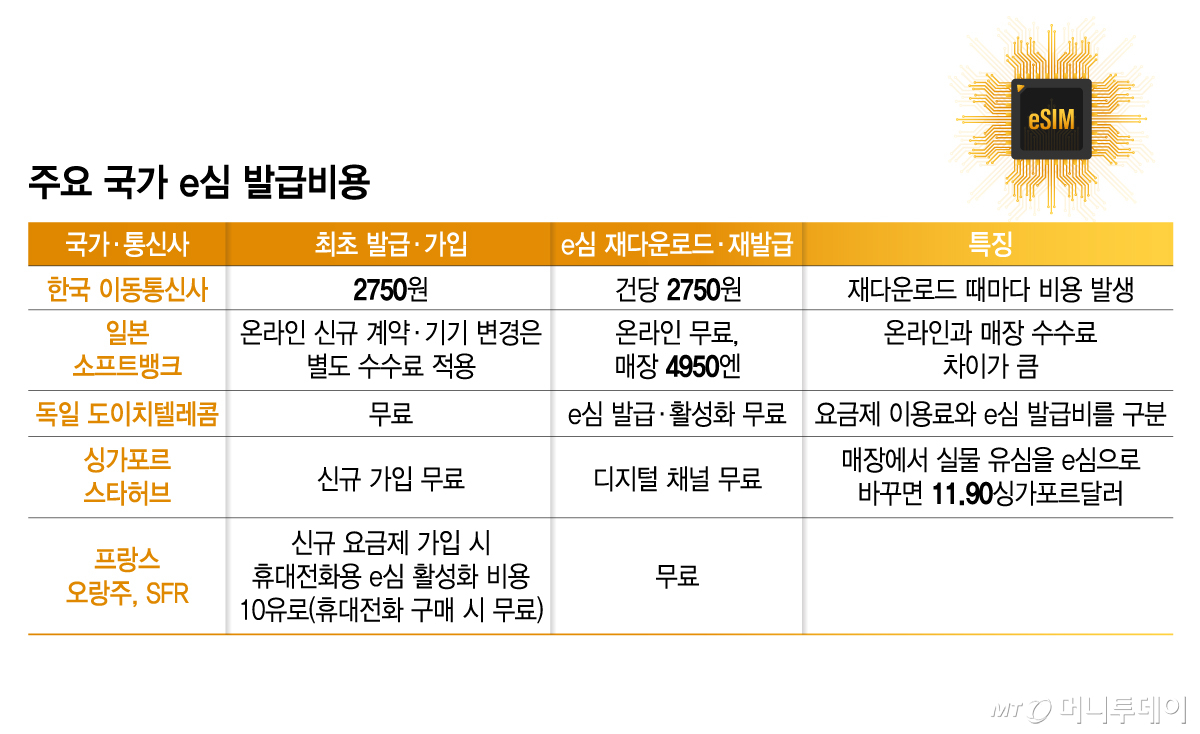
eSIMs work by downloading subscriber information to a chip built into the smartphone. There is no need to install a physical USIM, and online activation is possible. The initial issuance fee is also 2,750 won, cheaper than a USIM (7,700 won), but usage has barely increased.
The biggest obstacles are re-download costs and cumbersome activation procedures. In South Korea, users must pay 2,750 won each time they switch devices or accidentally delete an eSIM profile and need to download it again. Three re-downloads total 8,250 won, exceeding the price of a physical USIM. For MVNO users with short device replacement cycles or frequent plan changes, physical USIMs can paradoxically be cheaper than eSIMs. Although online activation is possible, there are operating hour restrictions. This contrasts with most overseas markets, where eSIM re-downloads are generally free and users can self-activate at any time.
In response, the Ministry of Science and ICT proposed methods referencing overseas cases, such as waiving fees for online eSIM issuance (Japan) and charging a fee only once for initial issuance while waiving it upon device change (France). However, it is known that carriers expressed reluctance. They explained that overseas operators recover costs through subscription fees, activation fees, and administrative charges, making simple comparisons with South Korea difficult. Concerns over declining USIM sales and subscriber churn are also significant.
Han Seok-hyun, head of the Seoul YMCA Citizen Broadcasting Station, pointed out, "The advantage of eSIMs is convenience, but in South Korea, they can actually be less convenient and more expensive than USIMs, which is why people do not use them." He added, "Carriers' USIM sales are substantial, and due to the three-carrier monopoly structure, they have been passive in competing for user convenience."
Consequently, the Ministry of Science and ICT has decided to push for a comprehensive overhaul of the eSIM system to reduce user inconvenience and revitalize the MVNO market. It is expected to announce an activation strategy this month that includes lowering eSIM fees, making re-downloads and other conditions free, expanding activation hours, and simplifying self-activation procedures.
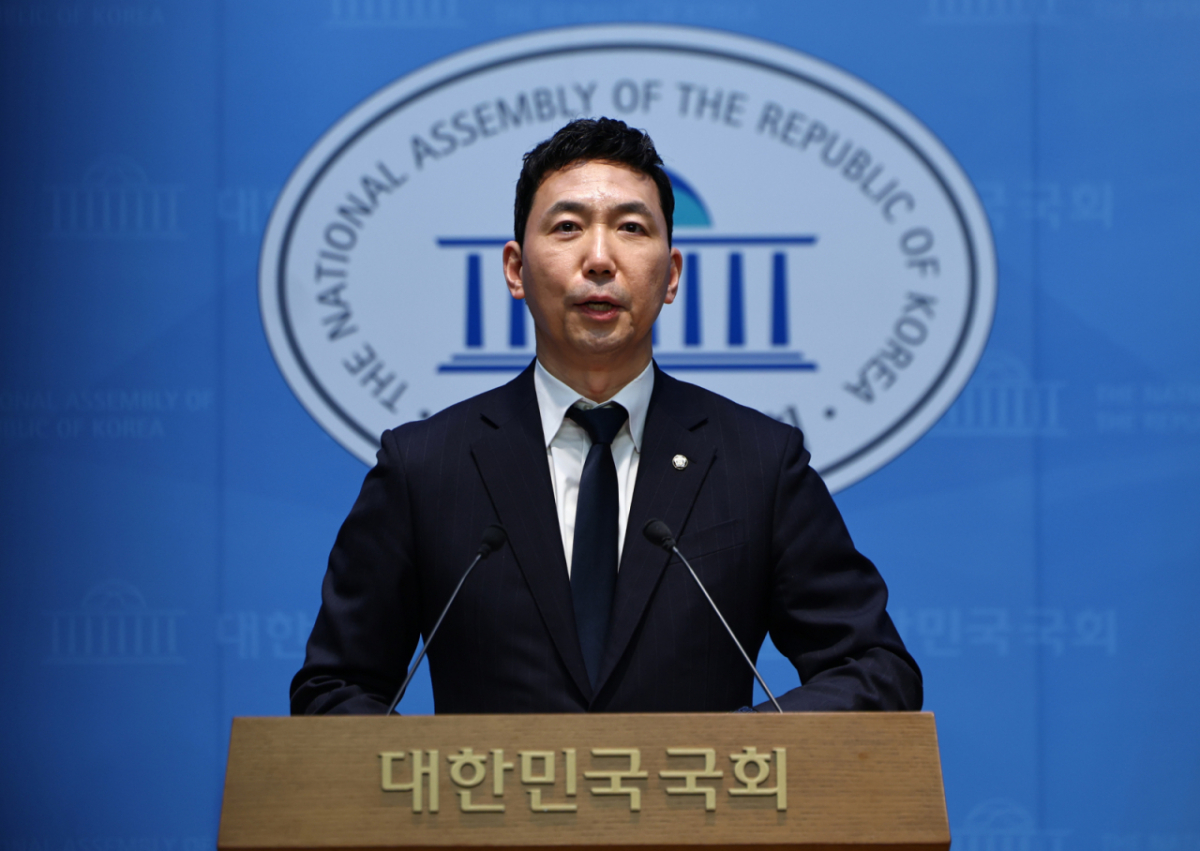
Lawmaker Lee Jeong-heon (Rep.) stated, "eSIMs were introduced to reduce communication costs and broaden user choice, but carriers are maintaining a structure favorable for USIM sales revenue and retaining existing subscribers." He pointed out, "It is difficult to accept repeatedly charging consumers fees on the grounds of license costs and operating expenses." He emphasized, "The structure in which consumers bear costs and inconvenience for carriers' profits must change. The government should push for abolishing re-download fees and simplifying activation procedures, and carriers must actively work to enhance user benefits and revitalize competition in the telecommunications market."

 in TECH

