

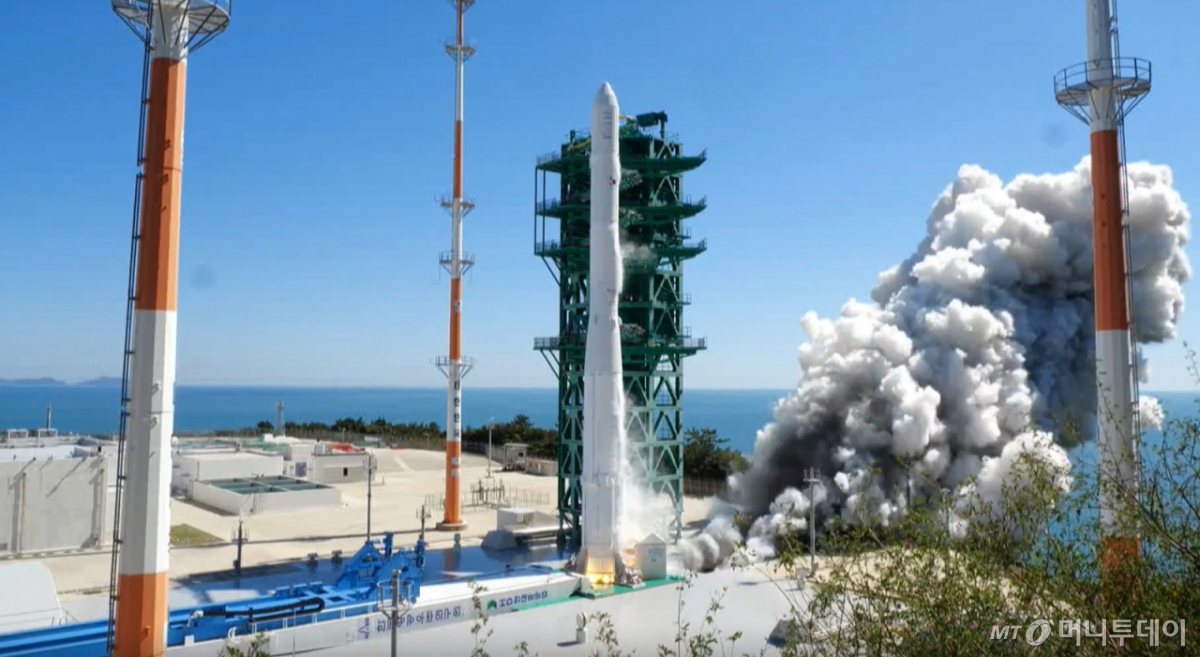
Hanwha Aerospace will develop Korea's first 'orbit transfer vehicle' to send a communications satellite into lunar orbit by 2029. Following its work on the Korean-made rocket, Hanwha Aerospace will also lead the design and development of the country's first orbit transfer vehicle.
According to science and technology sources on the 22nd, Hanwha Aerospace (hereinafter referred to as Hanwha Aero) was selected in June as the prime contractor for the Korea Aerospace Administration's orbit transfer vehicle flight model development project. An orbit transfer vehicle (OTV) is a spacecraft that transfers satellites or payloads placed in low Earth orbit by a rocket into lunar transfer orbits, geostationary orbits, and other destinations. Full-scale design work will begin next year.
The Aerospace Administration has selected Hanwha Aero as the prime contractor to develop Korea's first orbit transfer vehicle, aiming for the launch of the first orbit transfer vehicle on the eighth Nuri rocket launch in 2029. The primary mission of the orbit transfer vehicle is to move one 'lunar orbit communications satellite' into lunar transfer orbit. Previously, in a presidential work report last December, the Aerospace Administration stated that it would "launch an orbital vehicle for lunar communications in 2029 using the Nuri rocket and an orbit transfer vehicle."
According to the plan, the eighth Nuri rocket will place the orbit transfer vehicle into low Earth orbit at an altitude of 300 kilometers. After placing one CubeSat into low Earth orbit, the orbit transfer vehicle will move to lunar transfer orbit (a large elliptical orbit between the Earth and the Moon) and deploy one lunar orbit communications satellite to its target location.
The entire process of launching a domestically produced lunar orbit communications satellite into space using a domestic rocket and an orbit transfer vehicle represents the first challenge for Korea's aerospace industry. The Aerospace Administration plans to invest 70 billion won in national funds over four years, from 2026 to 2029, for the development of the orbit transfer vehicle flight model.

 in TECH
