

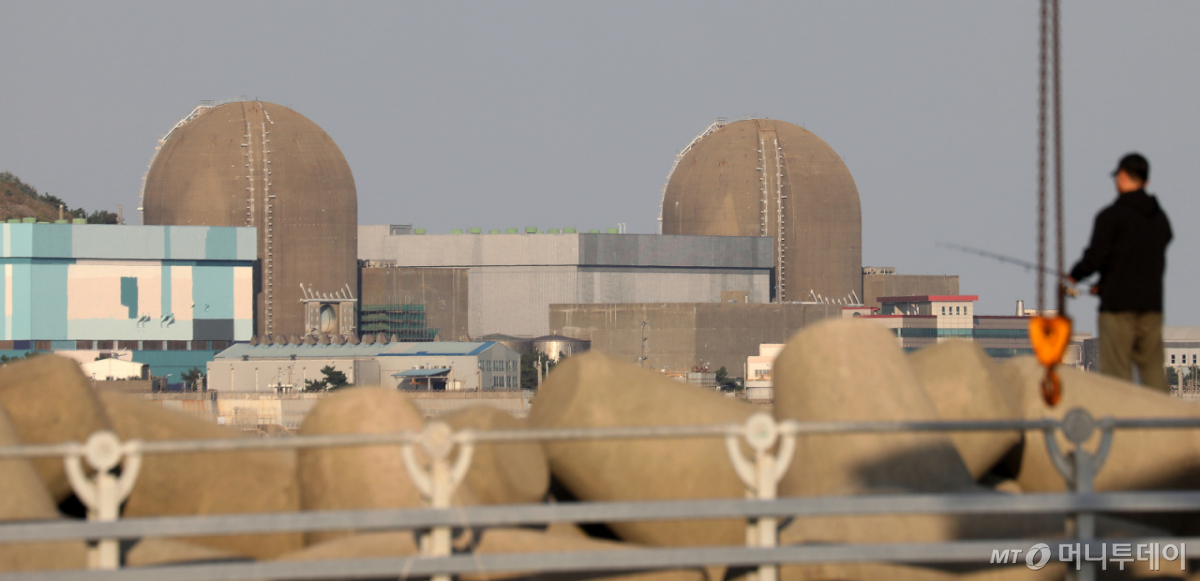
Gori Nuclear Power Plant Units 3 and 4, which had been shut down for more than a year, are expected to resume operation as early as the first half of next year.
The Nuclear Safety and Security Commission held its 17th meeting on Tuesday and approved the continued operation permit for Gori Nuclear Power Plant Units 3 and 4.
Accordingly, Gori Unit 3 will proceed with resumption procedures approximately two years after ceasing operations on September 28, 2024, due to the expiration of its design life, while Gori Unit 4 will do so approximately one year and two months after its shutdown on August 6, 2025.
It is expected that at least three months will be required before actual resumption of operations. Following the approval for continued operation, the operator, Korea Hydro & Nuclear Power, will begin maintenance work necessary to ensure safety, including equipment replacement. Subsequently, it will generate electricity after an on-site inspection by the Nuclear Safety and Security Commission.
Previously, Gori Unit 2, which was the first in South Korea to be approved for continued operation, resumed power generation in April last year after undergoing equipment improvements and inspections following its approval in November 2025.
Gori Units 3 and 4 were first put on the agenda at a Nuclear Safety and Security Commission meeting on the 15th, but were not approved due to the need for supplementary materials and additional review. At this second meeting, after six hours of deliberation, the continued operation permit was approved as originally proposed by a vote of five in favor and two against, surpassing the majority of the nine sitting commissioners.
If it is determined that a nuclear power plant can operate safely beyond its design life, it may be operated for an additional 10 years. Under this approval, the lifespan of Gori Unit 3 will be extended until September 2034, and that of Gori Unit 4 until August 2035.
Gori Unit 3 began its first commercial operation on September 30, 1985, and Unit 4 on April 29, 1986. Both are pressurized water reactor units with a capacity of 950 megawatts (MW) each, and upon resumption, they will supply a total of 1,900 MW of electricity.
This level is sufficient to meet the annual residential electricity consumption of Seoul city as a whole, and is large enough to operate several dozen AI data centers (AIDCs) with a capacity of 100 MW each simultaneously.

 in TECH
