

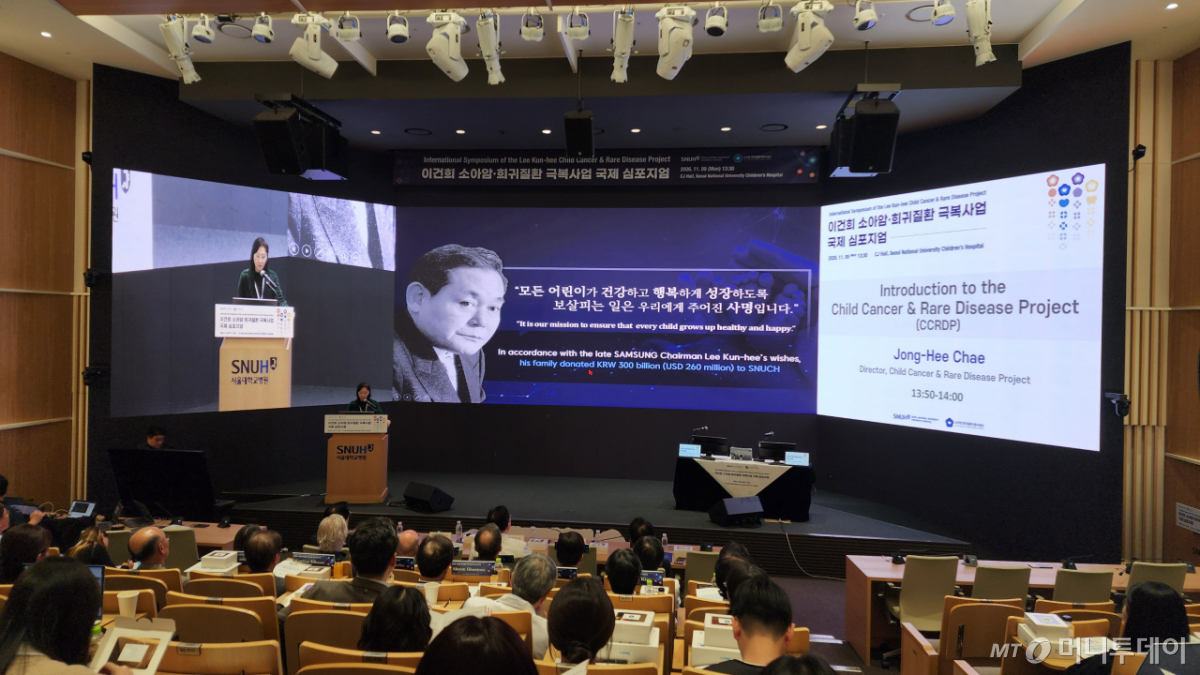
A 300 billion won donation made by the family of late Samsung Electronics Chairman Lee Kun-hee to Seoul National University Children's Hospital five years ago is delivering results in the fight against childhood cancer and rare diseases.
The initiative has led to the development of Korea's first standard treatment protocol for childhood leukemia and the discovery and diagnosis of more than 20 previously unidentified rare diseases.
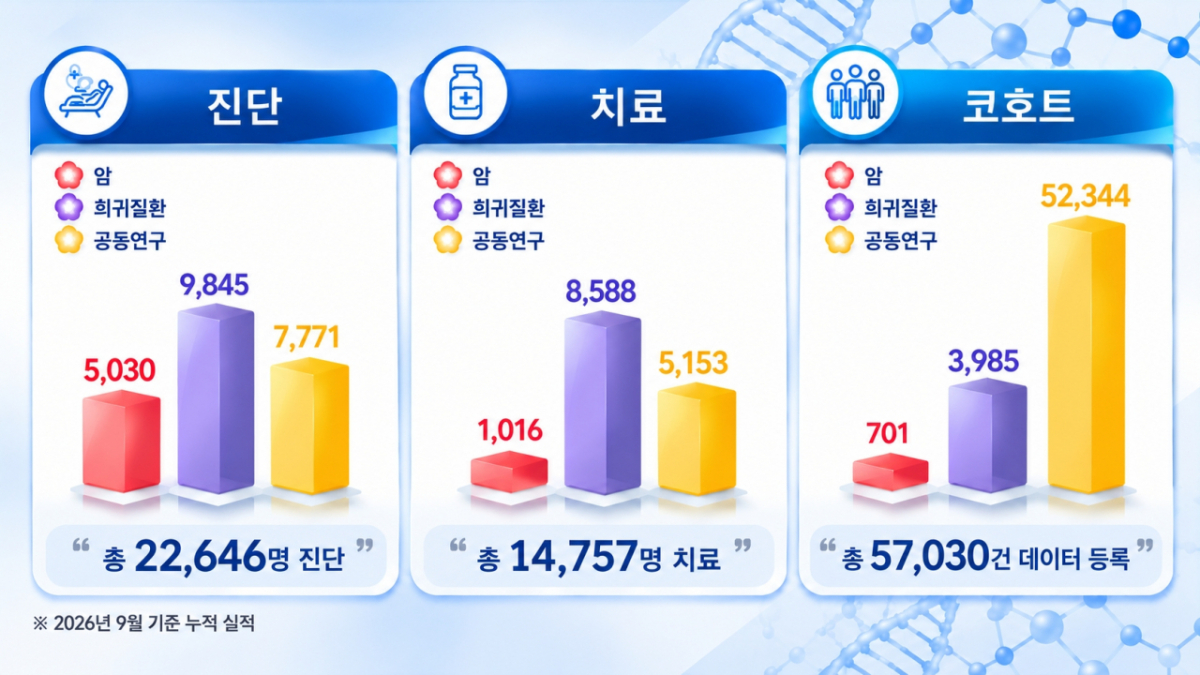
On Monday, the Pediatric Cancer and Rare Disease Support Project Team at Seoul National University Hospital announced that through the "Lee Kun-hee Childhood Cancer and Rare Disease Overcoming Project," initiated by the late Chairman Lee's family's "generous donation" of 300 billion won, they have achieved results in diagnosing 22,646 patients and treating 14,757 as of this September.
On this day, the project team held the "Lee Kun-hee Childhood Cancer and Rare Disease Overcoming Symposium" at the CJ Hall in the Seoul National University Children's Hospital in Seoul Jongno-gu, under the theme "Opening the Future of Pediatric Precision Medicine: Cutting-Edge Research in Childhood Cancer and Rare Diseases." The event shared research achievements from the past five years and explored directions for future international collaborative research.
The symposium featured participation from eight domestic and international experts, including those from the International Agency for Research on Cancer (IARC) and universities in the United States and the United Kingdom. In two sessions, participants shared the latest research achievements and clinical experiences, including genome-based precision medicine for childhood cancer, CAR-T therapy development, international cooperation for rare disease diagnosis, precision gene editing, patient-derived organoids, and digital pathology research.
Previously, the late Chairman Lee had emphasized his philosophy that "caring for all children to grow up happily is our mission." In line with this, the family donated 300 billion won to Seoul National University Children's Hospital in April 2021 to carry on the late chairman's will. Following this, in May of the same year, Seoul National University Hospital launched the Pediatric Cancer and Rare Disease Support Project Team, with Seoul National University Children's Hospital as the lead institution. The project team will continue research on childhood cancer and rare diseases until 2030.
Since its launch, over five years, the project team has established the first standard treatment protocol for pediatric acute lymphoblastic leukemia in Korea. They classified patients into five risk groups to formulate treatment strategies and built a foundation supporting precision medicine by utilizing genome analysis and next-generation sequencing (NGS)-based minimal residual disease monitoring.
In the field of rare diseases, they also discovered and diagnosed more than 20 new types of previously unknown rare diseases. They established a national rare disease diagnosis network that allows regional hospitals to send samples and genetic information to a central analysis center, which then provides diagnostic results within four to six weeks.
The national research collaboration system has also expanded. Centered on the Cancer Project Division, Rare Disease Project Division, and Joint Research Project Division, the project team has broadened its research base by collaborating with medical institutions nationwide. The number of research projects supported by the team increased from seven in 2021 to 190 this year. As of September this year, 185 institutional investors and 1,411 medical professionals across the country are participating, and 57,030 data entries have been registered in the cohort for childhood cancer and rare disease patients.
In Korea, it takes an average of 9.2 years to diagnose a rare disease, and approximately 50% of patients do not receive a proper diagnosis. There are only 69 pediatric hematologist-oncologists nationwide, and more than 70% of childhood cancer patients residing outside Seoul are treated in regions other than their place of residence.
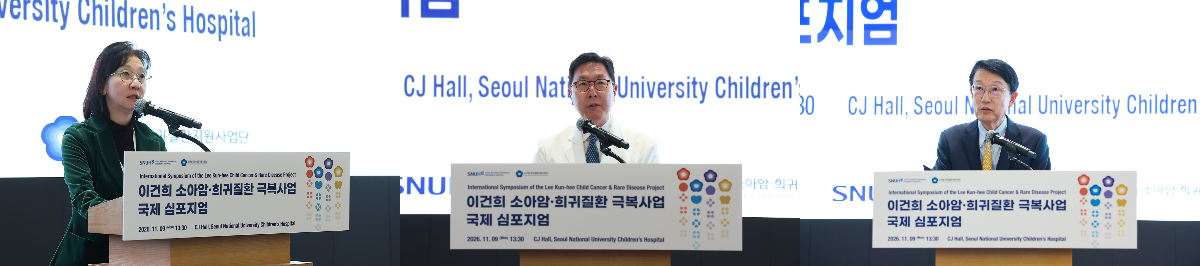
In response, Chae Jong-hee, head of the project team, stated, "Childhood cancer and rare diseases involve small patient numbers per disease and diverse characteristics, making many challenges difficult to resolve through the efforts of individual research institutions alone." He added, "I hope this symposium will serve as an opportunity to share research achievements and clinical experiences among domestic and international experts, strengthen the foundation for international collaborative research, and explore directions for development over the next five years."
Baek Nam-jong, president of Seoul National University Hospital, emphasized, "The true value of medical research lies in improving patients' lives." He noted, "This project demonstrates the potential of a virtuous cycle where meaningful private donations support medical research, and those achievements contribute back to patient diagnosis and treatment."
Jang Seok-hoon, President overseeing Samsung's social contribution business, said, "The philosophy of 'respect for human life' that the late Chairman Lee emphasized throughout his life extended into concern and love for all lives and children." He added, "I pray that this symposium will lead to more hope and treatment opportunities not only for patients with childhood cancer and rare diseases in South Korea but also around the world."
The project team plans to further develop programs for early diagnosis and disease prevention, including ultra-high-speed genetic testing for infants in intensive care units, newborn genome screening, prenatal diagnosis, and preimplantation genetic testing. Additionally, they aim to reflect research achievements in actual clinical practice and medical policy to expand diagnostic and treatment opportunities for patients with childhood cancer and rare diseases.

 in THEBIO


