

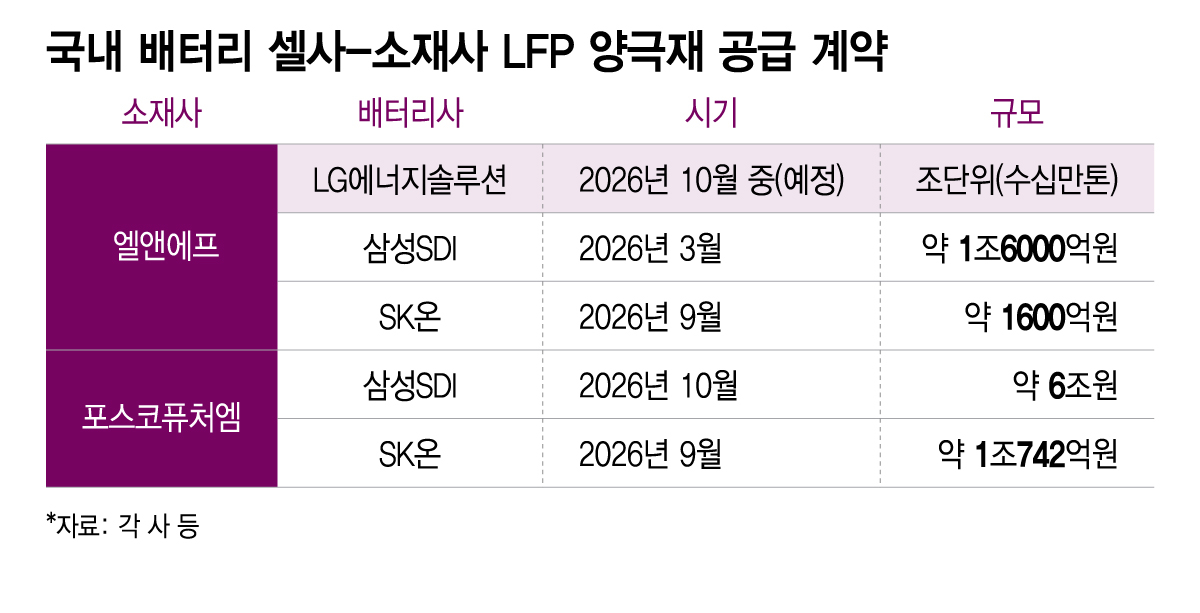
The fact that LG Energy Solution and L&F have entered into their first LFP (lithium iron phosphate) cathode material contract indicates that the "domestication of the LFP supply chain" in Korea's battery industry has entered a full swing. In North America, where trends to push out Chinese-made materials are intensifying, securing stable material supplies is becoming increasingly urgent.
According to industry sources on the 13th, requirements for receiving the Advanced Manufacturing Production Credit (AMPC) under the U.S. non-PFE (Prohibited Foreign Entity) regulation are becoming increasingly stringent. The allowable PFE ratio in batteries is scheduled to decrease from 40% this year to 35% next year, 30% in 2028, 20% in 2029, and 15% after 2030. If these standards are not met, companies may be unable to receive the AMPC benefit of up to $45 per kWh (kilowatt-hour).
Until now, it has been difficult for domestic battery makers to ignore Chinese-made materials. This is because there was a strong incentive to utilize cheaper Chinese products to lower cathode material prices, which account for approximately 40% of cell costs. However, calculations have changed due to strengthened U.S. regulations. Not only price, but also "where the materials are made" now determines profitability. The need to diversify procurement networks concentrated in China to reduce supply uncertainty is also being highlighted.
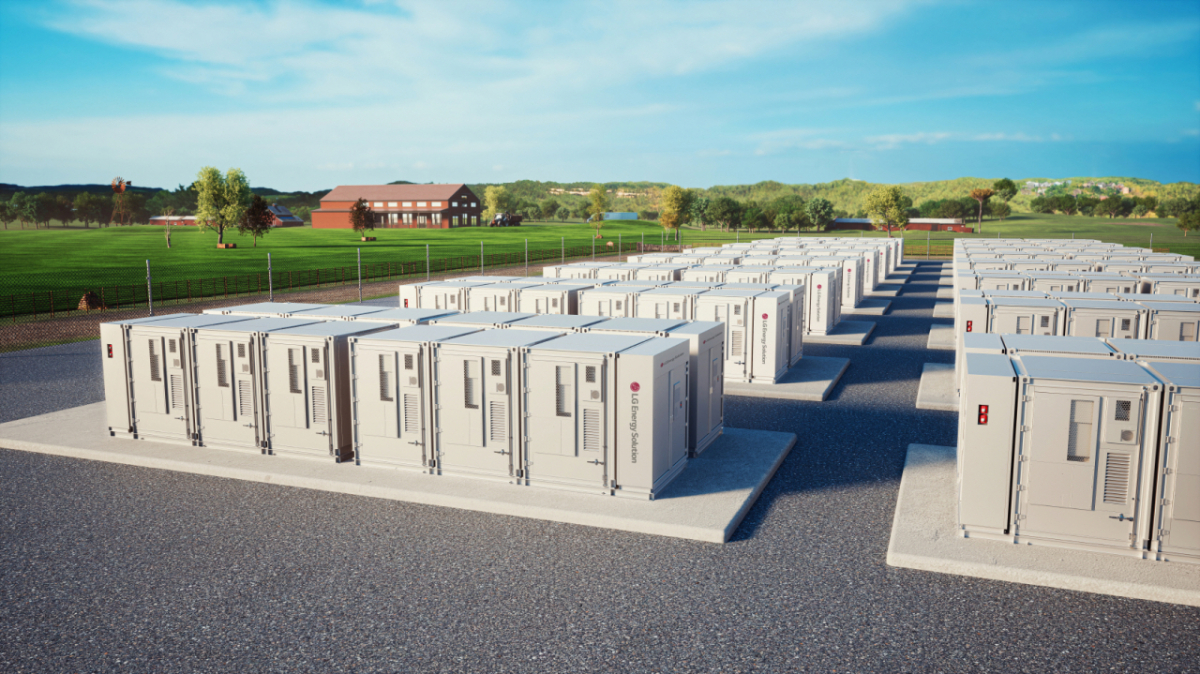
In this context, as North America's energy storage system (ESS) market grows rapidly and demand for mid-to-low-priced products increases in the electric vehicle market, the importance of securing LFP cathode materials is growing. LFP batteries are cited as having lower output than ternary systems such as NCM (nickel-cobalt-manganese), but they boast price competitiveness, long lifespan, and stability as strengths.
Accordingly, cooperation between domestic cell and materials makers centered on LFP is gradually strengthening. In fact, L&F signed LFP cathode material supply contracts with Samsung SDI and SK On prior to LG Energy Solution. POSCO Future M also signed a supply contract worth 1 trillion 742 billion won with SK On for the period 2027–2029 last month, followed by an LFP cathode material contract worth approximately 6 trillion won with Samsung SDI for the period 2027–2032 on the 6th.
In particular, as the top three domestic battery makers aim to turn around their performance using the North American ESS market as a springboard, such moves are expected to accelerate further. The expansion of ESS sales also played a major role in these companies recording profits simultaneously for the first time in seven years in the second quarter.
The trend of improving performance is expected to continue into the third quarter this year. LG Energy Solution announced that it recorded provisional revenue of 9 trillion 643.4 billion won and an operating profit of 756 billion won in the third quarter. These figures represent increases of 59% and 25.7%, respectively, compared to the same period last year. Notably, the company generated an operating profit of 339.1 billion won even excluding AMPC.
Above all, LFP batteries have established themselves as a core pillar in the electric vehicle market. According to market research firm SNE Research, global EV cathode material loading volume for LFP reached 1.2538 million tons from January to August this year, an increase of 31.8%, while ternary systems increased by only 6.4% to 663,500 tons.
In the 1,180 MW (megawatt) scale third-round ESS central contract market, where domestic battery makers are competing fiercely, the use of domestic materials is also emerging as a major variable.
An industry official said, "The domestication of LFP cathode materials is an important pillar in restructuring the supply chain to secure competitiveness in the North American market," adding, "As non-PFE requirements strengthen, we are also making efforts to diversify supply sources for other key battery materials."

 in INDUSTRY

