

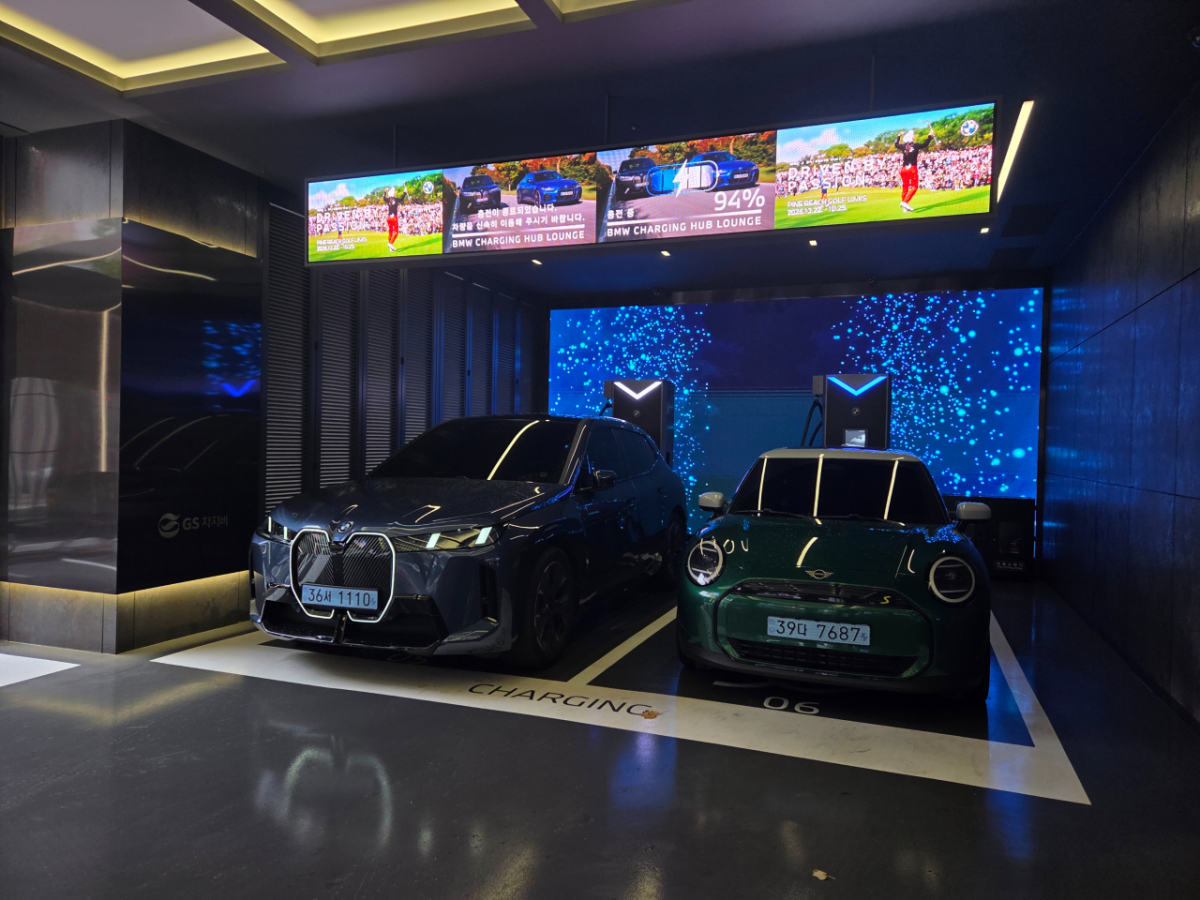
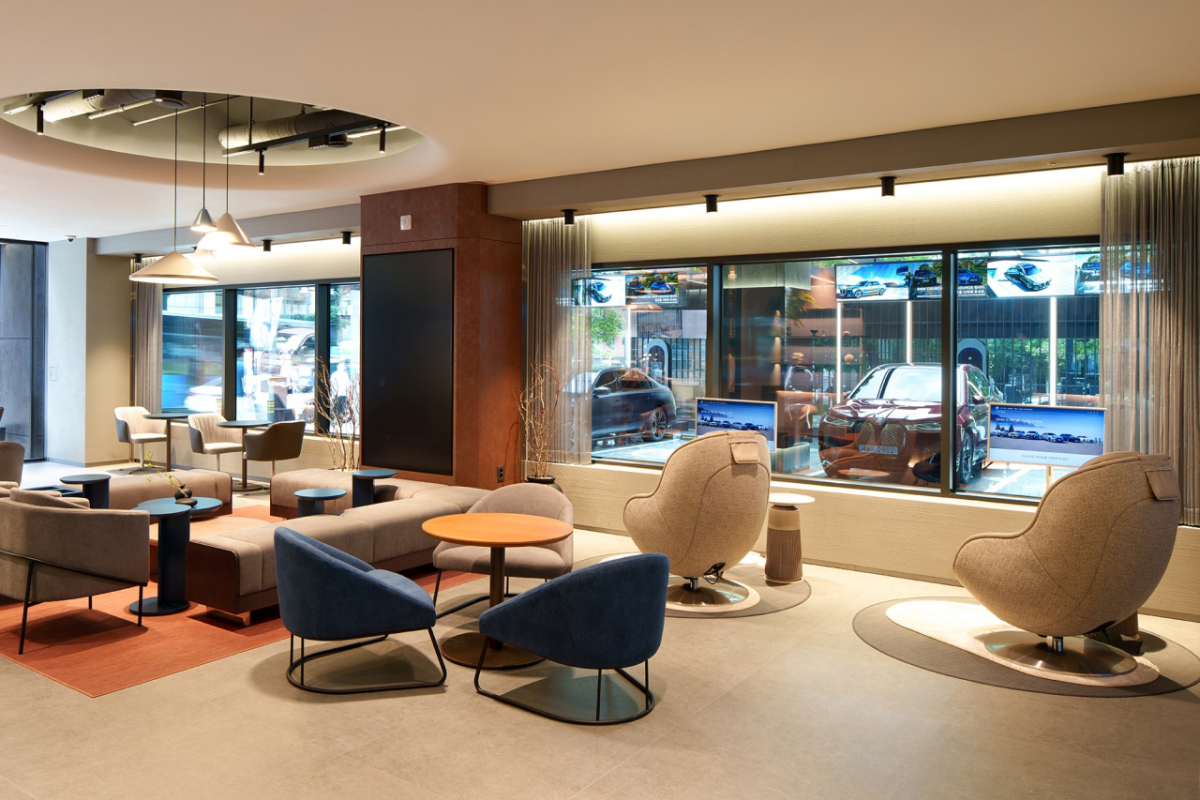
When sitting at the "BMW Charging Hub Lounge" in Jung-gu, Seoul, which was visited on the 13th, one can check the charging status through the window. In fact, a display at the top of the charger showed a charging rate of 94%. The sign at the building's entrance reads "Electric Vehicle Charging Station" in Hangul instead of the English "Charging Station." While global brands must follow headquarters' Corporate Identity (CI) guidelines for facility names, BMW Korea persuaded its headquarters to change it to Hangul to approach Korean customers more familiarly.
This facility, which combines a hotel lounge and a fast-charging station in one space, exists only in Korea among the global markets where BMW operates. By continuing to invest in Korea's charging infrastructure even at the cost of forgoing charging revenue, BMW is moving to secure an early position in the Korean market for the electric vehicle era.
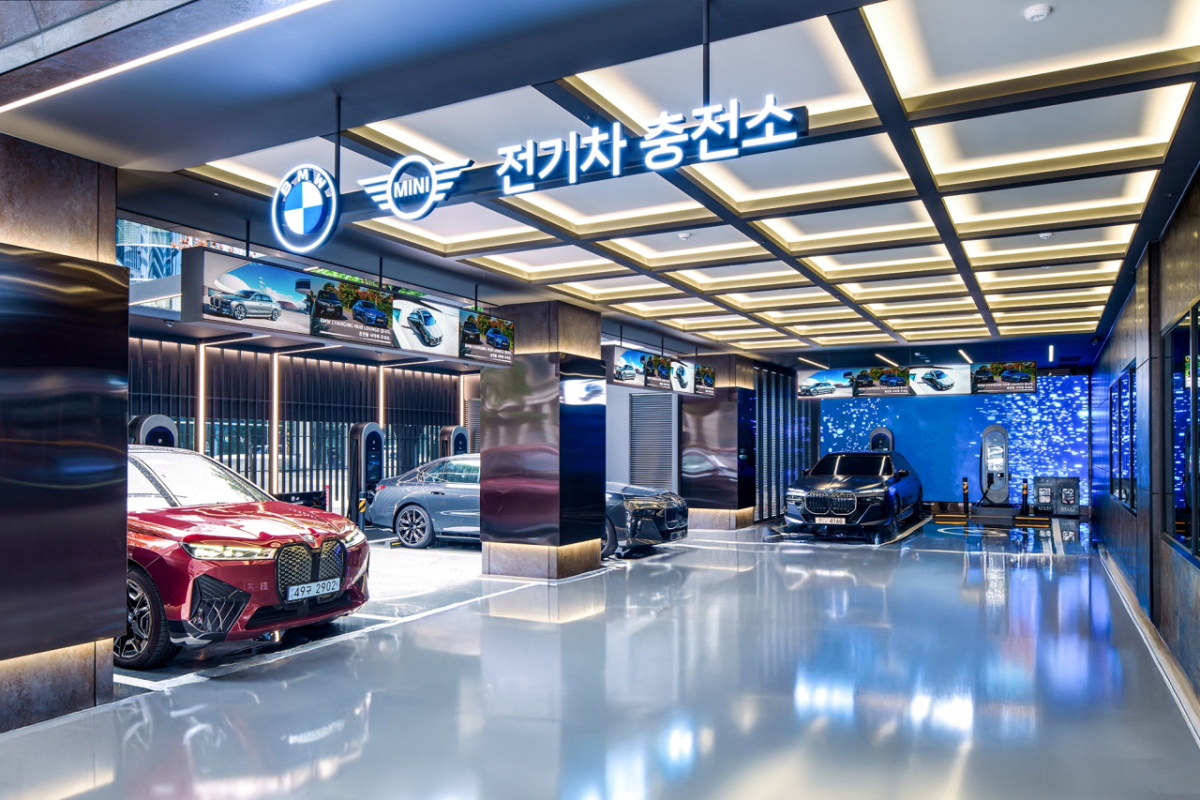
According to BMW Korea, the lounge, which opened in September 2024, is equipped with four 200-kilowatt chargers, two 400-kilowatt ultra-fast chargers, and seating for 30 people. From October of that year until last month, over a period of two years, 45,359 people visited, and the number of charging users reached 6,287. This amounts to nearly 1,900 visitors per month on average. The 400-kilowatt charger was installed for the first time in Korea as a public charger last June. It was brought in ahead of the launch of the iX3, which features an 800-volt system. The space within the "Energy Plus Seoul-ro" building where the lounge is located was originally a GS Caltex gas station. A place where gasoline was once pumped has been transformed into an electric vehicle charging space.
Korea becoming the first stage for this initiative was the result of BMW Korea persuading its headquarters. A BMW Korea official stated, "In the charging sector, Korea receives the most budget and support from BMW Group headquarters among all global markets," adding, "It is not easy for a global brand to have Hangul signage or Hanok-style canopies, but headquarters agreed because they recognize Korea as their most important market." The installation of Hanok-style canopies at charging stations in Gyeongju, North Gyeongsang Province, and Joomunjin, Gangwon Province, which cost several times more than ordinary roofs, is in the same context.
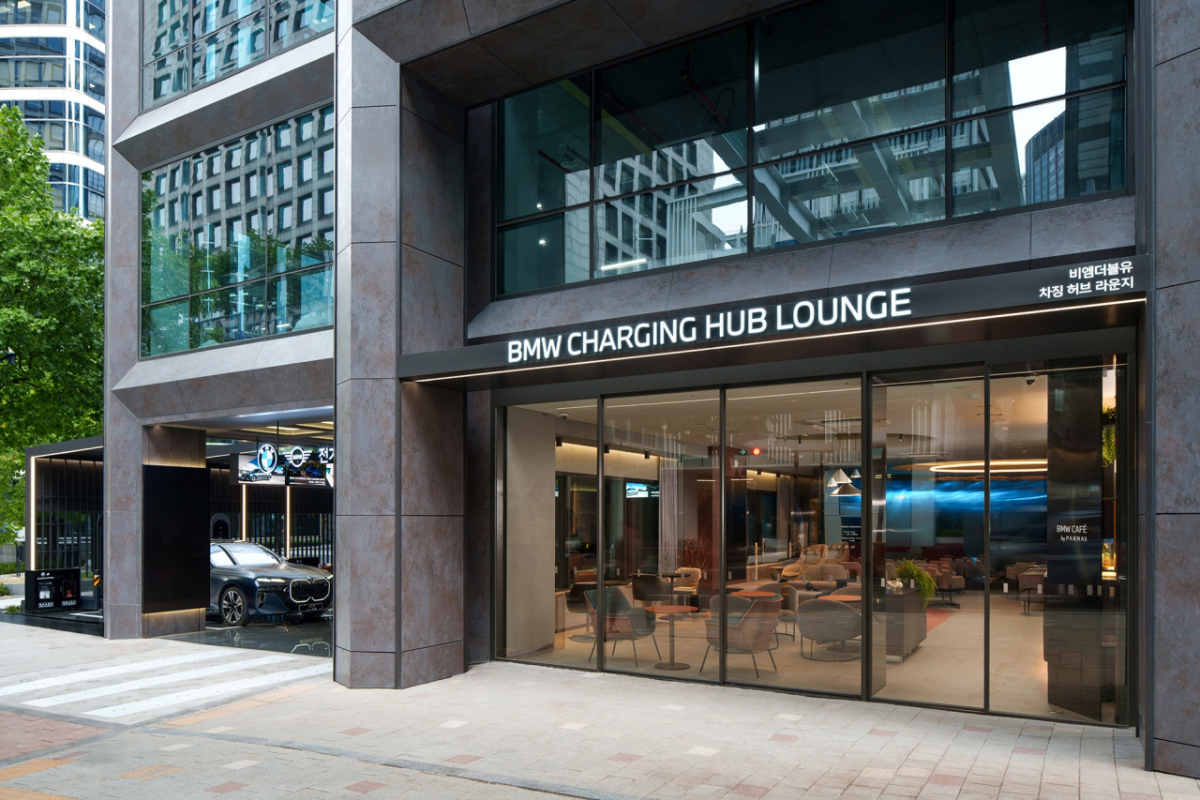
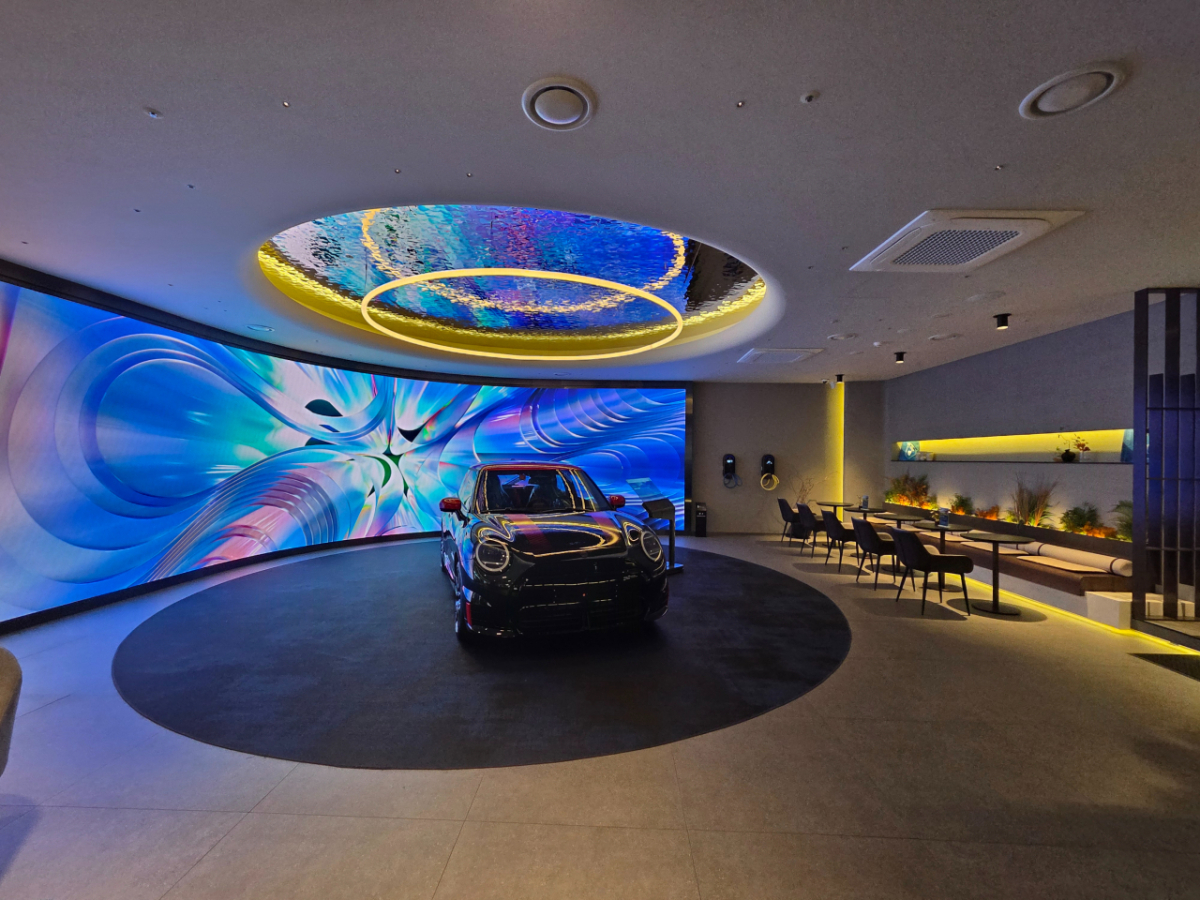
The charging station is available to anyone 24 hours a day, regardless of brand. Electric vehicles from Mercedes-Benz, Tesla, and Hyundai, as well as taxis, come to charge. The cafe is operated by Parnas Hotel, selling first-floor hotel cafe menu items at prices lower than those in the hotel, and offering a 30% discount to BMW customers.
Efforts were also made for safety. Triple sprinklers are linked with Seoul's fire protection system. Thermal imaging CCTV monitors temperature changes 24 hours a day, and extinguishers dedicated to lithium-ion batteries and smothering blankets have been installed. Recently, a remotely operated cooling extinguishing device targeting vehicle underbody batteries was also installed.
BMW does not take charging revenue from this location. BMW covers the lounge operating costs, and charging revenue is used for additional charger construction. This is a different approach from Hyundai or Tesla, which generate revenue as charging operators. The company maintains the policy that creating the foundation for customers to buy cars should take priority over simply selling cars.
Customer support is in the same context. When purchasing a BMW electric vehicle, customers receive a charging card usable at approximately 95% of domestic public chargers and a 500,000 won charging credit. The "BEV Membership," which allows new car purchase customers to drive the latest electric vehicles for one week, has deployed more than 100 vehicles.
Investment is leading to sales. BMW sold 10,335 electrified models from January to September this year, becoming the first imported premium brand to surpass 10,000 units. The number of chargers nationwide is 3,334, and this will increase to 4,000 by the end of the year. Next year, plans are in place to expand the parts logistics center in Anseong, Gyeonggi Province, to increase storage space for electric vehicle parts such as batteries.

 in INDUSTRY


