

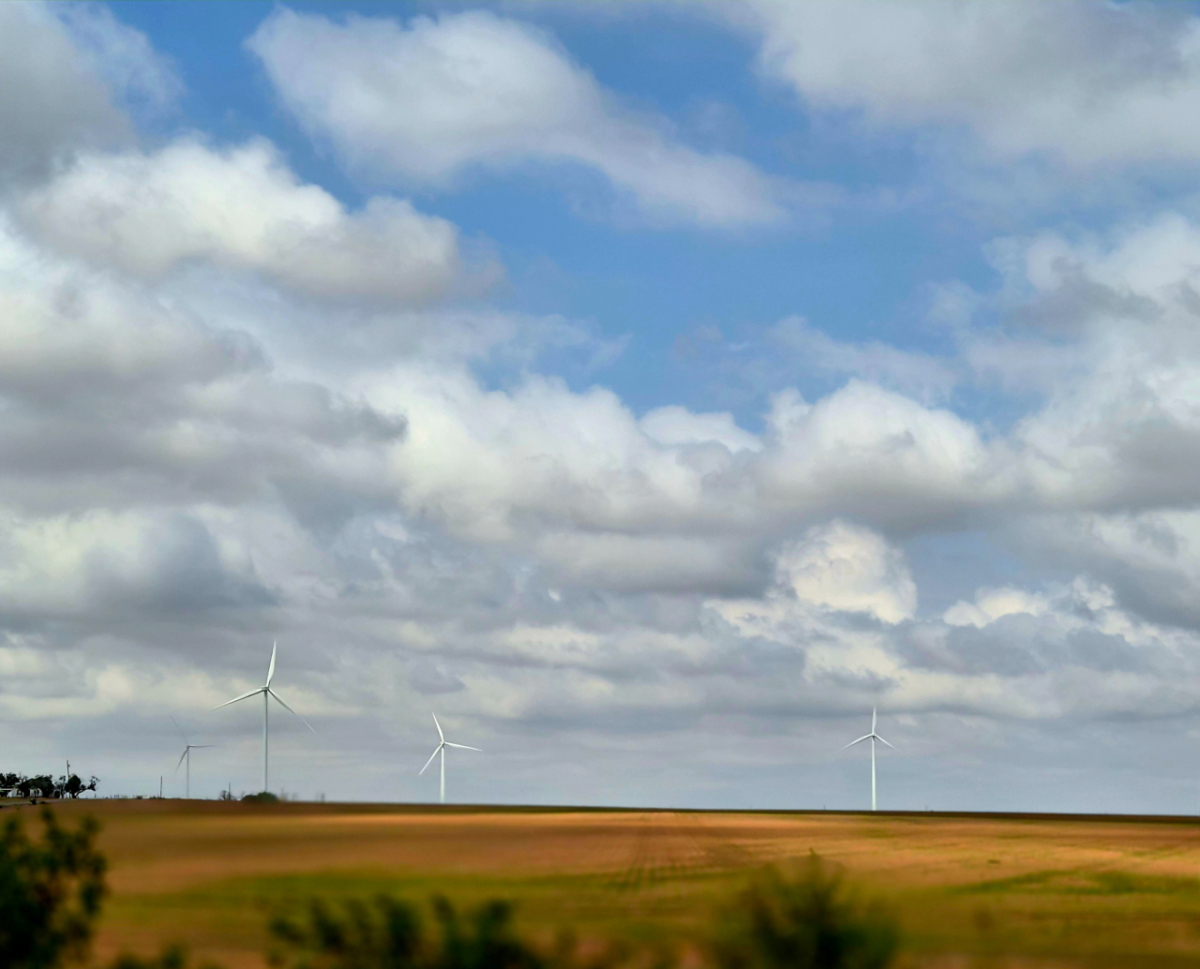
The road leading to a Google data center construction site located about 15 km from the Haskell City Hall in Texas, U.S. Beyond the endless plains visible through the car window, what first dominates the view are the massive wind turbines densely filling the horizon.
Hundreds of large wind turbines spin their giant blades ceaselessly up to the borders of nearby counties, and large-scale solar power plants have been established throughout the plains. The scene vividly shows that the western Texas plains, once called the heartland of fossil fuels, have transformed into a fortress for U.S. wind and solar power.
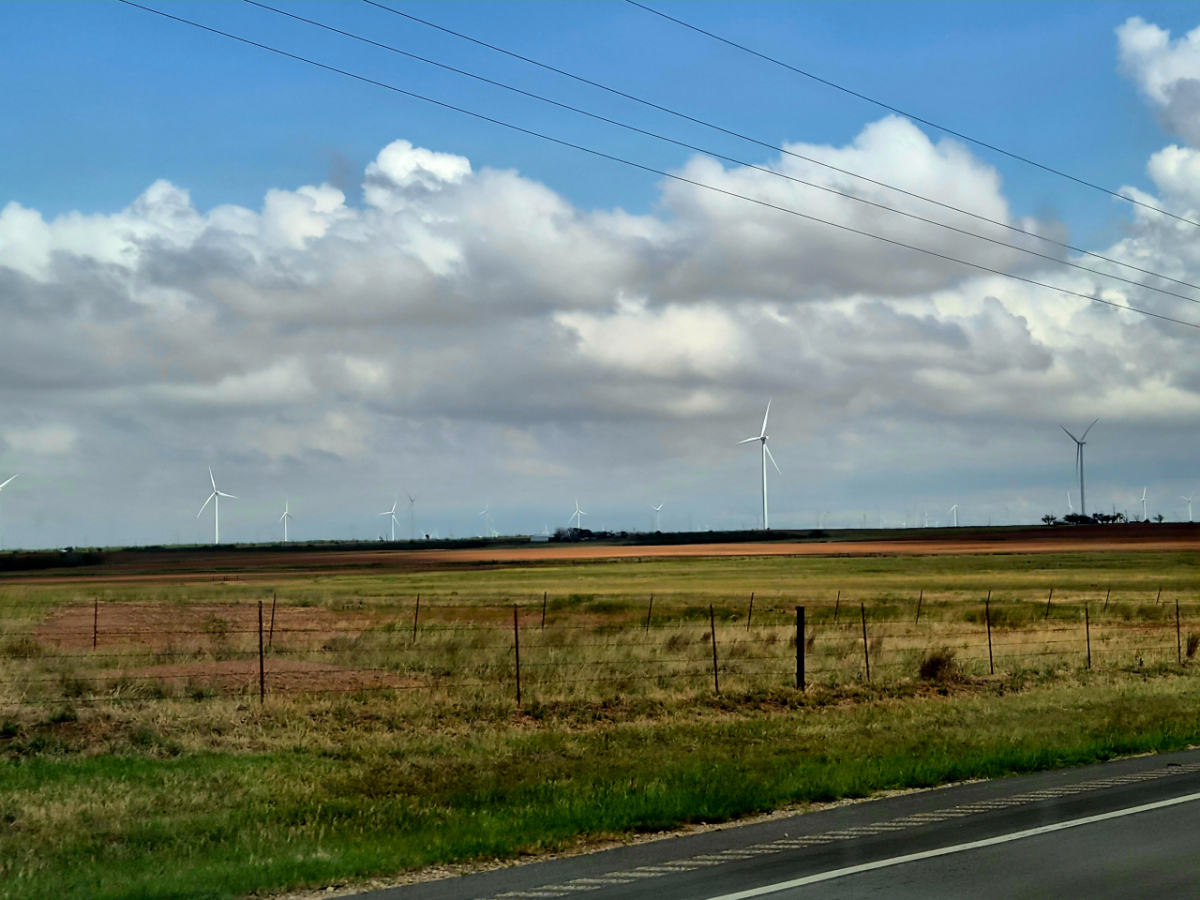
Wind turbines and solar panels filling the Texas plains
The reason Texas has rapidly emerged as a major hub for global data center investment lies in its abundant renewable energy resources, vast land area, and relatively fast infrastructure construction speed. With onshore wind power expanded over a long period, combined with recently surging solar power and battery energy storage systems (BESS), the options for big tech companies seeking cheap electricity and clean energy have broadened.
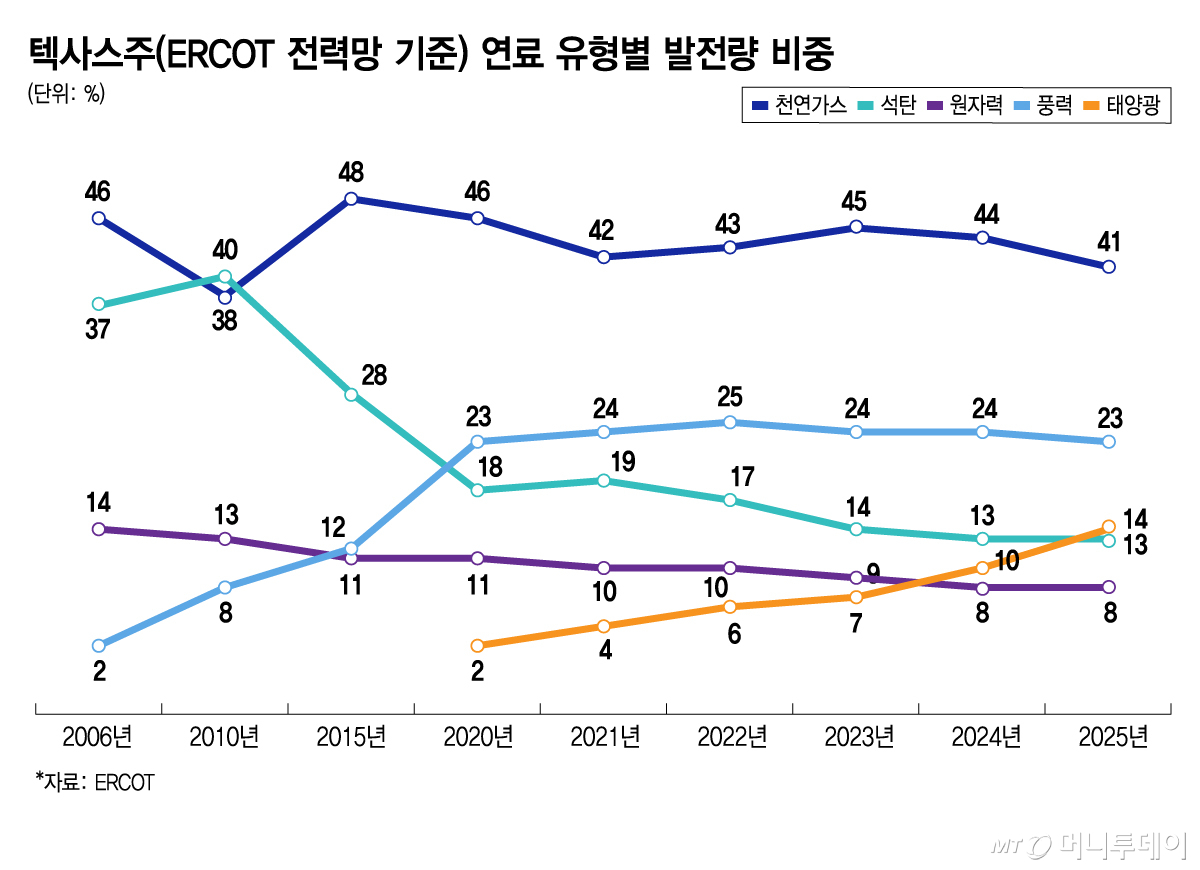
Looking at last year's generation mix of ERCOT, which handles about 90% of Texas' power demand, natural gas accounts for about 41%, followed by wind at 23%, solar at 14%, coal at 13%, and nuclear at 8%. Combined, wind and solar account for a 37% share of generation. The wind share has grown to nearly double in 10 years, and solar, which was close to zero (0) 10 years ago, overtook coal generation in just four years from 2% in 2020.
In particular, the growth rate of solar power is steep. According to ERCOT, last year's grid-connected solar generation was 67.8 terawatt-hours (TWh), a 40.6% increase from the previous year (48.2 TWh). It is more than four times the annual generation in 2021 (15.7 TWh). In terms of large-scale solar power plant generation, Texas has surpassed California.
The "cheapest and fastest" energy source… Shaking the Texas power market
The driving force behind this growth is economic viability. Joshua Rose, a researcher at the University of Texas at Austin campus who is also an expert in power systems and a member of the Austin City Power Committee, explained to MoneyToday, "The reason solar has grown in Texas since the 2020s is that it has become the cheapest among new power sources, and consequently, the power market has chosen solar." He added, "Prices are changing due to tariffs, supply chains, and reduced tax incentives, but in Texas, solar is about 30% cheaper than other power sources."
In particular, Texas' power market structure, based on competition among generation operators, has supported investment in cheap generation sources. The ERCOT grid operates separately from the large-scale power grids of the U.S. East and West coasts. This market lacks a capacity market that compensates generators for securing the ability to supply power at specific times. In other words, because there is no fixed compensation simply for possessing equipment, generation operators have a greater incentive to choose power sources with low initial construction costs, short construction periods that allow for rapid cash flow creation, and low fuel costs.
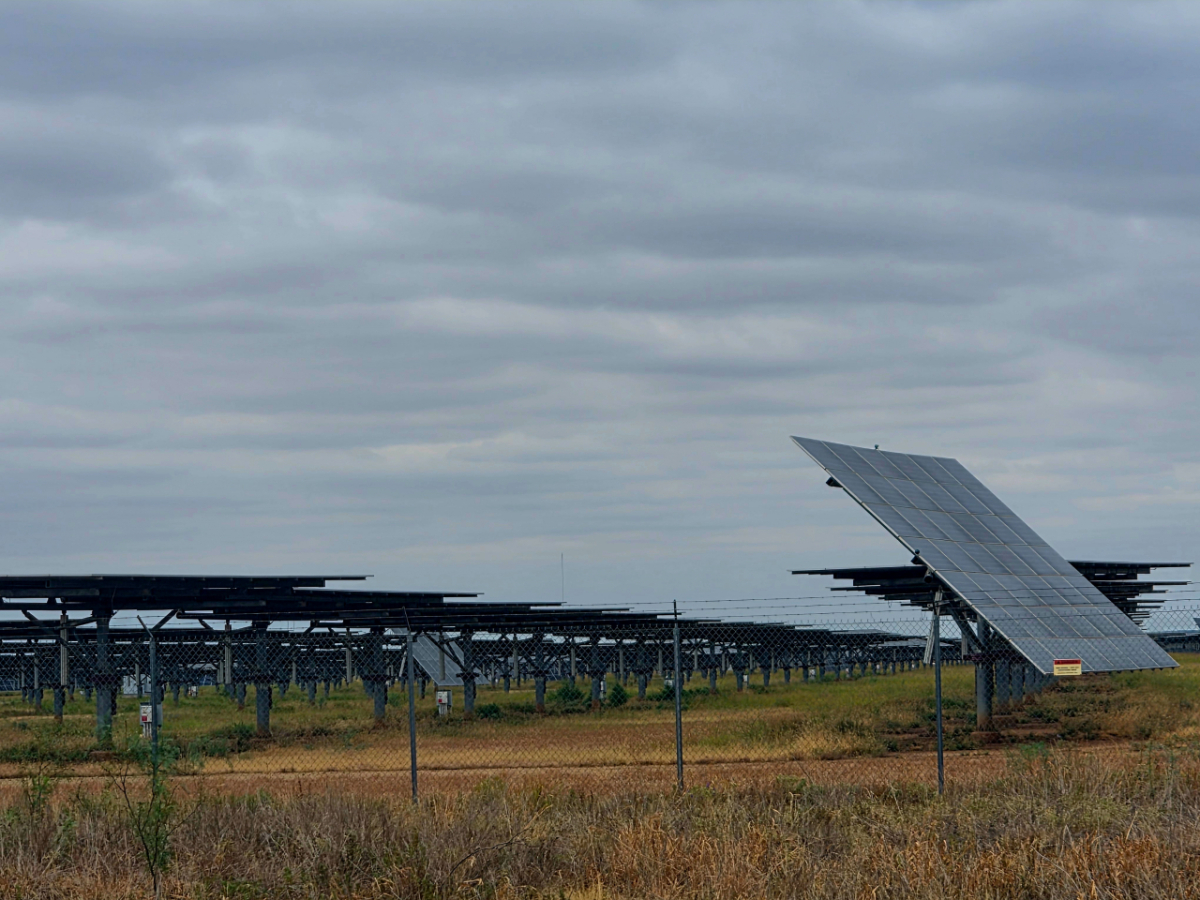
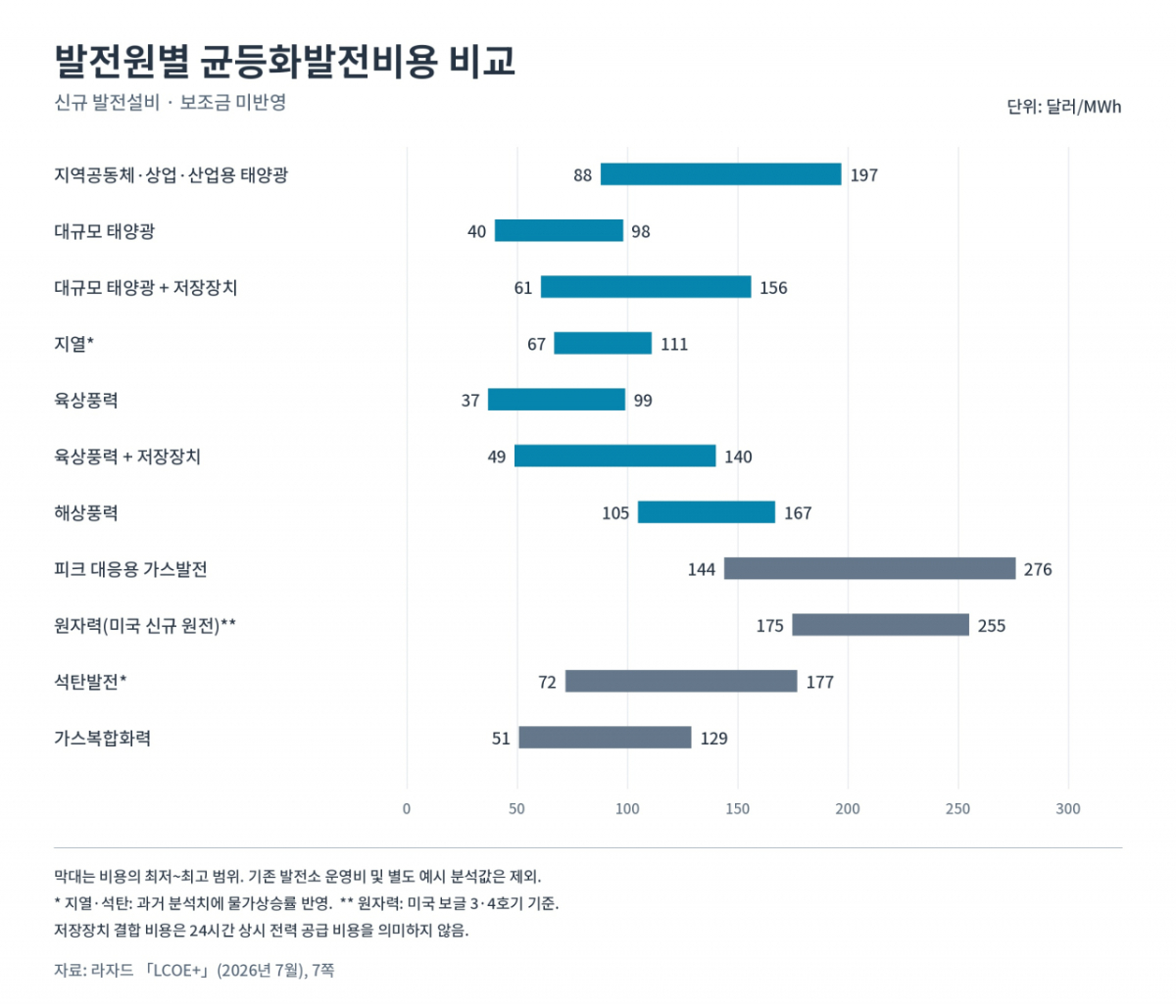
Looking at current technology, solar and onshore wind are generation sources with cost competitiveness. According to a report comparing costs by power source released last July by global financial advisory firm Lazard, the levelized cost of energy excluding subsidies is in a lower range than gas combined-cycle (51–129 dollars) for large-scale solar at 40–98 dollars per megawatt-hour (MWh) and onshore wind at 37–99 dollars.
Additionally, the fact that Texas' approval process for new generation projects is simpler than in other regions has supported the rapid expansion of wind, solar, and BESS. Daniel Cohen, a civil and environmental Gyeong Gong-hak-gwa (Prof.) at Rice University, emphasized, "ERCOT has streamlined the process for approving new generation projects, allowing it to add wind, solar, and batteries faster than most other power grids."
The choices made by generation operators pursuing economic viability have led to the expansion of renewable energy and storage in Texas, the center of the U.S. fossil fuel industry. Professor Cohen stated, "Combining wind and solar with battery support can supply power at lower and more predictable costs than gas generation," adding, "Because gas turbine orders are backlogged nationwide, wind, solar, and batteries can be built faster than gas plants."
※ This special investigation was supported by the Korea Journalists Association and Climate Media Hub.

 in INDUSTRY


