

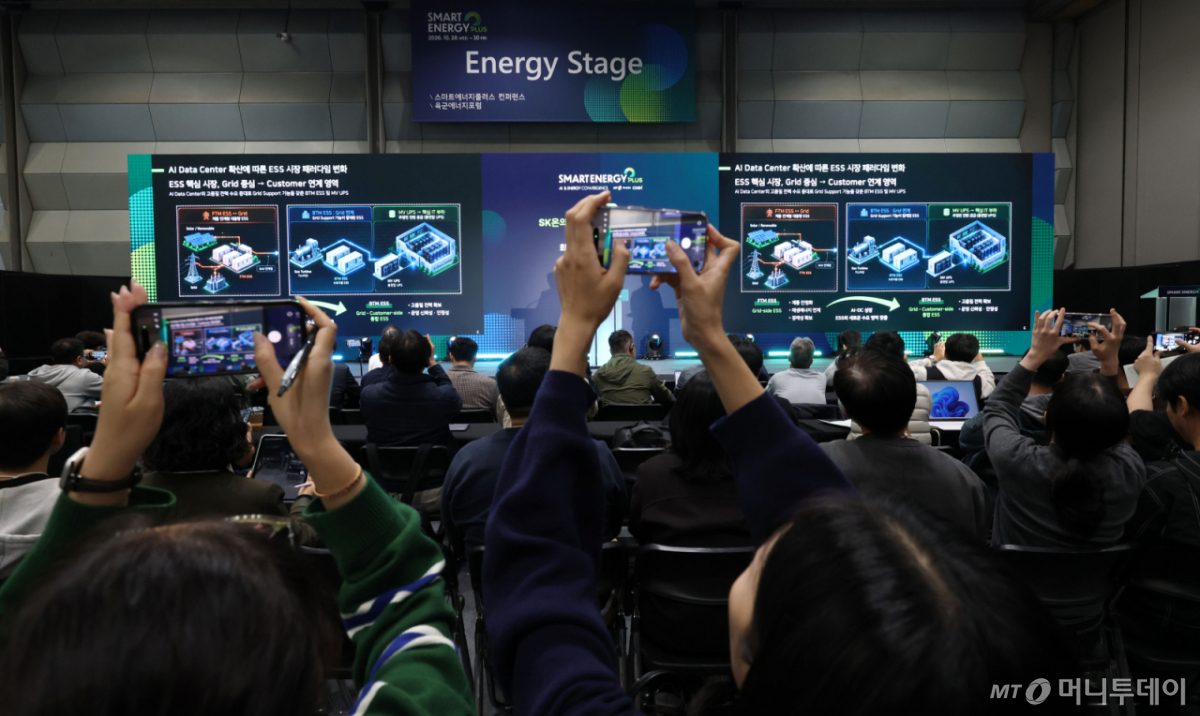
"I would like to ask whether LG Energy Solution is planning a platform business that can generate independent revenue by integrating everything, including competitors' batteries, through software."
The question was raised during the Q&A session following a presentation by Kim Hyun-tae, vice president in charge of ESS (energy storage system) product planning and strategy at LG Energy Solution, at the battery conference held at COEX Hall B in Samseong-dong, Seoul, on Oct. 30 as part of Smart Energy Plus (SEP) 2026. The questioner was Song Jong-hwa, a group leader at Samsung SDI.
In his presentation, Kim said LG Energy Solution aims to establish a leading position in the ESS market by adding differentiated software to its battery hardware. The question came from an executive at its competitor, Samsung SDI.
Calling it a "good question," Kim replied that the ultimate goal was to develop an "independent solution that does not rely on battery manufacturers." This means the company intends to develop its technology so that even competitors can eventually use its software.
"Initially, we are developing solutions that are tied to LG Energy Solution batteries," Kim said. "Ultimately, however, our goal is to provide customers with solutions that deliver the same added value even when they use batteries made by other manufacturers."
The battery conference also featured presentations by Kim, Jang Seok, head of Samsung SDI's Global TPM1 Team and an executive vice president, and Choi Dae-jin, head of SK On's ESS Business Office. The 200-seat conference hall was packed, with some attendees standing because no seats were available. The presentations were followed by in-depth Q&A sessions, such as the exchange between Kim and Song.
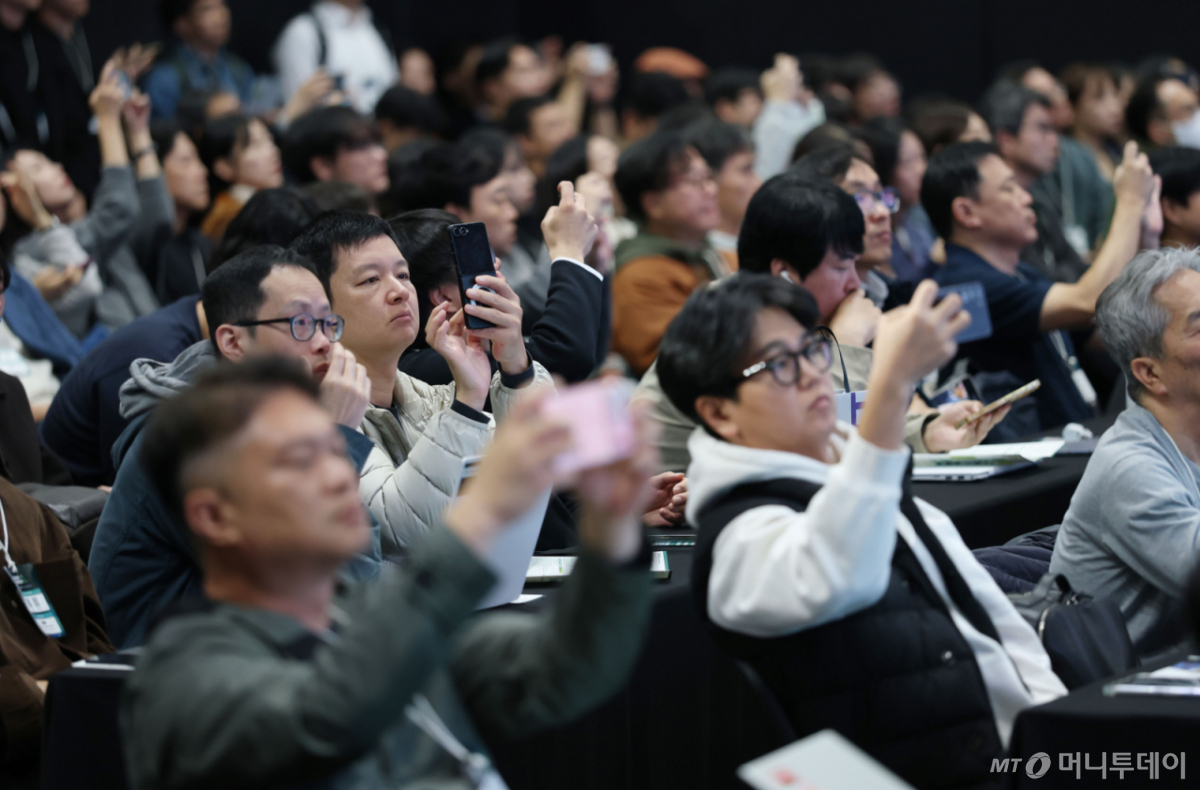
After Jang's presentation, Park Jong-hyun, a senior researcher at Doosan Enerbility, asked whether supercapacitors were emerging as a new solution, alongside batteries, to address fluctuations in AI-related power demand.
A supercapacitor is a type of high-output energy storage device. While it stores less energy than a battery, it can deliver large amounts of power over a short period.
"Capacitors cannot be used as extensively as batteries because their prices are too high," Jang said. He added that capacitor bank units (CBUs) could also play an important role, but batteries remained necessary due to cost concerns and limitations in power density.
Choi, meanwhile, was asked how SK On, which specializes in pouch-type batteries, planned to compete in the ESS market, where prismatic batteries are widely used because of their relatively high safety.
"Of course, we have the technology for prismatic batteries, but we already have production capacity of more than 100 gigawatt-hours, so we don't think we necessarily need to switch that capacity to prismatic batteries," Choi said.
"Safety is not determined by hardware alone," he added. "We are further enhancing and reinforcing safety through software and other measures."

 in INDUSTRY

