

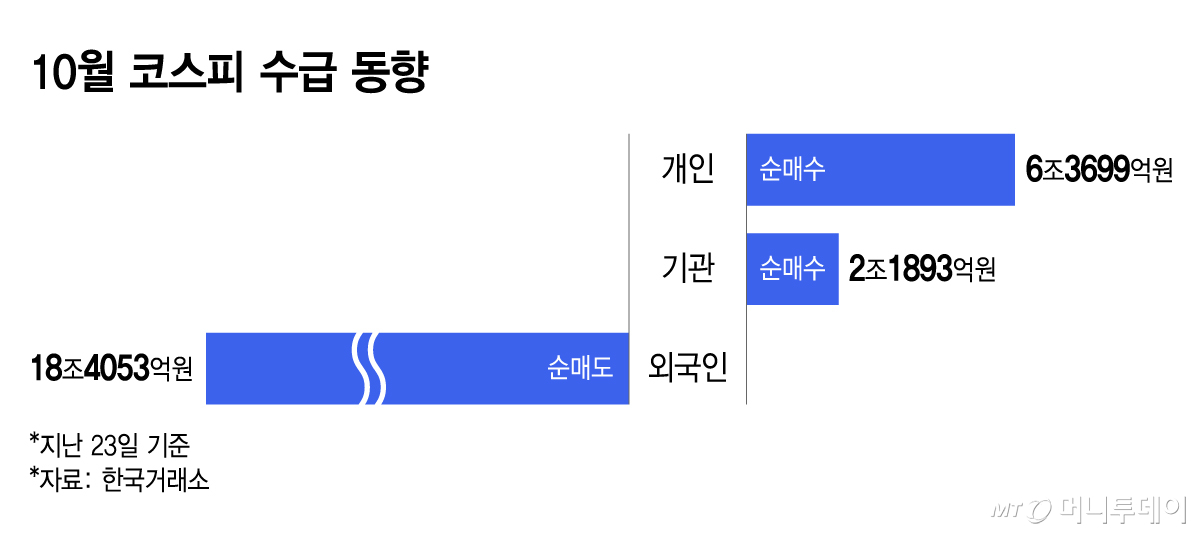
Foreign investor outflows have been cited as a direct cause of the recent sharp market decline, prompting calls to strengthen investment infrastructure and make trading more convenient to attract overseas capital.
Proposed measures include promoting omnibus accounts to make it easier for foreign retail investors to trade Korean stocks and providing company research reports in English.
According to the financial investment industry on Monday, while investment demand for Korean companies is increasing in global financial hubs such as Hong Kong and New York, trading infrastructure and access to investment information are failing to keep pace.
Notably, there are pointed out that access to research on domestic companies is lacking. A financial investment industry official said, "Interest is high among retail investors from various countries, including the Asian region such as Hong Kong and Taiwan, which have a strong interest in semiconductor companies, and there is significant demand for indicators and research to refer to when making investment decisions."
He added, "Individual securities firms are also considering ways to improve access to investment information for foreign retail investors."
In fact, it was only this year that foreign retail investors were able to invest in domestic stocks using their existing accounts.
The Financial Services Commission partially amended the Financial Investment Business Regulations on Dec. 17 last year to relax the requirements for entities opening foreign stock integrated accounts.
In April of this year, a "GuideLINE for Foreign Stock Integrated Accounts" was established to define the standards and procedures required for overseas securities firms to conduct foreign integrated account business.
Domestic securities firms are also actively strengthening their foreign integrated account services through partnerships with overseas securities firms.
Eight years after the introduction of the foreign integrated account system, in August last year, Hana Securities launched investment services together with Hong Kong's Emperor Securities, and Samsung Securities, Yuanta Securities, and others received additional designations as innovative financial services from financial authorities to enhance trading convenience for foreign investors. Other securities firms are also preparing services through contact with overseas securities firms.
Although foreign retail investor services have begun, challenges remain regarding access to investment information and trading infrastructure.
An official at a securities firm's overseas subsidiary said, "Foreign investors want reports containing financial analysis and investment opinions on our country's semiconductor companies, financial institutions, and healthcare and robotics companies," adding, "Currently, we translate Korean-language reports and independently reorganize the investment points to provide them."
While "big players" including major investment banks (IBs) may issue their own reports and have many channels to obtain information, retail investors with a strong interest in the domestic market have relatively low access to information.
This is also the background behind the fact that inflows of new funds by foreign retail investors are not easy amid significant outflows from foreign big players.
A financial investment industry official said, "High-net-worth clients of overseas securities firms are very interested in the domestic market, and there are cases where they propose holding investor relations (IR) meetings for Korean companies," adding, "Cases have increased where overseas securities firms first express their intent to partner with domestic securities firms to meet such high-net-worth investment demand."
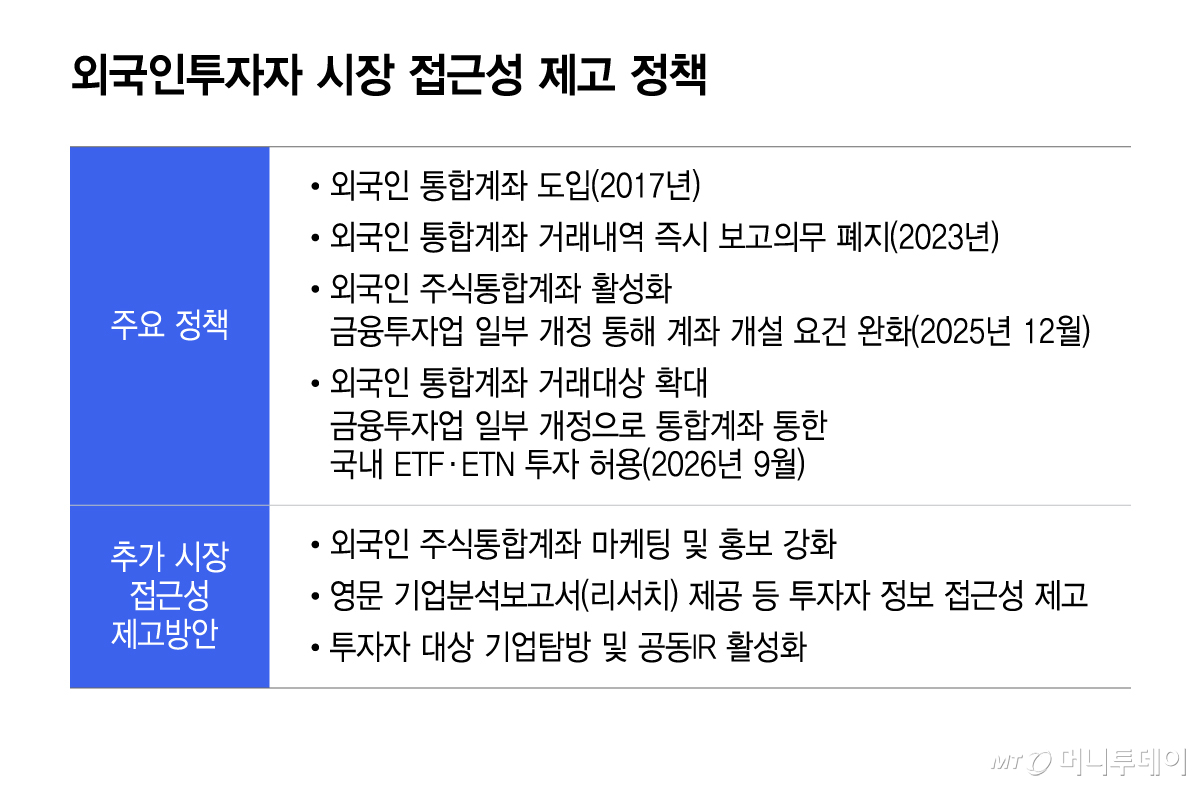
There are also points out that financial authorities' policies must be designed more finely to match investor demand in order to attract overseas capital. Foreign retail investors were only able to invest in ETFs (Exchange-Traded Funds) last September.
The Financial Services Commission announced on the 9th of last month an amendment to the Financial Investment Business Regulations expanding the trading targets of foreign integrated accounts to include ETFs and ETNs (Exchange-Traded Notes).
It was a significant inconvenience for foreigners, as they could not invest through integrated accounts while the domestic ETF market grew to over 500 trillion won in the first half of this year.
To attract overseas capital into the KOSDAQ market, it is also necessary to strengthen public disclosure regarding intellectual property, which is a core source for companies.
This is a measure to improve foreign access to information on KOSDAQ technology companies to alleviate concentration in the KOSPI market and large leading stocks.
Chung Hee-cheol, an anlyst of the Capital Markets Institute, said, "Major advanced countries such as the United States, Japan, and Singapore already view intellectual property and intangible assets as core sources of corporate value and have strengthened the institutional foundation for systematic and transparent disclosure."
Chung said that substantiating intellectual property disclosure can reduce the risk of undervaluation for companies and lower capital raising costs, thereby improving conditions for securing growth funds.

 in STOCK

