

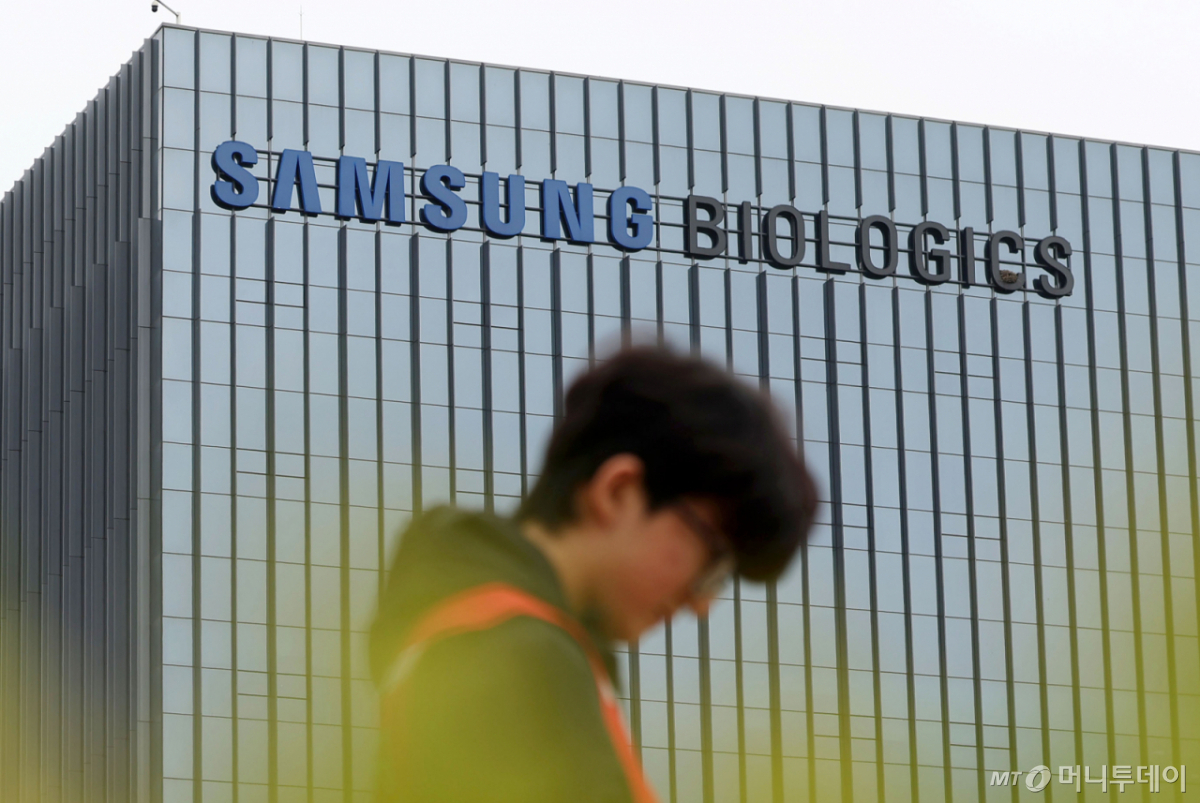
As the union at Samsung Biologics (hereinafter “Samba”) prepared for a second general strike, the court effectively banned labor disputes across all production processes. Although the union maintains its stance of carrying out the strike, analysts say it has lost much of its momentum.
According to industry sources on the 18th, the First Civil Division of the Incheon Branch of the Seoul High Court ruled on the 16th in an appeal hearing on a preliminary injunction against labor disputes filed by Samba, granting the company’s application for all nine production processes.
The court determined that the entire production process for which Samba applied to prevent unlawful labor dispute activities falls under “security work” intended to prevent the deterioration or spoilage of raw materials and products.
Before the first general strike in May, the first-instance court had banned labor disputes in three processes corresponding to the latter half of production: △concentration and buffer exchange, △bulk filling, and △buffer manufacturing and supply. Under this appellate ruling, the union must maintain and perform the same staffing levels, operating hours, operating scale, and duty of care as usual during strike periods across all nine processes (including the first half): △flask culture, △bioreactor culture, △harvesting, △media manufacturing and supply, △chromatography, △virus filtration, △concentration and buffer exchange, △bulk filling, and △buffer manufacturing and supply.
Previously, the Samba union had announced that it would launch a second general strike for three weeks starting on the 26th. The court’s ruling is expected to inevitably disrupt the union’s general strike plans. The union stated, “Our plan to carry out collective action remains unchanged, but there is a high likelihood that the start date of the strike will be changed.”
Citing the ruling by the panel that determined “work must be performed normally as usual even during labor dispute periods,” Samba stated, “We are grateful for the court’s wise judgment. We will continue to make efforts toward a mutually beneficial labor-management relationship.”

 in THEBIO
