

It has been confirmed that a plan to invest 198 billion dollars (approximately 30 trillion won) in constructing a natural gas combined-cycle power plant in the southeastern region of Texas is being seriously considered as the first investment project under the Korea-U.S. tariff agreement. According to the bilateral agreement, the South Korean government will make equity investments through special purpose vehicles (SPVs), and major domestic plant companies are expected to participate in the project.
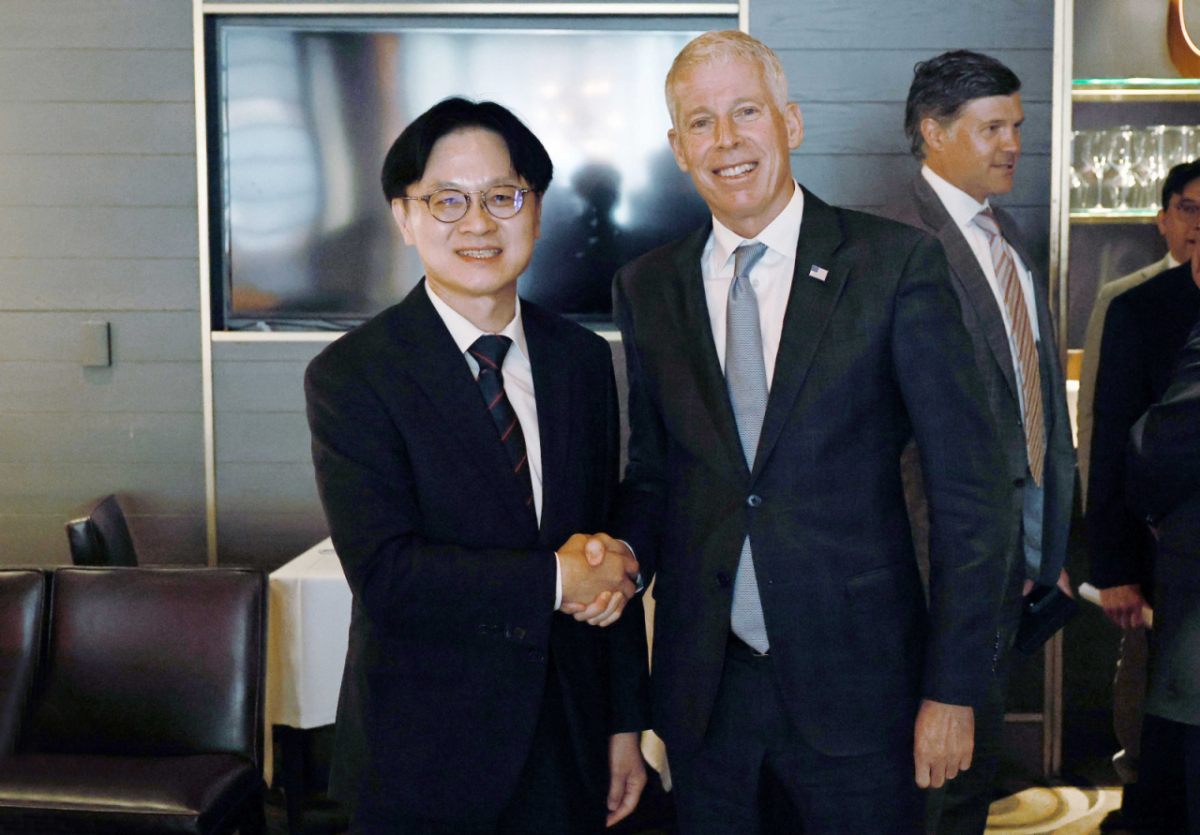
According to a comprehensive report by MoneyToday on the 28th, the government is currently negotiating with U.S. officials to proceed with the construction of a natural gas combined-cycle power plant as the first U.S. investment project. To this end, Minister Kim Jong-kwan visited Washington D.C. from the 22nd to the 25th and held discussions with key U.S. officials including Commerce Secretary Howard Lutnick. It is understood that the South Korean negotiation team is currently in the final stages of coordination in the United States.
It was reported that power plants are scheduled to be built in the southeastern region, including Texas, where electricity demand has surged recently, with an investment amount of 198 billion dollars. The government plans to officially announce the first U.S. investment project next month after final coordination with the U.S. side. A source familiar with the matter stated, "We are in final negotiations with the U.S. side to finalize the project," and added, "At this point, it is highly likely that a natural gas combined-cycle power generation project will be pursued."
According to the "Memorandum of Understanding (MOU) on Korea-U.S. Strategic Investment" signed under the Korea-U.S. tariff agreement last year, South Korea will invest a total of 350 billion dollars in the United States, including 150 billion dollars for shipbuilding cooperation and 200 billion dollars for strategic investments. To this end, South Korea enacted the Korea-U.S. Strategic Investment Act last month and recently launched the Korea-U.S. Strategic Investment Corporation to implement practical execution.
The project will be promoted through special purpose vehicles (SPVs) for each individual project. South Korea will establish a Korea-U.S. Strategic Investment Fund to make equity investments in SPVs, and the profits generated by the SPVs while promoting the projects will be repaid with principal and interest.
As this is a large-scale investment project, the most important criterion in selecting projects is commercial rationality. This means that sufficient recovery of investment funds must be guaranteed. In the case of natural gas combined-cycle power generation, it is analyzed that sufficient business viability can be secured due to the recent surge in electricity demand driven by AI (artificial intelligence) investments within the United States.
When promoting U.S. investment projects, participation by Korean companies will be given priority consideration. Given South Korea's strength in plant construction, it is expected that various related companies such as KEPCO Engineering and Doosan Enerbility will participate in securing contracts.
Investment funds will be paid in through a capital call method based on the progress of the project, within an annual limit of 20 billion dollars. Although there may be some time lag between project selection and actual implementation, the U.S. side may also request advance payment of funds.
According to the MOU, funds required for project promotion must be paid within 45 business days from the date of notification by the United States regarding investment site selection. Depending on U.S. requests, the entire investment amount for the first project corresponding to the annual payment limit could be executed immediately. However, if concerns such as foreign exchange market instability arise, the timing and scale of payments can be adjusted, leading to speculation that specific fund execution methods will be determined through mutual consultations between both sides.

 in ECONOMY
