

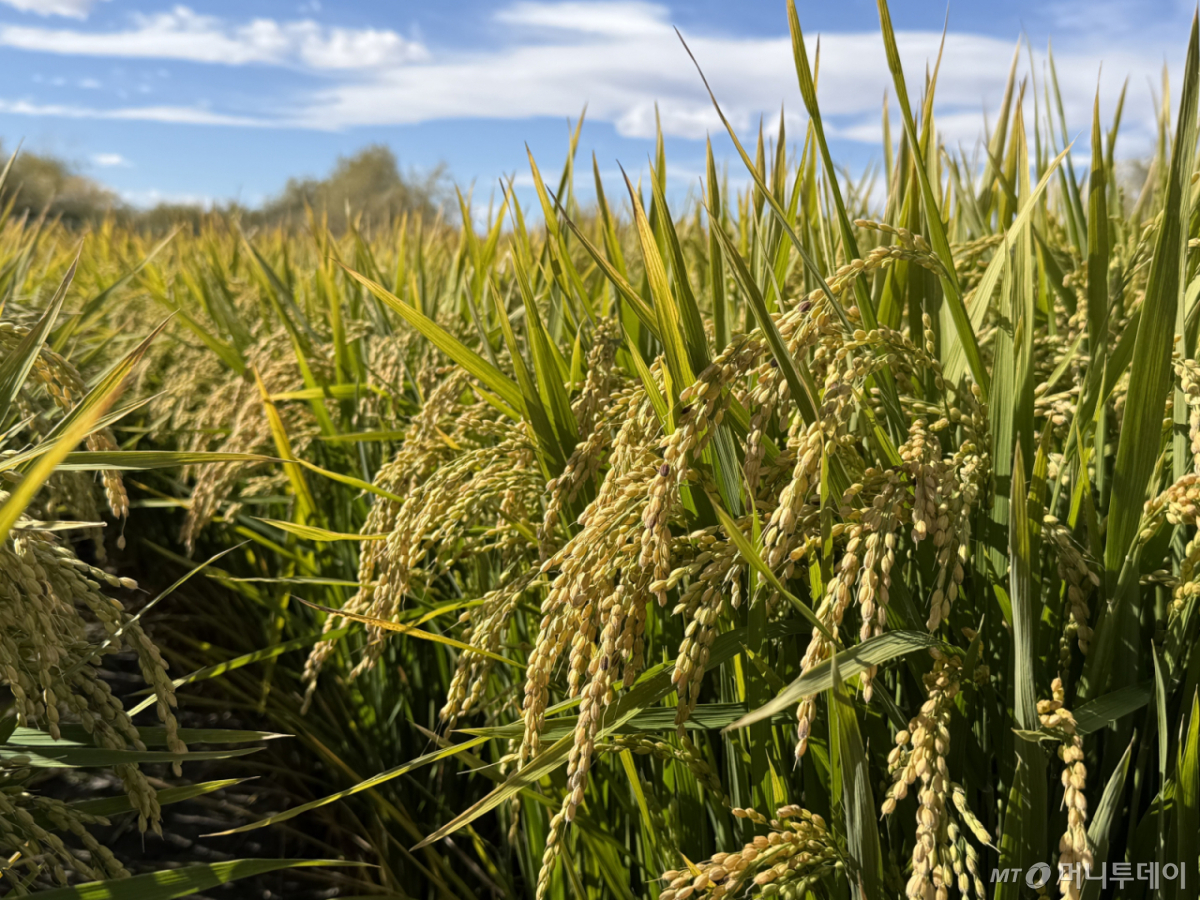
On the 28th of last month, when I visited Mongolia to report on the rice harvest scene, it was snowing. While people in Korea were still wearing short sleeves and shorts, sub-zero cold had already set in in Mongolia. Temperatures dropped to between minus 5 and minus 6 degrees Celsius.
At a time when rice is ripening and the harvest is in full swing in Korea, people here had to worry about winter. The "K-agriculture challenge" of "planting rice and harvesting grain" felt particularly weighty in a country where temperatures drop to minus 40 degrees Celsius in winter.
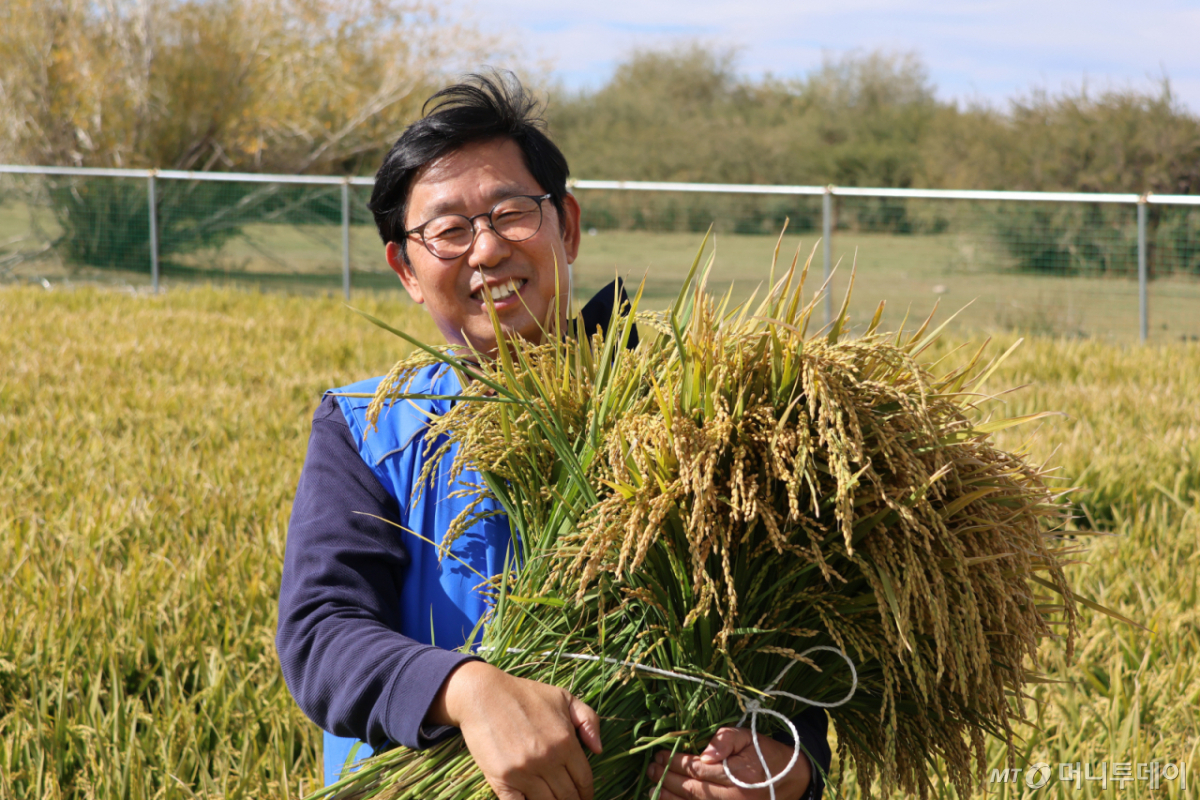
Yet, on that cold-approaching land, Korean rice ripened. On the 30th of last month, at a rice test cultivation site in the Khovd region of western Mongolia, located a full 24 hours by car from the capital Ulaanbaatar, a harvest demonstration was held using a Korean-made combine harvester.
This was the result of efforts by the Rural Development Administration and the KOPIA (Korea Overseas Agricultural Technology Cooperation) Mongolia Center to develop locally suitable varieties and cultivation methods through the "Mongolia-Adapted Rice Cultivation Technology Development Project." Following the first harvest last year, this year saw the ripening rate—the proportion of grains that fully mature—rise from approximately 30% to 70%.
What Mongolian rice farming must contend with is a short growing season and early-arriving cold. Even if successful in producing panicles, if temperatures drop before the grains fully ripen, it is difficult to proceed to harvest. Planting rice and seeing panicles is entirely different from obtaining rice that can be cooked into meals.
After the Mongolian government officially requested a rice cultivation trial from the Rural Development Administration in 2023, researchers tested ultra-early maturing varieties such as "Jinbu Olbe." The seedling rearing period was also extended to 40 days. This was a choice made to complete farming before the cold arrived.
Even after finding a variety that could withstand Mongolia's cold, challenges remained. The water supplied to the rice differed from Korean paddies. Water flowing down from snow-capped mountains served as agricultural water but simultaneously acted as cold water that slowed growth.
Oh Myung-gyu, Director of the KOPIA Mongolia Center, explained, "We used water from snow-capped mountains, but it was too cold, causing delays in initial growth. As a result, the period for panicle emergence also lengthened." In places with little time available for rice to grow, delayed initial growth posed a threat to the harvest.
Researchers created warm-water channels that received water, heated it, and then supplied it to the paddies. They applied blackout treatment during the seedling rearing process to induce panicle formation. This year, the period for panicle emergence was shorter than last year. To turn the potential held by seeds into actual harvests, both water and cultivation methods had to be adapted to local conditions.
Following rice harvesting in Bolgan County in the Khovd region last year, trials were conducted on new farmland in Boint County this year. Experience gained from farming land where rice had been grown once did not directly apply to places where paddies were being created for the first time.
He stated, "Paddies are not easily made. There is a significant difference between land that has been farmed once and land that has never been farmed."
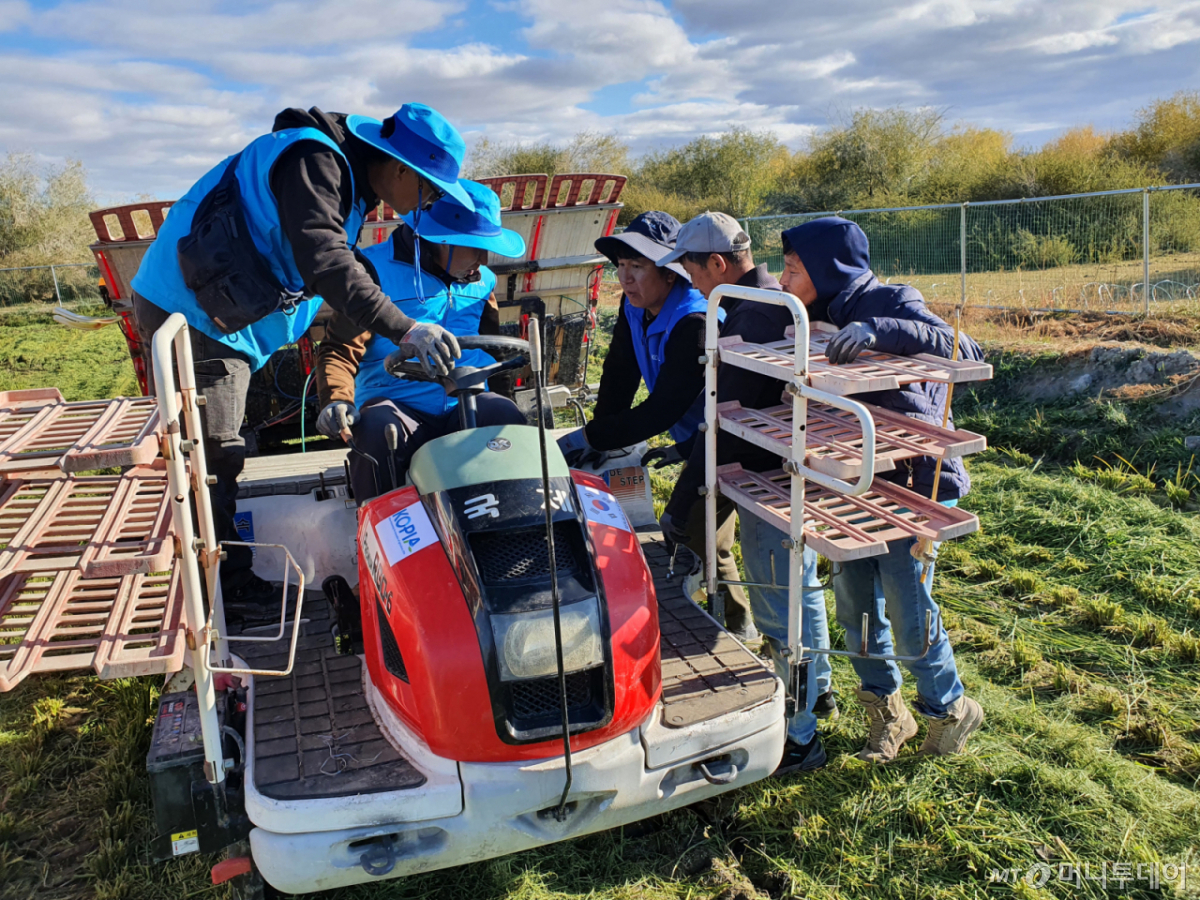
Water poured in would drain away, and during the transplanting process, the rice transplanter got stuck in the paddy and could not move properly. The initial growth of seedlings was also poor. Fortunately, over time, drainage and growth conditions improved. Director Oh viewed that productivity would have been higher if these problems had not occurred.
A single paddy field, familiar in Korea, was a production base that needed to be newly created in Mongolia. It was necessary to start with retaining water, allowing seedlings to take root, and compacting the ground so that agricultural machinery could move. The 70% ripening rate this year is the result obtained through that process.
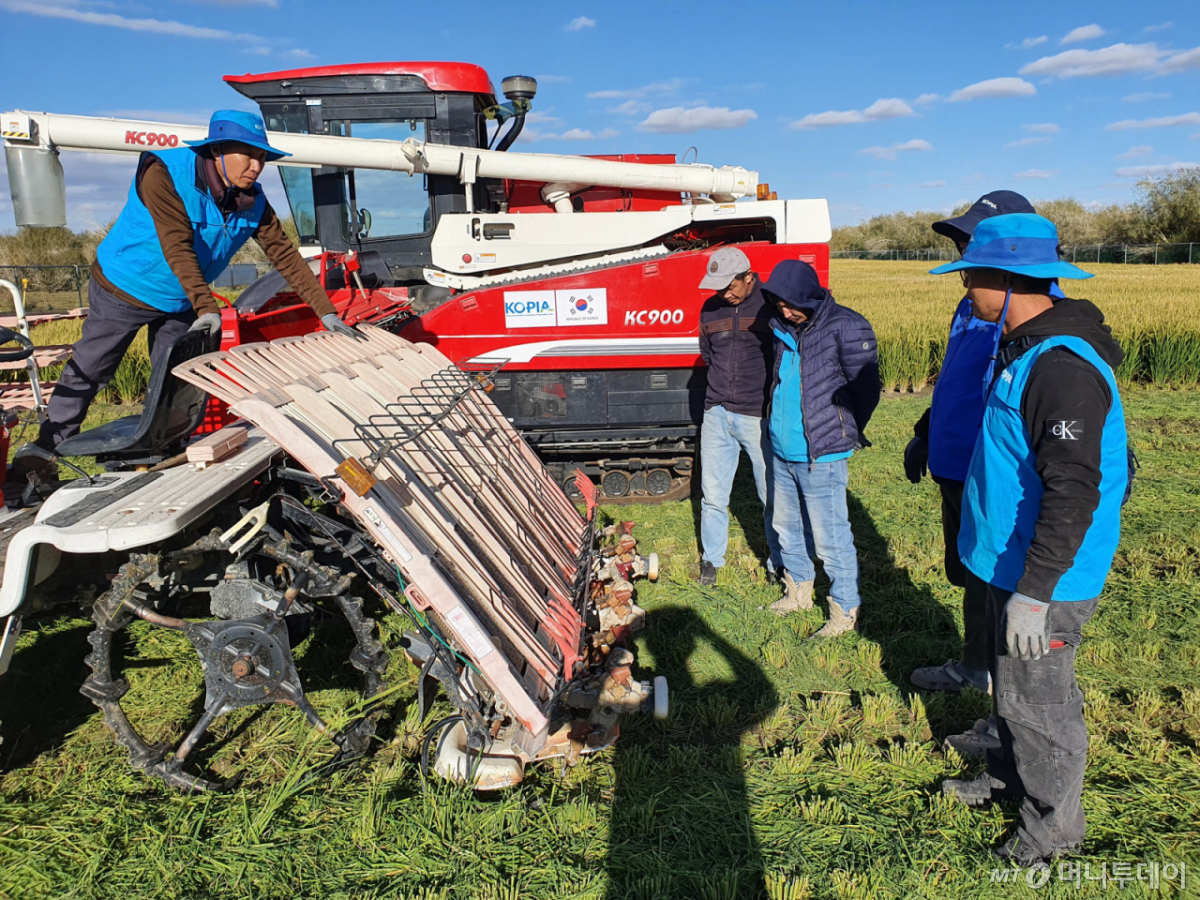
There were changes in harvesting methods as well. The Rural Development Administration deployed a Korean-made combine harvester for the first time to check its local applicability.
An agricultural machinery expert from the National Institute of Agricultural Science and Technology demonstrated the harvest and educated researchers from the Mongolian government's collaborating institutional investor on operation and management methods. This added harvesting technology to the technology of growing rice.
The background for Mongolia's interest in rice farming lies in "changes on the dining table." Although rice consumption has recently increased in Mongolia, it relies entirely on imports for rice. If the country could produce rice domestically, it would gain one more option for securing food. This is why the fruits of small test plots connect to Mongolia's food security.
According to the KOPIA Mongolia Center, the Korean variety rice harvested this time is scheduled to be stocked in a large supermarket located in the center of Ulaanbaatar in November, which is expected to serve as an opportunity to inform local consumers about its quality.
This year's results do not immediately mean self-sufficiency in rice for Mongolia. The current test cultivation scale is 0.4 hectares. Two years of harvests represent achievements in confirming local production potential and improving technology. To expand this into farming that agricultural workers can sustain, further verification of cultivation stability and production costs is required.
Director Oh proposed establishing a foundation equipped with paddies and reservoirs on a scale of 5 to 10 hectares, along with agricultural machinery, for this purpose. The plan is to expand the cultivation scale through inter-ministerial cooperation to verify results, and based on this, encourage the Mongolian government to take steps toward building a full-scale production base.
He stated that rice farming can only lead to an industry if paddy creation, irrigation technology, agricultural machinery, and agricultural materials are introduced together.
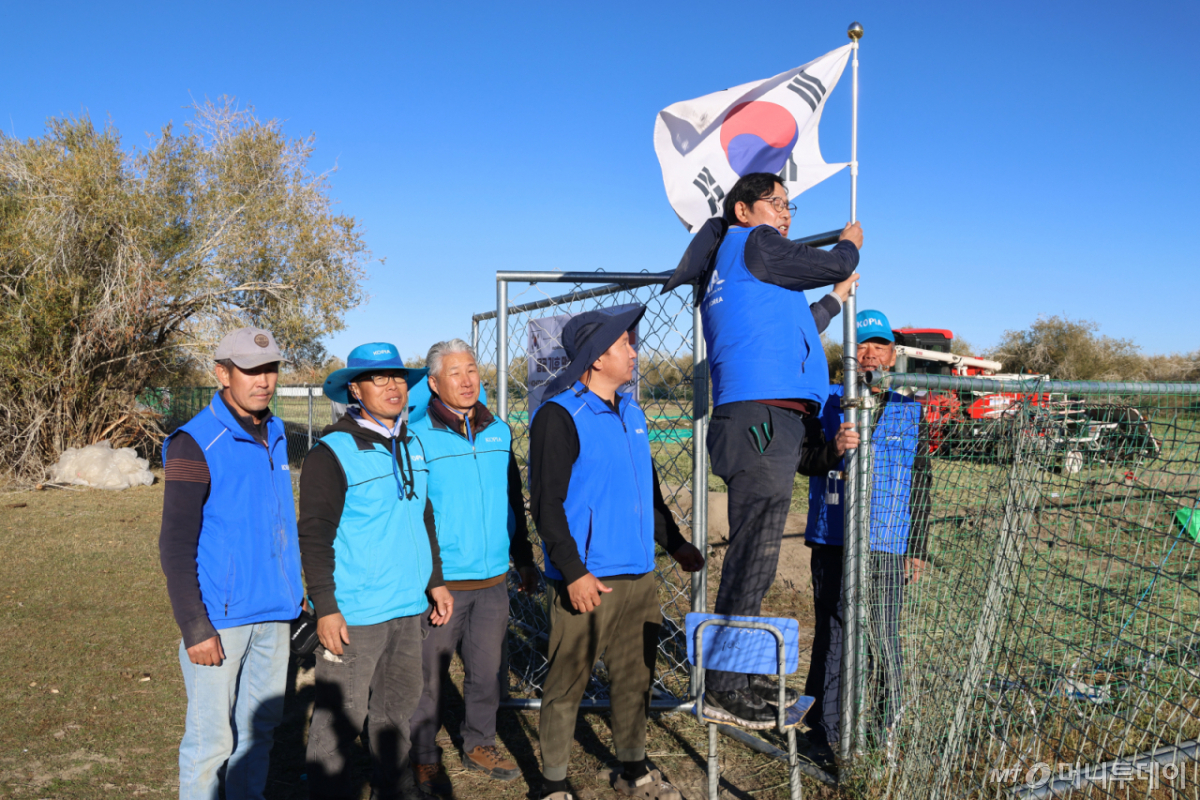
This harvest demonstration is one of the follow-up measures to the memorandum of cooperation on agricultural technology in the livestock and food security sectors signed during the Korea-Mongolia summit in July last year.
Lee Seung-don, Director of the Rural Development Administration, met with the Deputy Secretary of the Presidential Office of Mongolia and the Food and Agriculture Gyeong Gong-eop-bu (Minister) at the time to discuss expanding cooperation on livestock and rice cultivation technologies and linking agricultural material exports.
The principle of technical cooperation emphasized by Director Oh starts from the field. He stated, "What is most needed in Mongolian agriculture is not high-tech technology. Any technology requires phased introduction suited to the Mongolian field."
Bringing in technology that works well in Korea does not mean farming will succeed automatically. It must be followed by heating cold water, turning water-draining land into paddies, and helping local researchers handle equipment. The Rural Development Administration is also promoting the distribution of standard cultivation manuals and verifying the applicability of agricultural machinery to prepare for farming after support ends.
Lee Seung-don, Director of the Rural Development Administration, stated, "We will lay the foundation for self-reliance in cultivation technology so that Mongolia can sustain stable rice farming on its own, and further strengthen local verification and cooperation for the overseas export of our companies' products, such as K-agricultural machinery."

 in ECONOMY


